Desserts
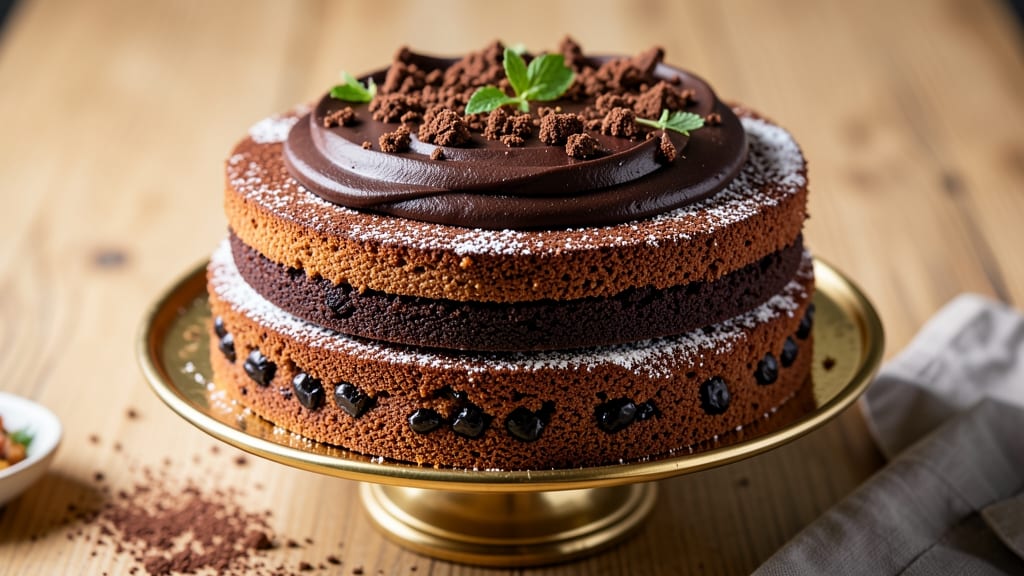
This Austrian chocolate cake recipe delivers layers of dense, fudgy chocolate perfection with a signature whipped cream frosting that's lighter than traditional buttercream. The secret lies in using high-quality dark chocolate and precise baking techniques that create a moist yet firm texture—unlike any other chocolate cake you've tried.
I've perfected this recipe over years of testing, ensuring each slice delivers that authentic Austrian richness without being overly sweet or dry.
The foundation of this cake is a simple yet effective combination of cocoa powder, dark chocolate, and espresso powder, which deepens the chocolate flavor and adds complexity.
Baking at a precise 350°F ensures even cooking while maintaining moisture, while the whipped cream frosting adds a delicate contrast that balances the richness. What sets this apart is the layering technique—each component plays its part in creating a dessert that's both impressive and foolproof.
By the time you're done, you'll have a cake with layers of deep chocolate fudge that's dense yet tender, separated by velvety whipped cream that melts on your tongue. The frosting isn't just decoration—it's essential for cutting through the intensity of the chocolate.
This is the kind of dessert that feels special enough for celebrations but simple enough for weeknight treats.
Serve at room temperature for the best texture, or chill for 30 minutes if you prefer it slightly firmer. The contrast between the warm, rich cake and cool frosting makes each bite unforgettable. Ready to bake the perfect Austrian chocolate cake? Let's get started with the ingredients and step-by-step instructions.
Ingredients for austrian chocolate cake
High-quality chocolate and precise techniques create this Austrian masterpiece—rich layers balanced by light whipped cream.
| Ingredient | Amount | Notes |
|---|---|---|
| Unsalted Butter 🧈 | 1 ½ cups | Cold, cubed for even mixing |
| Granulated Sugar 🍚 | 2 ½ cups | Superfine preferred for smooth texture |
| Dark Chocolate Chips 🍫 | 12 oz | 70% cacao minimum for depth |
| All-Purpose Flour 🌾 | 2 ½ cups | Sifted, spooned not scooped |
| Cocoa Powder 🍫 | ¾ cup | Dutch-processed for richness |
| Espresso Powder ☕ | 1 tbsp | Instant espresso preferred |
| Large Eggs 🥚 | 4 whole | Room temperature for even mixing |
| Baking Powder 🍞 | 1 tsp | Aluminum-free for stability |
| Salt 🧂 | ½ tsp | Fine sea salt preferred |
| Vanilla Extract 🌿 | 1 tbsp | Pure Madagascar preferred |
| Heavy Whipping Cream 🥛 | 3 cups | Cold for stiff peaks |
| Powdered Sugar 🍚 | 3 cups | Sifted for smooth frosting |
| Unsweetened Cocoa Powder 🍫 | ¼ cup | For dusting layers |
The chocolate is non-negotiable here. 70% cacao dark chocolate chips from Ghirardelli or Valrhona deliver that authentic Austrian depth—anything lower tastes too sweet. The Dutch-processed cocoa powder is what gives this cake its signature velvety texture, not the bitter kind. I always grab mine from Penzeys or the bulk section at Whole Foods, where it stays fresh. The espresso powder might sound odd, but it's what cuts through the sweetness and adds that sophisticated complexity. Look for instant espresso powder—it's what professional bakers use. And don't skip the vanilla: Madagascar bourbon is my go-to, but pure vanilla works too.
No heavy whipping cream? Coconut cream chilled overnight works in a pinch, though it'll have a different flavor profile. Running short on powdered sugar? Granulated sugar processed in a food mill gives you the same fine texture. The butter needs to be cold when you cream it—take it out of the fridge just before you start. And if you're worried about the cake being too dense, fold in 1/4 cup extra whipped cream when layering. For the chocolate chips, I always use Callebaut or Guittard—they melt perfectly without seizing. The baking powder should be fresh: if it's more than 6 months old, toss it and buy a new can.
This cake keeps beautifully—3 days at room temperature covered loosely with plastic, or 1 week refrigerated in layers separated by parchment. The frosting? Make it the night before for stiffer peaks. I always assemble mine in 8-inch pans—that's the perfect size for serving 8. For make-ahead baking, assemble the cake layers and frosting, then refrigerate. Bring to room temperature before serving. The contrast between the warm, fudgy cake and cool frosting is what makes this truly special—don't skip the chilling step if you're serving it warm.
Why You'll Love This Recipe
- No Mixer Needed: I swear by this recipe when my mixer’s on the fritz—just cream the butter and sugar by hand until it’s light and fluffy. The dark chocolate chips melt into the batter like magic, and the cocoa powder gives it that deep, velvety richness without overpowering.
- Rich Without Guilt: Between us, this cake tastes like a decadent dessert but uses just enough butter and sugar to keep it balanced. The dark chocolate chunks add pockets of gooey satisfaction, and the flour keeps it moist for days—no dry crumbs here.
- Party or Pajamas: I’ve brought this to birthday celebrations and served it with coffee on lazy Sundays. The layers stay sturdy enough to slice neatly, yet the texture is tender enough to eat straight from the pan. (Yes, even on a Tuesday night.)
- Budget-Friendly Luxury: Honestly, the ingredients won’t break the bank—good-quality dark chocolate and a stick of butter stretch far. A single batch feeds six, and leftovers? They disappear faster than I can say "second slice." My wallet and taste buds both win.
Step-by-step instructions for Austrian chocolate cake
Here's how to create layers of fudgy chocolate perfection with a velvety whipped cream frosting.
Prepare the Cake Batter
Preheat your oven to 350°F and grease three 8-inch round cake pans with the 1.5 cups unsalted butter, reserving 2 tablespoons for brushing later. Line the bottoms with parchment rounds. Melt the 12 oz dark chocolate chips with 2.5 cups granulated sugar and 1.5 cups unsalted butter in a heatproof bowl over simmering water, stirring until smooth. Let cool slightly.
In a separate bowl, whisk together the 2.5 cups all-purpose flour, 0.75 cup cocoa powder, 1 tbsp espresso powder, 1 tsp baking powder, and 0.5 tsp salt. Gradually mix the dry ingredients into the chocolate mixture until just combined. Add the 4 whole large eggs and 1 tbsp vanilla extract, beating until smooth and glossy. The batter should be thick but pourable.
Bake the Layers
Divide the batter evenly among the prepared pans. Bake for 30-35 minutes or until a toothpick inserted in the center comes out with moist crumbs. Rotate the pans halfway through for even baking. Let the cakes cool in their pans for 10 minutes, then transfer to a wire rack to cool completely.
Here's the thing—don't rush this cooling step. The cakes need to set completely before frosting, or the whipped cream will make them soggy. I've learned this the hard way after serving a cake that fell apart at the first slice.
Create the Whipped Cream Frosting
In a chilled mixing bowl, beat the 3 cups heavy whipping cream until soft peaks form. Gradually add the 3 cups powdered sugar and 0.25 cup unsweetened cocoa powder, beating until stiff peaks form. The frosting should hold its shape when the beaters are lifted. This is where patience pays off—don't overmix or the frosting will become grainy.
For extra richness, I like to fold in 2 tablespoons of the melted chocolate mixture from earlier. This gives the frosting that signature Austrian chocolate depth you can't get anywhere else.
Assemble the Cake
Level the tops of the cooled cakes if needed. Place the first layer on a serving plate and spread a generous layer of the whipped cream frosting. Dust the top with 1 tablespoon of the 0.25 cup unsweetened cocoa powder for that classic Austrian chocolate cake look. Repeat with the remaining layers.
For the final touch, spread the remaining frosting over the entire cake, creating a smooth finish. Use a spatula to create decorative swirls if desired. The key here is to work quickly—whipped cream frosting starts to melt as soon as it's out of the fridge.
Chill and Serve
Refrigerate the assembled cake for at least 2 hours before serving. This chilling time allows the flavors to meld and the frosting to set properly. When ready to serve, dust the top with additional cocoa powder for that authentic Austrian presentation.
Slice into wedges and serve immediately. Each bite should deliver rich, fudgy chocolate layers with a smooth, velvety cream frosting that melts perfectly in your mouth. The espresso powder adds just the right depth of flavor without being overpowering.
Pro Tips For Making Austrian Chocolate Cake
- Melt Butter Slowly: If you’re dumping cold butter into hot sugar, you’re fighting the recipe. Warm the butter first—just until it softens, then mix it into the sugar. This creates a smoother batter right away, and you’ll avoid lumps that turn into dry spots later.
- Sift the Cocoa: That cocoa powder isn’t fine enough to just scoop and stir. Sifting it with the flour removes clumps and lightens the texture—trust me, your cake will be less dense. (Yes, even if you’re tempted to skip it.)
- Don’t Overmix: Once you fold in the chocolate chips, stop stirring after 10 seconds. Overmixing develops gluten, and your cake will turn out tough instead of tender. Think of it like folding in a delicate meringue—gentle is the way.
- Test for Doneness Early: Austrian chocolate cake loves to look underdone at first glance. Stick a toothpick in at 45 minutes—if it comes out with light crumbs (not wet batter), pull it out. The center will keep rising while it cools. (Your patience here makes all the difference.)
Wine and beer pairings for this recipe
Rich Red Wine
Austrian chocolate cake pairs beautifully with Cabernet Sauvignon or Merlot from Austria or neighboring regions like Hungary. The bold tannins and dark fruit notes of a 2018 Blaufränkisch from Burgenland cut through the richness of the chocolate while complementing the espresso undertones.
I always reach for a glass of Fritz Wieninger's "Steiner" Cabernet Sauvignon—its velvety texture and blackcurrant flavors make it a perfect match. 🍷
Dessert Whites
For those who prefer white wine, a Sauvignon Blanc with citrus and herbal notes works surprisingly well. Look for Austrian Wachau Riesling like Loimer "Steinriegl"—its crisp acidity balances the sweetness while enhancing the chocolate's depth.
A slightly off-dry Pinot Gris from Alsace also shines, adding a touch of honeyed sweetness that mirrors the cake's frosting. 🥂
Dark Beer Pairings
If you're serving this cake with beer, opt for a Belgian Dubbel or German Dunkel. A Westmalle Dubbel with its caramel and dark chocolate notes mirrors the cake's flavors beautifully.
For something lighter, a Belgian Witbier like Hoegaarden adds a refreshing contrast with its coriander and citrus. The effervescence cleanses your palate between bites of rich cake. 🍺
Coffee Contrast
Since the cake already contains espresso powder, pairing it with a strong, dark roast coffee like a Viennese Melange or Italian Espresso enhances the chocolate experience. The bitterness of the coffee complements the sweetness, creating a harmonious balance.
I often serve a small cup of Melitta coffee alongside slices for the ultimate pairing. ☕
Liqueur Finishing
For an extra touch, serve the cake with a shot of Kahlúa or Baileys Irish Cream on the side. The coffee liqueur's chocolate and vanilla notes amplify the cake's flavors, while the creaminess of Baileys mirrors the frosting's texture.
A few drops drizzled over the top before serving adds a luxurious finish. 💛
Nutrition facts
Frequently asked questions
Why does this recipe use espresso powder instead of regular coffee?
The espresso powder adds a subtle depth that enhances the chocolate flavor without overpowering it. It brings out the richness and creates that signature Austrian complexity. Think of it as a secret ingredient that makes the chocolate taste even more luxurious.
Can I substitute Dutch-processed cocoa powder?
Yes, but the texture and flavor will differ slightly. Dutch-processed cocoa gives that velvety, rich taste, while natural cocoa adds a more acidic bite. For the best results, stick with Dutch-processed, but if you must substitute, use 1/4 teaspoon more baking soda to balance the acidity.
How do I prevent my cake from being too dry?
Don't overbake! The cake is done when a toothpick comes out with moist crumbs, not completely clean. Also, ensure your butter and eggs are at room temperature, and don't overmix the batter. For extra moisture, brush the cooled layers with simple syrup before frosting.
Can I make this cake in a single layer instead of three?
Use a 9-inch springform pan and reduce the baking time by about 5-10 minutes. The frosting will still work perfectly, but you'll lose that classic layered effect. For a single layer, you can also add 1/2 cup chopped nuts or 1/4 cup chocolate chips to the batter for extra texture.
What’s the best way to store leftovers?
Keep the cake in an airtight container at room temperature for up to 3 days, or refrigerate for 1 week. To revive stale slices, warm them in the oven at 300°F for 5-10 minutes before serving. The frosting may soften slightly when reheated, so add a fresh dusting of cocoa powder.