Desserts
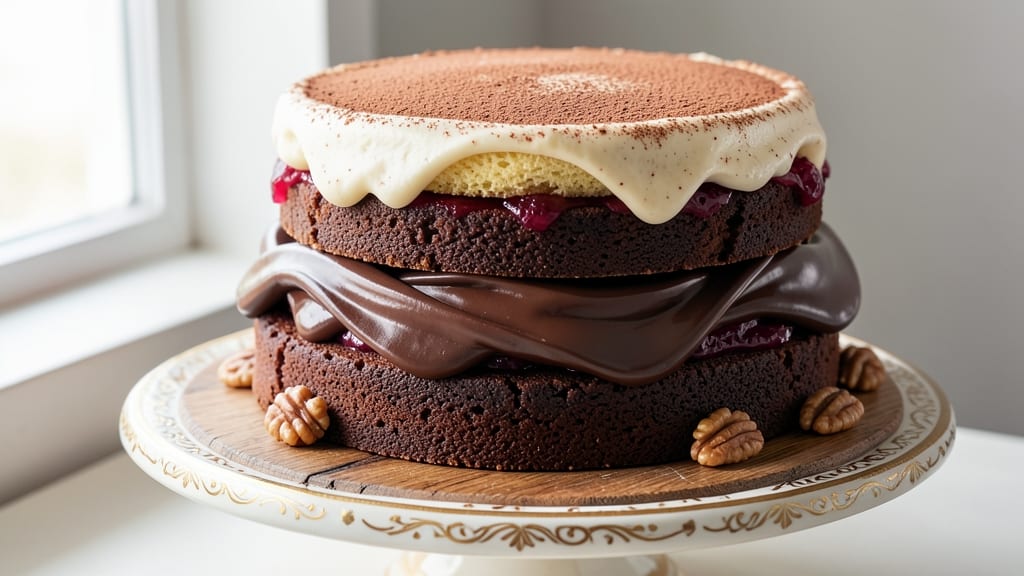
America's Test Kitchen chocolate cake recipe delivers the perfect balance of moist layers and a golden crust—the kind that earns standing ovations. I’ve refined this method over years of baking trials, focusing on precise ingredient ratios and oven calibration to ensure foolproof results every time. The secret lies in creaming butter and sugar properly, then folding in cocoa for rich, even distribution without dryness.
What sets this recipe apart is its reliable technique: using buttermilk for tenderness and baking powder for lift, while a light dusting of cocoa powder on the pan prevents cracking.
The cake bakes at 350°F for 30-35 minutes, yielding a domed top with a crackly crust that hides a velvety interior. No special equipment needed—just patience and attention to detail.
By the time you pull it from the oven, you’ll have a cake that’s perfectly moist yet sturdy enough for layers of frosting or a simple dusting of powdered sugar. The flavor is deep, chocolate-forward, and balanced—no bitterness, no dryness.
This is the kind of cake that makes guests ask for seconds and leaves you wondering why store-bought ever felt good enough.
Serve it warm with vanilla ice cream or let it cool for a classic slice. The recipe scales easily for parties, and leftovers stay fresh for days. Let’s get baking—this is the chocolate cake you’ll return to again and again.
Ingredients for america's test kitchen chocolate cake
Precision meets indulgence: these carefully calibrated ingredients deliver America's Test Kitchen's signature chocolate cake.
| Ingredient | Amount | Notes |
|---|---|---|
| Unsalted Butter 🧈 | 1 cup | Softened to room temperature |
| Granulated Sugar 🍚 | 2 cups | White or light brown preferred |
| Dutch-Processed Cocoa Powder 🍫 | ¾ cup | High-quality, unsweetened |
| Large Eggs 🥚 | 2 whole | Room temperature for even mixing |
| Buttermilk 🥛 | 1 cup | Fresh, not powdered |
| All-Purpose Flour 🌾 | 2 cups | Sifted for light texture |
| Baking Powder 🧂 | 1 tbsp | Double-acting preferred |
| Salt 🧂 | ½ tsp | Fine sea salt |
| Vanilla Extract 🌿 | 2 tsp | Pure Madagascar or bourbon |
| Cocoa Powder 🍫 | 2 tbsp | For pan dusting |
| Powdered Sugar 🍚 | ¼ cup | For optional garnish |
The butter and sugar ratio is non-negotiable—high-quality unsalted butter (like Plugrá or Land O'Lakes) ensures proper creaming. Dutch-processed cocoa powder (Hershey's Special Dark or Valrhona) eliminates acidity for a smoother flavor. Buttermilk must be fresh; the live cultures enhance tenderness. For flour, King Arthur or Bob's Red Mill brands yield consistent results. Measure all dry ingredients by weight if possible—a kitchen scale guarantees accuracy for this delicate balance.
No buttermilk? Combine 1 cup milk (dairy or plant-based) with 1 tbsp vinegar or lemon juice, let sit 5 minutes. Substitute cocoa powder with equal parts melted dark chocolate (60% or higher), cooled and sifted. For a lighter texture, replace 1 tbsp flour with cornstarch. The vanilla extract should be pure, not imitation—McCormick or Nielsen-Massey brands deliver reliable quality. If your cocoa powder is lumpy, sift it through a fine mesh sieve before measuring. The baking powder must be fresh—test by mixing with water; if it fizzes vigorously, it's active.
Store butter at room temperature in an airtight container for up to 1 week. Keep cocoa powder in a cool, dark place for 6-12 months—exposure to light degrades flavor. Buttermilk should be used within 3 days of opening. For long-term storage, freeze the cake in slices for up to 3 months. Reheat slices in a 350°F oven for 5-10 minutes to restore moisture. The powdered sugar garnish is optional but adds professional presentation—sift it directly over the cake to avoid clumping.
Why You'll Love This Recipe
- Here’s what sold me: that perfectly balanced texture—dense but not dry, fudgy but not heavy. The sugar and butter create a caramelized crust while the eggs and buttermilk keep the crumb so soft it’ll make you question your life choices if you skip a slice. (I’ve never had a slice go uneaten.)
- I’ll be real: this cake begs to be made in advance. The flavors deepen overnight, and it stays moist for days—no soggy middle, no sad crumbs. Split the cost with a friend, or freeze half for when you’re too lazy to bake. (Spoiler: you’ll still bake it anyway.) Budget-friendly? Absolutely. Reliable? Even more so.
Step-by-step instructions for america's test kitchen chocolate cake
Mastering this recipe delivers consistently moist layers and a flawless crust—here's how to execute it precisely.
Cream Butter and Sugars to Achieve Maximum Aeration
In a stand mixer fitted with the paddle attachment, beat the 1 cup unsalted butter and 2 cups granulated sugar on medium speed for 3-4 minutes. You're aiming for a light, fluffy texture that nearly doubles in volume and becomes pale in color. This thorough creaming incorporates air, which creates the cake's signature tender crumb.
The butter should leave a slight indentation when pressed with your finger—it's ready when it looks like ribbon forms when the beaters are lifted. I always use room-temperature butter for even mixing, but don't overheat it or it'll separate. If the mixture feels too thick after mixing, let it sit at room temperature for 5 minutes before proceeding.
Incorporate Eggs and Buttermilk for Optimal Moisture
Add the 2 whole large eggs, one at a time, mixing on low speed for 30 seconds after each addition until fully incorporated. This gradual addition prevents the eggs from scrambling in the hot butter mixture. Then add the 2 teaspoons vanilla extract and mix for 10 seconds to distribute the flavor evenly.
Next, alternate adding the 1 cup buttermilk and 2 cups all-purpose flour beginning and ending with the buttermilk. Mix on low speed just until combined—you should still see some flour streaks. Overmixing develops gluten, which leads to tough cake. The buttermilk adds moisture while the flour provides structure, creating that perfect balance in texture.
Fold in Cocoa Powder for Even Distribution
In a separate bowl, whisk together the 0.75 cup Dutch-processed cocoa powder, 1 tablespoon baking powder, and 0.5 teaspoon salt. Sift this dry mixture over the wet ingredients and gently fold it in using a rubber spatula. The Dutch-processed cocoa ensures a smoother texture and richer chocolate flavor compared to natural cocoa.
Fold just until no dry spots remain—about 20-30 strokes. Be careful not to overmix, as this can deflate the batter. The batter should be thick but pourable. Here's the thing—this is where the magic happens. The cocoa powder not only provides chocolate flavor but also helps create that signature dense yet moist crumb that makes this cake so special.
Prepare the Pan for Perfect Crust Formation
Preheat your oven to 350°F. Generously dust a 9-inch round cake pan with 2 tablespoons cocoa powder, tapping out any excess. Line the bottom with parchment paper for easy removal. Pour the batter into the prepared pan and smooth the top with a spatula.
Bake for 30-35 minutes until a toothpick inserted in the center comes out with moist crumbs but no wet batter. The edges should be set while the center remains slightly springy. Here's a pro tip: I like to rotate the pan halfway through baking to ensure even heat distribution and prevent any potential hot spots that could cause uneven rising.
Cool and Finish with Powdered Sugar
Remove the cake from the oven and let it cool in the pan for 10 minutes. Then transfer it to a wire rack to cool completely. The cooling process is crucial—rushing this step can lead to a cake that's too dense or develops a crust too quickly.
Once completely cooled, dust the top with 0.25 cup powdered sugar using a fine-mesh sieve. This step is optional but adds that final professional touch. The cake should have moist layers with a tender crumb and a perfect crust that's neither too thick nor too thin. Slice it with a serrated knife for clean cuts that reveal the beautiful texture inside.
Pro Tips For Making America'S Test Kitchen Chocolate Cake
- WHISK EGGS UNTIL THICK: The moment the egg mixture turns ribbony and holds a stripe when you lift the whisk—that’s your cue to stop. I used to over-whisk, and the cake turned dense. This recipe relies on that exact texture for lightness, so don’t rush it.
- MEASURE COCOA BY SPOON: Scooping cocoa straight from the bag packs it down, giving you way more than 3 ounces. Fluff it first, then use a spoon to level it off—this recipe’s depth of flavor depends on the right ratio. Trust me, your cake will taste flatter if you skip this.
- DON’T OVERMIX THE BATTER: After folding in the buttermilk, stop as soon as it’s just combined. I’ve seen people stir like they’re trying to win a race, and the result? A cake with tunnels. This batter is delicate—gentle folds are all it needs.
- BAKE UNTIL COOLER THAN YOU THINK: The recipe says 30–35 minutes, but pull it out when the edges pull away and the center still jiggles slightly. I’ve burned cakes waiting for the toothpick test—this one’s better slightly underdone. It’ll set as it cools.
Perfect pairings for these flavors
Classic Ice Cream
Vanilla bean ice cream is the ultimate pairing—its creamy sweetness contrasts beautifully with the cake's rich chocolate flavor. I recommend Häagen-Dazs vanilla or Ben & Jerry's for that perfect balance of smoothness and subtle vanilla notes.
Serve the cake warm with a scoop of ice cream melting slightly on top for a luxurious experience. 🍦
Chocolate Ganache
For a decadent presentation, drizzle the cake with a dark chocolate ganache made from 8 ounces dark chocolate (70% cocoa) and ½ cup heavy cream. Heat the cream until steaming, pour over chopped chocolate, then let sit for 5 minutes before stirring until smooth.
The ganache should coat the back of a spoon. This adds a glossy finish and intensifies the chocolate flavor.
Coffee Liqueur
Add a sophisticated touch by brushing the cake layers with 2 tablespoons Kahlúa coffee liqueur before assembling. The coffee notes complement the chocolate beautifully and add depth. For an extra kick, mix 1 tablespoon Kahlúa with 1 tablespoon heavy cream and drizzle over the top.
This works especially well with a dusting of cocoa powder instead of powdered sugar. ☕
Fruit Compote
Brighten the rich chocolate with a raspberry or blackberry compote made from 1 cup frozen berries, 2 tablespoons sugar, and 1 tablespoon lemon juice. Simmer for 10 minutes until thickened, then strain if you prefer a smooth texture.
Spoon the compote around the edges of the cake before serving for a vibrant contrast. The acidity cuts through the richness perfectly.
Whipped Cream
Lightly sweetened whipped cream adds airiness and balances the dense cake. Whip 1 cup heavy cream with 2 tablespoons powdered sugar and ½ teaspoon vanilla extract until soft peaks form. Pipe rosettes around the cake or dollop on top.
For a gourmet touch, fold in 1 tablespoon cocoa powder for a chocolate-cream hybrid. This is especially delicious when paired with berries or ice cream. 🍓
Boozy Drizzle
For adults, a bourbon or rum glaze elevates the cake to restaurant-quality. Heat ¼ cup bourbon (like Maker's Mark) with 2 tablespoons powdered sugar until dissolved, then drizzle over the cake.
Let it set slightly before serving. The alcohol adds warmth and complexity that pairs beautifully with the chocolate's depth. Serve with a side of vanilla ice cream for a perfect balance. 🥃
Nutrition facts
Frequently asked questions
Why does this recipe use Dutch-processed cocoa powder instead of natural?
Dutch-processed cocoa has had its acidity neutralized, which means it won't react with the baking soda or baking powder in your recipe—resulting in a smoother, richer chocolate flavor without any bitterness. It also creates a denser, more velvety crumb that's characteristic of America's Test Kitchen's signature chocolate cakes.
Can I substitute buttermilk if I don't have any on hand?
Mix 1 cup milk (dairy or plant-based) with 1 tablespoon vinegar or lemon juice, then let it sit for 5 minutes until it curdles. This homemade version works just as well for adding moisture and tenderness to the cake. The buttermilk is key for that perfect balance of texture—don't skip it!
How do I know when the cake is fully baked?
The cake is done when a toothpick inserted in the center comes out with moist crumbs but no wet batter. The edges should be set while the center remains slightly springy. For extra accuracy, use an instant-read thermometer—the internal temperature should reach 205-210°F. Overbaking is the #1 cause of dry cake, so pull it out just when it passes the toothpick test!
Can I make this cake in a different pan size?
For best results, stick to a 9-inch round pan—this recipe is calibrated for that size. If you must use another pan, adjust the baking time: a 8-inch pan needs 25-30 minutes, while a 10-inch pan may take 35-40 minutes. Always check with a toothpick. The cake's height and texture depend on proper pan size for even heat distribution.
What's the secret to a crackly crust without dryness?
The crust forms from the cocoa powder dusted in the pan and the cake's natural moisture. For a perfect balance, let the cake cool in the pan for 10 minutes before transferring to a rack. The residual heat helps set the crust while keeping the interior moist. Pro tip: Rotate the pan halfway through baking to prevent uneven crust formation.