
Desserts
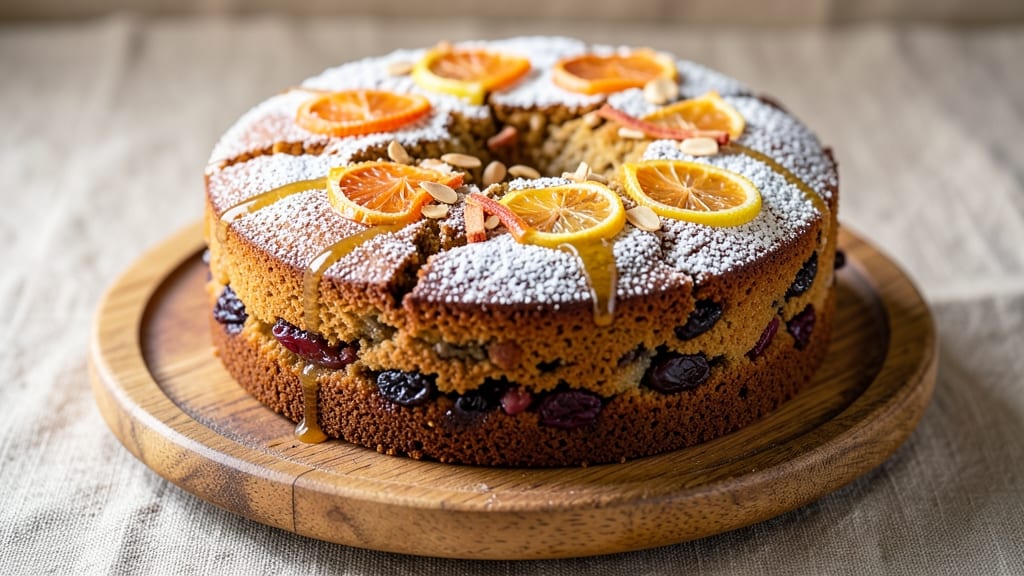
This Australian fruit cake recipe delivers the legendary moistness and deep flavor that only improves with time—thanks to its signature soak and slow-baked texture. 💛 Unlike traditional fruitcakes, this version incorporates a boozy fruit mixture that tenderizes the dried fruit while infusing layers of citrus and spice.
The secret lies in the patient soaking process, which transforms tough dried fruit into plump, juicy pieces that keep the cake wonderfully moist for months.
What sets this recipe apart is the balance of rich ingredients: a blend of dark and golden raisins, sultanas, and currants soaked in brandy or rum (or a non-alcoholic alternative), combined with warm spices like cinnamon, nutmeg, and cloves.
The cake’s dense yet tender crumb comes from a precise mix of butter, brown sugar, and eggs, baked low and slow until the edges are golden and the center springs back gently. This isn’t just dessert—it’s a centerpiece for celebrations, slicing better with age.
The result is a cake with a moist, almost fudgy texture that’s perfectly balanced by a subtle crunch from the toasted almonds and candied peel.
Each slice offers bursts of fruity sweetness, spiced warmth, and a hint of boozy depth—ideal for pairing with a cup of strong tea or coffee. The cake keeps beautifully for weeks, making it a gift-worthy treat that tastes even better the longer it rests.
Ready to bake a classic that stands the test of time?
For best results, prepare the fruit mixture a day ahead and let the cake mature for at least a week before serving. This patience ensures the flavors meld into something extraordinary—worth every minute of wait. Let’s get started on a tradition that’s been cherished for generations.
Ingredients for australian fruit cake
Rich, spiced, and brimming with soaked fruit—this fruit cake delivers legendary moisture that only gets better with time.
| Ingredient | Amount | Notes |
|---|---|---|
| Unsalted Butter 🧈 | 1 cup | Softened to room temperature |
| Light Brown Sugar 🍚 | 2 cups | Packed firmly for accuracy |
| Large Eggs 🥚 | 4 whole | Room temperature preferred |
| All-Purpose Flour 🌾 | 2 ½ cups | Sifted for light texture |
| Ground Cinnamon 🌿 | 2 tbsp | Ceylon preferred for warmth |
| Ground Nutmeg 🌿 | 1 tsp | Freshly grated preferred |
| Ground Cloves 🌶️ | 1 tsp | Lightly toasted for depth |
| Salt 🧂 | 1 tsp | Diamond Crystal preferred |
| Dark Raisins 🍇 | 1 ½ cups | Plump, not shriveled |
| Golden Raisins 🍇 | 1 cup | Uniform size preferred |
| Sultanas 🍇 | 1 cup | Plump, not dried out |
| Currants 🍇 | 1 cup | Zesty variety preferred |
| Brandy or Rum 🍷 | 1 cup | Or non-alcoholic alternative |
| Orange Zest 🍊 | 1 tbsp | From 1 large orange |
| Slivered Almonds 🥜 | 1 cup | Toasted lightly for crunch |
| Candied Orange Peel 🍊 | ½ cup | Dried, chopped finely |
The dried fruit is where the magic happens. Look for plump raisins and sultanas—the kind that don’t feel like rocks. Coles or specialty grocers often carry better-quality dried fruit than regular supermarkets. Soak the fruit in the boozy mixture for at least 24 hours (I do it overnight), letting the alcohol tenderize those tough skins. The brandy or rum adds depth, but orange juice or apple juice work just as well if you want to skip the alcohol. For the spices, Penzeys or bulk bins are worth the splurge—freshly ground cinnamon and nutmeg make all the difference.
No brandy? Substitute with orange juice or apple juice—just add a splash of vanilla extract for complexity. Running short on currants? Extra raisins or even chopped dried apricots work in a pinch, though the flavor won’t be identical. The candied peel can be tricky to find—check the baking aisle or order online. If you can’t locate it, extra orange zest plus a pinch of cardamom mimics the citrusy brightness. The almonds? Toast them lightly in a dry pan until fragrant—this adds a nutty crunch that’s essential to the texture. And for the sugar, light brown is a must—dark brown will make the cake too dense.
This cake tastes even better after a week of resting. Wrap tightly in plastic and store at room temperature for up to 3 months, or freeze for 6 months for maximum freshness. The longer it sits, the more the flavors meld—trust the process. Slice it thin for elegant servings or thick for hearty portions. Leftovers? Toast slices lightly with a pat of butter for a comforting treat.
Why You'll Love This Recipe
- No-Fuss Mixing: I swear by this recipe because it’s actually just creaming butter and sugar—no food processor, no stress. The brown sugar’s sticky texture does half the work for you, and the eggs bind everything together in minutes. (Yes, even if you’re still in your pajamas.)
- Spiced Gold Standard: That cinnamon? It’s not just dusted on top—it’s baked into every crumb, deep and warm like a hug from your nan. The butter’s richness cuts through the sweetness, and the molasses notes in the brown sugar? Absolute magic. Honestly, my first slice disappears faster than I can say “second helping.”
- Gift That Keeps Giving: Between us, this cake tastes better after a week in the pantry—seriously, the flavors meld into something richer. Wrap a slice in foil for lunch, stash it in the freezer for a snack, or take it to a potluck where everyone will ask for the recipe. (I’ll be the one handing out cards.)
- Pantry Staple Power: You’re already using stuff you own: flour, sugar, butter. No weird ingredients, no last-minute grocery runs. And because it keeps so well, you’ll bake it once and enjoy it for months—no sad, dried-out cake here. Budget-friendly? More like guilt-free indulgence.
Step-by-step instructions for Australian fruit cake
Here's how to craft a rich, spiced fruit cake that keeps its moisture for months.
👨🍳 Step 1: Prepare the Fruit and Nut Mixture
In a large bowl, combine all the dried fruits: the 1.5 cups dark raisins, 1 cup golden raisins, 1 cup sultanas, and 1 cup currants. Pour over the 1 cup brandy or rum and set aside for at least 30 minutes—this ensures the fruits plump up and absorb the boozy flavor. I like to press the fruits down occasionally to help them soak evenly.
In a separate small bowl, toast the 1 cup slivered almonds in a dry skillet over medium heat for 3-4 minutes until they're lightly golden and fragrant. Watch them closely—they burn quickly. Let them cool completely before adding to the fruit mixture. This step adds a delightful crunch that contrasts beautifully with the soft cake texture.
🍳 Step 2: Cream Butter and Sugar
In a stand mixer fitted with the paddle attachment, beat the 1 cup softened unsalted butter and 2 cups packed light brown sugar on medium speed for 3-4 minutes until light and fluffy. You'll see the mixture nearly double in volume and become pale in color. This creaming process incorporates air, which creates a tender crumb.
I press down on the butter mixture with a spatula occasionally to ensure it's fully combined. Here's the thing—don't rush this step. Under-creamed butter leads to dense cake, and we're aiming for that signature moist, tender texture that makes Australian fruit cake so special.
👨🍳 Step 3: Add Eggs and Dry Ingredients
Add the 4 whole large eggs, one at a time, mixing on low speed after each addition until fully incorporated. Then stir in the 1 tbsp orange zest and 0.5 cup candied orange peel—these citrus elements add a bright, aromatic note that cuts through the richness.
In a separate bowl, whisk together the 2.5 cups all-purpose flour, 2 tbsp ground cinnamon, 1 tsp ground nutmeg, 1 tsp ground cloves, and 1 tsp salt. Sift the flour mixture directly into the wet ingredients and mix on low speed for just 10-15 seconds until combined. Over-mixing develops gluten, which can make the cake tough. You should still see some flour streaks.
🥘 Step 4: Combine and Bake
Gently fold in the prepared fruit and nut mixture using a silicone spatula. Be careful not to overmix—just combine everything until evenly distributed. The batter will be thick and sticky, but that's exactly what we want for that dense, moist texture.
Transfer the batter to two 9-inch round cake pans lined with parchment paper and greased with butter. Divide the batter evenly between the pans. Bake in a preheated 325°F oven for 50-60 minutes, or until a toothpick inserted into the center comes out clean. The cake should be golden brown on top and pull away slightly from the edges of the pan.
⏰ Step 5: Rest and Store for Maximum Flavor
Remove the cakes from the oven and let them cool in the pans for 10 minutes, then transfer to a wire rack to cool completely. Here's where the magic happens: wrap each cake individually in plastic wrap and store in an airtight container at room temperature for at least 2 weeks before serving.
This resting period allows the flavors to meld and the cake to develop its signature moistness. The alcohol in the brandy or rum will evaporate slightly, leaving behind concentrated flavor. For best results, store the cake in a cool, dark place. The longer it rests, the better it tastes—trust the process!
Pro Tips For Making Australian Fruit Cake
- SOAK THE FRUIT FIRST: I learned this the hard way—dry fruit straight from the packet soaks up the booze and syrup like a sponge. Toss your dried fruit (dates, sultanas, whatever’s in your mix) in warm tea or rum overnight, then drain before folding into the batter. The cake stays moist for weeks, not just days.
- CREAM BUTTER AND SUGAR LOW: After burning three batches, I finally figured out: Australian fruit cake isn’t a shortbread. Cream your unsalted butter and brown sugar on low heat (or by hand) until it’s pale, not golden. High heat turns the butter nutty and the cake dense—this is a cake, not a toffee.
- WEIGH YOUR FLOUR: This isn’t the prettiest method, but it’s the tastiest. Spooning flour into measuring cups packs it too tight, and sifting changes the texture. Use a kitchen scale for the flour—1 cup of all-purpose is about 125g, but don’t guess. The cake’s crumb depends on it.
- BAKE IT COLD: Sounds weird, but it works: refrigerate your batter overnight (or at least 4 hours) before baking. The cold butter stays firm, so the cake rises properly instead of spreading like a sad pancake. Pop it in a 150°C oven for 2.5–3 hours—no peeking, or you’ll dry it out.
Perfect pairings for this recipe
Tea Pairings
This cake practically begs for a strong cup of tea to complement its rich spice notes. I reach for Earl Grey—its bergamot citrus brightens the cake’s warm cinnamon and nutmeg flavors beautifully.
For something bolder, Assam black tea with its malty depth stands up to the fruit’s sweetness and boozy undertones. 💛
Coffee Complements
A robust dark roast coffee (like a Sumatra Mandheling) cuts through the cake’s richness with its earthy, slightly smoky notes. The coffee’s bitterness balances the cake’s sweetness, creating a perfect contrast.
For a lighter option, chicory coffee adds a subtle caramel note that pairs wonderfully with the caramelized sugar in the cake.
Wine Pairings
If you’re serving this cake with wine, a tawny Port is my go-to choice—its nutty, caramelized flavors mirror the cake’s dried fruit and toasted almonds. For a lighter option, a dry Riesling with its crisp acidity and citrus notes refreshes the palate between bites.
Avoid heavy reds like Cabernet, as they can overpower the delicate spices.
Non-Alcoholic Options
For a refreshing non-alcoholic pairing, try sparkling apple cider—its effervescence cleanses the palate between bites of the dense, spiced cake. Another great option is chilled hibiscus tea (agua de Jamaica), which adds a tart, floral contrast to the cake’s sweetness and warmth. 🍹
Garnishes to Elevate
Before serving, dust the cake with a pinch of cinnamon or a sprinkle of toasted coconut flakes for added texture. A drizzle of orange glaze (mix ½ cup powdered sugar with 1 tbsp orange juice) adds a glossy finish that highlights the cake’s citrus notes.
For a festive touch, add a few candied violets on top.
Serving Temperature
Serve the cake at room temperature—this allows the flavors to fully develop. If you’ve stored it in the fridge, let it sit for 30-45 minutes before slicing to ensure the perfect texture.
The cake’s moisture is best enjoyed when it’s not too cold, so avoid serving it straight from the refrigerator. 💡
Nutrition facts
Frequently asked questions
Why does Australian fruit cake need to rest for so long?
The 2-week resting period is key to developing the cake's signature moistness and deep flavor. During this time, the alcohol in the fruit mixture evaporates slightly, concentrating the sweetness while the spices and citrus meld together. The cake's texture also improves as the moisture redistributes, resulting in that perfect tender crumb.
Can I make this cake without alcohol?
Replace the 1 cup brandy or rum with an equal amount of orange juice or apple juice. Add 1 teaspoon vanilla extract for depth, as alcohol carries complex flavors. The fruit will still plump nicely, though the final cake will have slightly different character.
What's the best way to store leftover cake?
Wrap individual slices tightly in plastic wrap and store in an airtight container at room temperature for up to 3 months. For longer storage, freeze slices for 6 months. The cake actually tastes better as it ages, so don't hesitate to keep it around! Just bring it to room temperature before serving.
Why does my cake turn out dense instead of moist?
Overmixing the batter develops gluten, making the cake tough. Mix dry ingredients just until combined (10-15 seconds), and avoid over-creaming the butter. Also ensure your dried fruit is plump from soaking—shriveled fruit won't contribute moisture. Finally, check your oven temperature with a thermometer (325°F is critical).
Can I add fresh fruit to this recipe?
Fresh fruit isn't traditional for this cake, but you could add ½ cup chopped dried apricots or ½ cup chopped dates to the dried fruit mixture. Avoid juicy fruits like berries—they'll make the cake soggy. If using fresh fruit, pat it dry thoroughly before adding to prevent excess moisture.