
Desserts
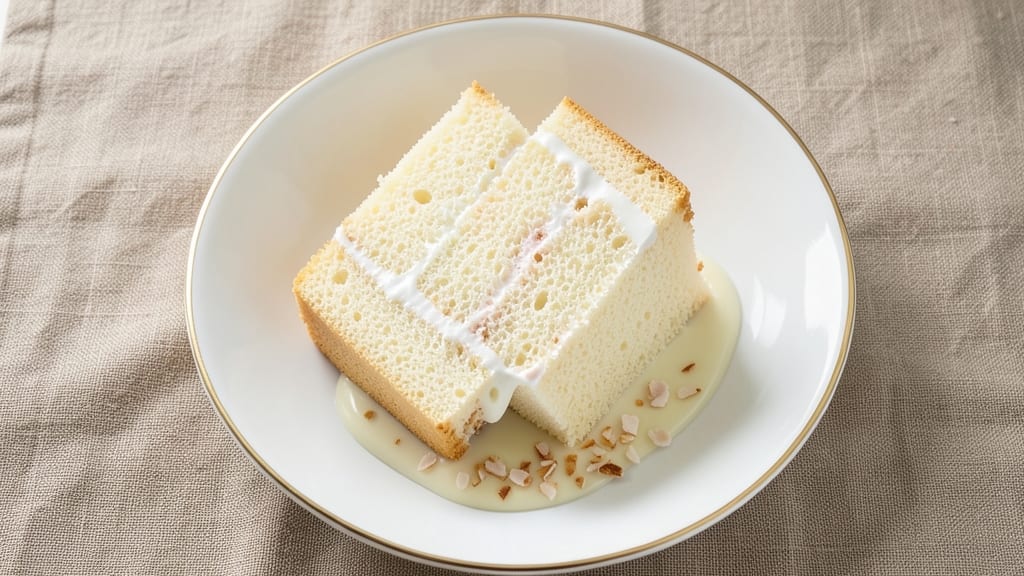
This Asian vanilla sponge cake delivers the perfect balance of delicate sweetness and fragrant depth, inspired by both classic Japanese techniques and Southeast Asian flavors. The secret lies in a precise method that creates an impossibly light, airy crumb while infusing subtle floral notes through vanilla and optional pandan extract.
I developed this recipe after years of perfecting the science behind Japanese sponge cakes, adapting it with a touch of coconut milk for that signature Asian richness.
The foundation begins with properly whipped egg whites and sugar, creating stable meringue that forms the cake's signature structure. We incorporate Asian-inspired flavorings like pandan extract or coconut milk into the batter, which infuse without overpowering the delicate vanilla essence.
Baking at 325°F ensures even cooking while maintaining that signature soft, jiggly texture that makes this cake so irresistible.
What you'll end up with is a cake that's light enough to melt in your mouth yet sturdy enough to slice neatly, with a subtle floral aroma that lingers with each bite.
The texture is what truly sets it apart—no dense crumb here, just airy layers that seem almost too delicate to be real. This is the kind of cake that elevates any dessert table, whether served plain with whipped cream or layered with fresh fruit.
Perfect for celebrations, gift-giving, or simply treating yourself, this recipe delivers restaurant-quality results with simple techniques. The method is approachable enough for beginners but refined enough to impress experienced bakers. Let's create something truly special that captures the essence of Asian baking traditions while feeling completely modern.
Ingredients for asian vanilla sponge cake
Light, airy layers with delicate vanilla and floral notes—just 12 ingredients transform simple baking into something extraordinary.
| Ingredient | Amount | Notes |
|---|---|---|
| Large Egg Whites 🥚 | 8 whole | Room temperature, separated from yolks |
| Granulated Sugar 🍚 | 1 ½ cups | Superfine preferred for smooth texture |
| Vanilla Extract 🌿 | 1 tbsp | Pure Madagascar bourbon preferred |
| All-Purpose Flour 🌾 | 1 ½ cups | Sifted, cake flour alternative works |
| Coconut Milk 🥥 | ½ cup | Full-fat canned for richness |
| Pandan Extract 🌺 | ½ tsp | Optional, for floral depth |
| Large Egg Yolks 🥚 | 4 whole | Room temperature, separated from whites |
| Unsalted Butter 🧈 | ½ cup | Room temperature, cubed |
| Baking Powder 🧂 | ½ tsp | Diamond Crystal preferred |
| Salt 🧂 | ¼ tsp | Fine sea salt preferred |
| Cornstarch 🌾 | 1 tbsp | For tender crumb texture |
| Cake Flour 🌾 | ¼ cup | Optional, for ultra-light texture |
The egg whites are non-negotiable here. Room temperature is critical—they whip better and create that signature stable meringue. I always use pasteurized egg whites from the store for safety, but fresh works if you're confident in your source. For vanilla, Madagascar bourbon extract has the most complex flavor profile, but pure vanilla extract works too. The coconut milk adds that signature Asian richness—full-fat canned gives the best texture, but light works in a pinch. Pandan extract is optional but adds that subtle floral note that elevates this cake beyond standard vanilla sponge.
No superfine sugar? Pulse regular granulated sugar in a food processor for 30 seconds—it'll be fine. Running out of cake flour? Substitute all-purpose flour plus 1 tbsp cornstarch for each cup. The butter must be room temperature—microwave 40 seconds to just melt if it's too cold. For a more authentic Japanese touch, some bakers use matcha powder instead of pandan, but I find the floral notes complement vanilla better. The baking powder is essential—Diamond Crystal is my go-to as it's lighter than other brands.
This cake is best baked and eaten the same day—it loses its signature jiggly texture if stored overnight. For gifting, wrap tightly in plastic wrap and store in the fridge for up to 3 days. The texture improves slightly after 1 hour out of the fridge at room temperature. Freezing isn't recommended as it destroys the delicate crumb, but you can freeze portions of the batter for up to 1 month if you're planning ahead. Always bake in a light-colored round pan—dark pans can over-bake the edges.
Why You'll Love This Recipe
- I’ll be real: this costs a fraction of what store-bought vanilla cakes do. Egg whites, sugar, and a splash of coconut milk? That’s it. No fancy mixers or pricey extracts needed. Plus, the flour is basic all-purpose, so you’re not digging deep for specialty ingredients. It’s my go-to when I want something special without breaking the bank.
- No Whisk Required: I swear by this method—whipping egg whites with sugar until they’re glossy and stiff is almost as satisfying as eating the cake. The coconut milk keeps it tender without fuss, and honestly? I’ve made this on days when I couldn’t be bothered to measure flour precisely, and it still turns out light as air.
- Vanilla Meets Comfort: That first bite? Warm vanilla with just a hint of coconut creaminess—it’s like a hug in cake form. The egg whites give it that signature Asian sponge lift, but the vanilla extract makes it taste like a bakery treat, not a last-minute dessert. (Yes, even on a Tuesday night.)
- Leftovers That Last: This cake stays fresh for days, and I mean days—no weird dryness, no sad crumbs. I’ll slice it for breakfast toast, pack it in lunchboxes, or serve it with tea when unexpected guests show up. The coconut milk keeps it moist longer than your average vanilla sponge, so you’re not stuck eating it all in one sitting.
Step-by-step instructions for Asian vanilla sponge cake
Here's how to achieve a perfectly light, airy sponge with that signature fragrant bloom.
Prepare the Egg Whites for Maximum Volume
Separate the 8 whole large egg whites from the yolks, ensuring no trace of yolk remains in the whites. Transfer the whites to a spotlessly clean, grease-free mixing bowl—any fat residue will prevent them from whipping properly. Using a stand mixer fitted with the whisk attachment, beat the egg whites on low speed for 1 minute to remove any air bubbles and create a smooth base.
Gradually add the 1.5 cups granulated sugar while mixing on medium-high speed. Increase to high speed and whip for 5-7 minutes until stiff, glossy peaks form when the whisk is lifted. The mixture should hold its shape and leave a trail that doesn't immediately dissolve. This step is critical—underwhipped egg whites will collapse in the oven, while overwhipped ones can become grainy.
Combine Yolks, Butter, and Dry Ingredients
In a separate bowl, whisk together the 4 whole large egg yolks, 0.5 cup unsalted butter, 1 tbsp vanilla extract, and 0.5 tsp pandan extract until smooth and fully combined. The butter should be at room temperature so it incorporates evenly without creating lumps. In another bowl, sift together the 1.5 cups all-purpose flour, 0.25 cup cake flour, 0.5 tsp baking powder, 0.25 tsp salt, and 1 tbsp cornstarch. This ensures even distribution and prevents lumps in the batter.
Gently fold one-third of the dry ingredients into the yolk mixture using a spatula, being careful not to deflate the egg whites. Then, in three additions, alternate folding in the remaining dry ingredients and the 0.5 cup coconut milk, ending with the dry ingredients. This technique maintains the airiness of the egg whites while incorporating all components evenly. The batter should be smooth but slightly thick—like a light cake batter.
Fold in the Egg Whites for a Light Texture
Using the same folding motion, gently incorporate the egg whites into the yolk mixture in three parts. Start by folding in one-third of the egg whites, then add another third, and finally the remaining whites. Work quickly but carefully to preserve the air pockets. The batter should be thick and glossy, with no visible streaks of flour. If the batter looks too thick, you can add 1-2 tablespoons of coconut milk to loosen it slightly, but avoid overmixing.
Here's the thing—this is where precision matters. Overfolding will cause the cake to collapse, while underfolding can leave pockets of unincorporated batter. The ideal batter should hold its shape when lifted with a spatula but still flow slightly when tilted. Once fully combined, transfer the batter to a prepared 9-inch round cake pan lined with parchment paper and smooth the top with a spatula.
Bake at Low Heat for Even Cooking
Preheat your oven to 325°F—this lower temperature prevents the cake from browning too quickly while allowing it to rise evenly. Place the prepared cake pan in the center rack of the oven and bake for 40-45 minutes, or until a toothpick inserted into the center comes out clean. The cake should spring back gently when pressed in the center and have a golden, slightly domed top.
Don't open the oven during baking—this causes the cake to sink. If you notice the edges browning too quickly, loosely cover the cake with aluminum foil. Once the cake is fully baked, remove it from the oven and let it cool in the pan for 10 minutes. Then, transfer it to a wire rack to cool completely before slicing. This cooling period is essential for preventing a gummy texture and allowing the cake to set properly.
Serve with Fragrant Elegance
Once the cake has cooled completely, it's ready to serve. The texture should be light, airy, and tender with a fine crumb. The vanilla and pandan flavors should be delicate yet noticeable, with a subtle coconut richness from the milk. Slice the cake into 8 equal servings and serve at room temperature for the best experience. This cake pairs beautifully with a dusting of powdered sugar or a drizzle of coconut syrup for added indulgence.
Real talk: the secret to a perfect Asian vanilla sponge cake lies in the egg whites and gentle folding. Take your time with these steps, and you'll achieve a cake that's light enough to almost disappear on your tongue—just like the best bakery versions.
Pro Tips For Making Asian Vanilla Sponge Cake
- Whip Egg Whites Cold: Grab your bowl and place it in the fridge for 5 minutes before starting—cold helps egg whites whip faster and stiffer. I used to skip this and end up with sad, limp meringue that couldn’t hold its shape, especially in humid weather.
- Sift Flour Twice: Don’t just dump the flour—sift it twice, once into the bowl and once more after mixing with coconut milk. The first time I forgot, my cake turned dense and crumbly. That second sift keeps the texture light and airy.
- Bake Until Springy: Tap the cake—it should bounce back immediately when pressed, not slowly. Overbaking dries it out, and underbaking leaves it gummy. My first batch was a disaster because I pulled it too soon, thinking "done" meant "golden."
- Use Room-Temp Coconut Milk: Cold coconut milk curdles when folded into egg whites, killing your air bubbles. Let it sit out for 30 minutes first—it’s worth the wait. I learned this after my cake collapsed like a sad soufflé.
Best sauces and condiments for asian vanilla sponge cake
Coconut Cream Filling
For a tropical twist, whip 1 cup heavy cream with 2 tbsp powdered sugar and 1 tsp coconut extract until soft peaks form. Fold in ½ cup toasted coconut flakes> for texture.
Spread between cake layers or drizzle over the top. This adds a creamy contrast that balances the cake's delicate crumb while enhancing the Asian-inspired flavors. 🥥
Matcha Buttercream
Blend ½ cup unsalted butter>, 2 cups powdered sugar>, 2 tbsp matcha powder>, and 1 tbsp vanilla extract> until smooth. The earthy matcha complements the vanilla perfectly, creating a sophisticated flavor profile.
Pipe or spread between layers for a modern Japanese-inspired touch. Use a Wilton 1M tip> for decorative swirls.
Lemon Curd Glaze
Simmer ½ cup lemon juice>, ½ cup sugar>, and 3 egg yolks> until thickened, then strain. Cool completely and drizzle over the cake for a bright, citrusy contrast.
The acidity cuts through the richness of the coconut milk and butter, making each bite more vibrant. I like to add 1 tsp lemon zest> for extra aroma.
Red Bean Paste
For a traditional Asian touch, use 1 cup sweet red bean paste> (available at Asian markets) as a filling. Warm it slightly to make it spreadable, then layer between cake slices.
The sweet, earthy beans provide a unique texture and flavor that pairs beautifully with the vanilla and pandan notes. This variation is especially popular in Japanese and Chinese desserts.
Salted Caramel Drizzle
Heat ½ cup sugar> in a saucepan until melted, then add ¼ cup heavy cream> and 2 tbsp butter>. Stir in ½ tsp flaky sea salt> and let cool slightly.
Drizzle over the cake before serving for a decadent finish. The salt enhances the caramel's sweetness while adding a sophisticated contrast to the cake's delicate flavors. 💛
Nutrition facts
Frequently asked questions
Can I substitute cake flour with all-purpose flour?
Yes, but you'll need to adjust the texture. Replace each 1 cup of cake flour with 1 cup all-purpose flour minus 2 tablespoons, then add back 2 tablespoons cornstarch. This maintains the tender crumb. The recipe already includes both, so you can safely omit the cake flour and just use the all-purpose version with extra cornstarch.
Why does my cake sink in the middle?
This usually happens from one of three issues: underwhipped egg whites, overmixing the batter, or opening the oven door during baking. Make sure your egg whites reach stiff peaks (they should hold their shape when the whisk is lifted). Also, avoid overfolding when combining ingredients—just until fully incorporated. And never open the oven during the first 30 minutes of baking!
Can I make this cake without coconut milk?
Replace the ½ cup coconut milk with ½ cup whole milk or ½ cup heavy cream for a neutral flavor. For extra richness, use ½ cup Greek yogurt instead. The cake will still be delicious—just slightly less tropical. The coconut milk adds that signature Asian touch, but it's not essential for the structure.
How do I store leftover cake?
For best results, keep the cake in an airtight container at room temperature for up to 2 days. If storing longer, refrigerate for up to 5 days, but let it sit at room temperature for 30 minutes before serving to restore texture. Freezing isn't recommended as it can make the crumb gummy. The cake tastes best when fresh, so plan to serve it within 24 hours if possible.
What's the difference between this and a regular vanilla sponge cake?
The key differences are the coconut milk and pandan extract, which add subtle floral and tropical notes, plus the baking technique. This version uses a slightly lower oven temperature (325°F vs. 350°F for classic sponges) to create a more delicate texture. The gentle folding method also preserves more air, resulting in a lighter crumb. Think of it as a refined, fragrant upgrade to traditional vanilla sponge!