
Desserts
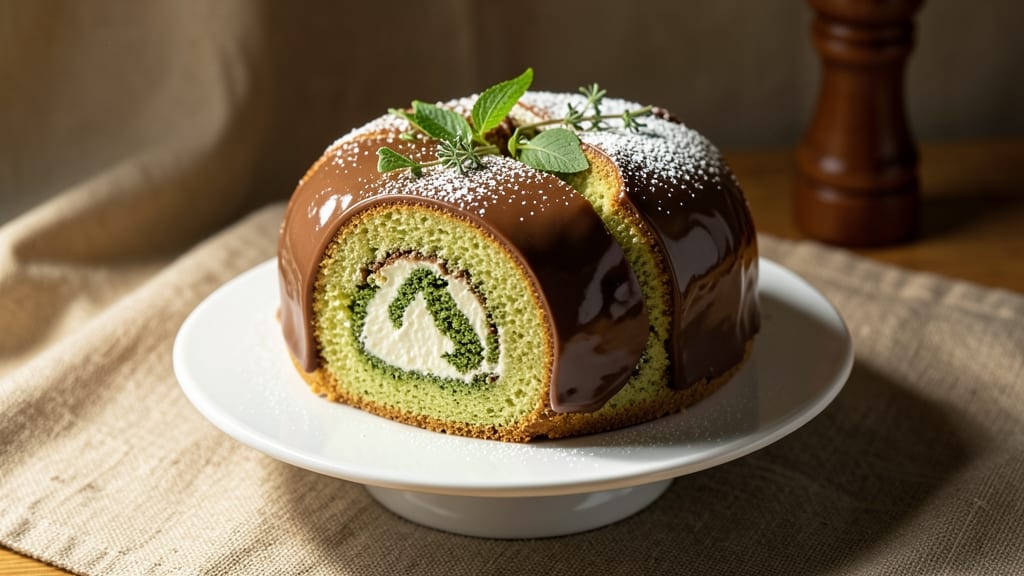
This Asian Swiss roll cake transforms simple ingredients into a showstopping dessert with layers of delicate matcha sponge and tropical mango filling. ✨ The secret to a perfect roll lies in precise baking and rolling techniques, ensuring a smooth, elegant finish every time.
This recipe balances traditional Swiss roll methods with vibrant Asian flavors for a dessert that feels both familiar and exciting.
What sets this recipe apart is the silky mango custard filling, which adds a tropical twist to the classic matcha sponge. The cake bakes up light and tender, with just enough structure to hold its shape when rolled.
Proper cooling and slicing techniques are key to maintaining that restaurant-quality presentation you crave.
By the time you're done, you'll have a beautifully rolled cake with layers of earthy matcha and sweet mango custard, dusted with powdered sugar for that final touch of elegance.
The contrast of flavors and textures makes this dessert perfect for special occasions or when you want to impress guests without spending hours in the kitchen.
Whether you're making it for a celebration or simply treating yourself, this recipe delivers professional results with simple steps. Let's get started on creating your perfect Asian Swiss roll cake.
Ingredients for asian swiss roll cake
Elegant layers of matcha and mango—just 14 ingredients for a showstopping cake!
| Ingredient | Amount | Notes |
|---|---|---|
| All-Purpose Flour 🌾 | 3 cups | Sifted for light texture |
| Granulated Sugar 🍚 | 1 ½ cups | Superfine preferred for smoothness |
| Matcha Powder 🍵 | 2 tbsp | Ceremonial grade for best flavor |
| Unsalted Butter 🧈 | 1 cup | Room temperature, full-fat |
| Large Eggs 🥚 | 4 whole | Room temperature for even baking |
| Vanilla Extract 🌿 | 1 tbsp | Pure extract, not imitation |
| Baking Powder 🧂 | 1 ½ tsp | Freshly opened for lift |
| Salt 🧂 | ½ tsp | Fine sea salt preferred |
| Mango Pulp 🥭 | 1 ½ cups | Fresh or high-quality canned |
| Heavy Cream 🥛 | 1 cup | Cold for stable custard |
| Powdered Sugar 🍚 | 1 ½ cups | For filling and dusting |
| Cornstarch 🌾 | 2 tbsp | For silky custard texture |
| Lemon Juice 🍋 | 1 tbsp | Freshly squeezed for brightness |
| Rice Paper 📄 | 1 sheet | For rolling and dusting |
The matcha powder is non-negotiable here—ceremonial grade from Matcha Kari or Ippodo delivers that vibrant, earthy flavor without bitterness. If you can't find it, culinary-grade matcha works but tastes slightly bitter. The mango pulp? Fresh is ideal, but Dole brand canned mango saves time and keeps for months. For the butter, Land O'Lakes unsalted melts beautifully, but any full-fat brand works. The rice paper is your secret weapon for rolling—it prevents sticking and adds that professional touch. Grab a pack from the Asian market if you can't find it in regular stores.
No matcha? Green tea powder at double the amount gets you close, but the flavor won't be as refined. Short on mango? Peach or apricot puree adds a different tropical vibe. The custard filling can be made a day ahead—just reheat gently before assembling. For the cake batter, whip the butter and sugar until light and fluffy (about 3-5 minutes with a stand mixer). This step is worth the extra time—it makes all the difference in texture. If you're short on time, microwave the butter 40 seconds to soften it before mixing.
Store the cake in an airtight container between layers of parchment paper for up to 3 days at room temperature. For longer storage, freeze the assembled cake (unrolled) for up to 2 months—thaw overnight before rolling again. The custard filling keeps for 5 days in the fridge, so make it fresh if you're serving immediately. Dusting the final cake with powdered sugar? Use a fine-mesh sieve for that flawless, snowy finish—no clumps allowed!
Why You'll Love This Recipe
- No-Fuss Layers: I swear, rolling the dough takes less time than waiting for the oven to preheat. Just spread, bake, and—boom—you’ve got that signature swiss roll shape without the stress of perfecting a fussy technique.
- Matcha Magic: That first bite of earthy matcha cutting through the buttery sweetness? It’s like a caffeine boost for your taste buds, and honestly, it’s the kind of flavor that makes people ask, “What’s in this?”
- Party in a Roll: Between us, this cake is my go-to for birthdays, potlucks, or just because. Slice it into neat rectangles, and suddenly you’ve got a showstopper that looks fancy but took no time at all.
- Budget-Friendly Luxe: Flour, sugar, eggs—these are pantry staples that won’t break the bank. And the leftovers? They stay fresh for days, so you’re basically getting two desserts for the price of one. Win.
Step-by-step instructions for matcha-mango Swiss roll cake
Here's how to create layers of delicate matcha sponge and tropical mango filling that'll impress anyone.
👨🍳 Step 1: Prepare the Matcha Sponge Batter
Preheat your oven to 350°F and line a 10x15-inch jelly roll pan with parchment paper. Sift together the 3 cups all-purpose flour, 1.5 tsp baking powder, and 0.5 tsp salt in a large bowl. Set aside.
In a separate bowl, whisk together the 1.5 cups granulated sugar and 2 tbsp matcha powder until completely dissolved. Add the 1 cup room-temperature unsalted butter and beat on medium speed until light and fluffy—about 3-4 minutes. This step is crucial for a tender, airy texture.
Add the 4 whole large eggs, one at a time, beating well after each addition. Mix in the 1 tbsp vanilla extract and the dry ingredients in 3 additions, mixing just until combined. The batter should be smooth and slightly glossy. Pour into the prepared pan and spread evenly.
🔥 Step 2: Bake the Sponge to Perfect Doneness
Bake for 12-14 minutes until the edges are light golden and a toothpick inserted in the center comes out clean. Here's the thing—overbaking makes the sponge dry and crumbly, so watch carefully. The moment it springs back when gently pressed is your cue to remove it.
Immediately invert the pan onto a clean kitchen towel dusted with powdered sugar (this prevents sticking). Let it cool completely before rolling. I know it's tempting to peel it off early, but patience here ensures clean layers later.
🍳 Step 3: Make the Mango Custard Filling
In a saucepan, combine the 1.5 cups mango pulp, 1 cup heavy cream, 1.5 cups powdered sugar, 2 tbsp cornstarch, and 1 tbsp lemon juice. Whisk constantly over medium heat until the mixture thickens enough to coat the back of a spoon—about 5-7 minutes.
Remove from heat and let it cool to room temperature. The custard should have a smooth, pudding-like consistency. If it thickens too much while cooling, whisk in 1-2 tablespoons water to reach a spreadable texture. Here's where the magic happens—this filling needs to be perfectly smooth for clean layers.
🥘 Step 4: Assemble the Swiss Roll
Once the sponge is completely cool, spread the mango custard evenly over the surface, leaving a ½-inch border uncovered. Roll up the cake tightly using the towel, starting from the long side. The towel helps prevent sticking and makes rolling easier.
Transfer to a cutting board and carefully remove the parchment and towel. Use the 1 sheet rice paper to dust the cake with powdered sugar while unrolling it slightly. This creates a beautiful, snowy finish that protects the filling. Roll it back up gently and slice into 8 pieces with a sharp knife.
⏰ Step 5: Chill and Serve
Refrigerate the rolled cake for at least 2 hours before slicing. This chilling time allows the custard to set properly and makes clean cuts possible. When ready to serve, carefully slice through the rice paper and into the cake for perfect portions.
Each slice should reveal layers of vibrant green matcha sponge and creamy mango custard. Serve at room temperature for the best texture contrast—cool custard against the slightly warm sponge. Store leftovers in the fridge for up to 3 days, separated by parchment paper to prevent sticking.
Pro Tips For Making Asian Swiss Roll Cake
- Chill the Dough Properly: Wrap the rolled sponge tightly in plastic wrap and refrigerate for at least 2 hours—no, 30 minutes won’t cut it. I learned this the hard way when my first roll cracked like a dried riverbed because the butter was still too soft. Cold dough = clean cuts and a stable roll.
- Sift Matcha Like Snow: Sift that matcha powder twice through a fine-mesh sieve before mixing it into the batter—clumps make for uneven color and texture. I used to just eyeball it, but now I swear by this step for that professional-looking, velvety green finish.
- Don’t Overbake the Sponge: Pull the cake out of the oven when the edges are just set and the center still jiggles slightly—it’ll firm up as it cools. Overbaking turns your delicate matcha sponge into a dry brick, and nobody wants that. A toothpick with a few crumbs? Perfect.
- Brush Butter Generously: Use room-temperature butter for the filling, and don’t skimp—about 2 tablespoons per layer. Cold butter spreads poorly, and skimping means a dry, crumbly roll. My grandmother’s trick: melt it slightly for easier spreading, but not so much it turns into soup.
Storing and reheating your asian swiss roll cake
Room-Temp Storage
Keep your assembled Swiss roll at room temperature for up to 3 days in an airtight container between layers of parchment paper. This prevents the delicate sponge from drying out while maintaining its moisture balance.
I always store mine on the countertop—just make sure it's not exposed to direct sunlight or heat sources, which can make the custard filling too warm. 🌟
Fridge Preservation
For longer storage, refrigerate the unrolled cake (after spreading custard) for up to 5 days. Wrap it tightly in plastic wrap and place it on a tray to catch any condensation. When ready to serve, roll it gently and slice as directed.
The cold temperature helps preserve the custard's texture, though you may want to bring it to room temperature for 30 minutes before serving for the best experience.
Freezing Tips
Freeze the unassembled cake (after baking but before adding filling) for up to 2 months for maximum freshness. Wrap it tightly in plastic wrap and aluminum foil to prevent freezer burn. When ready to use, thaw overnight in the fridge, then proceed with filling and rolling.
The custard should be made fresh after thawing for optimal texture—never freeze the assembled cake as it can become soggy. ❄️
Reheating Slices
If you've stored slices in the fridge, warm them gently in the microwave for 10-15 seconds (covered with a damp paper towel) to restore the sponge's softness. For a more even heat distribution, place slices on a baking sheet and warm in a 300°F oven for 5-7 minutes.
Never reheat the entire cake—it's best enjoyed at room temperature to preserve the contrast between the cool custard and warm sponge.
Reviving Dry Sponge
If your sponge feels dry after storage, brush the exposed areas with a simple syrup made from 2 tbsp water + 1 tbsp sugar (heated until dissolved). This quick fix adds moisture back to the sponge without altering the custard filling.
For extra richness, you can also drizzle a thin layer of heated mango puree over the top before serving—it's a secret trick I picked up from Japanese patisseries. 💫
Nutrition facts
Frequently asked questions
Can I substitute matcha powder with another green tea?
Yes, but expect a less refined flavor. Use 2 tbsp culinary-grade green tea powder (like Jasmine or Sencha) instead of matcha, but add 1 extra tbsp sugar to balance the bitterness. Matcha's vibrant color and umami depth are unique—this substitution works in a pinch but won't match the authentic taste.
How do I fix a cracked or uneven roll?
If your roll cracks during assembly, gently press the broken edges together with a light layer of leftover custard as "glue." For uneven rolls, chill the cake longer (3-4 hours) before slicing—this helps the custard firm up and makes cutting cleaner. Use a serrated knife and dip it in hot water between slices for perfectly clean cuts.
What's the best way to make this cake gluten-free?
Replace the all-purpose flour with a 1:1 gluten-free baking flour (like Bob's Red Mill or King Arthur). Add ½ tsp xanthan gum to improve elasticity, and reduce the sugar to 1.25 cups to prevent dryness. The custard filling remains the same—just ensure your mango pulp and cornstarch are certified gluten-free. The texture will be slightly denser but still delicious!
Can I make this cake without an oven?
Unfortunately, no—the delicate matcha sponge requires baking for proper texture. However, you can make the custard filling in a double boiler on the stovetop if you don't have an oven. For the sponge, try a portable electric oven or borrow a neighbor's—this cake isn't designed for no-bake methods. The baking step is non-negotiable for that light, airy result!
What other fillings pair well with matcha?
Beyond mango, try red bean paste (classic in Asian desserts), black sesame custard, or even lychee jam for a floral twist. For a lighter option, whipped cream with edible flowers adds elegance. The key is balancing the earthy matcha with sweet, fruity, or nutty flavors—avoid overly heavy fillings like chocolate that can overwhelm the sponge.