
Desserts
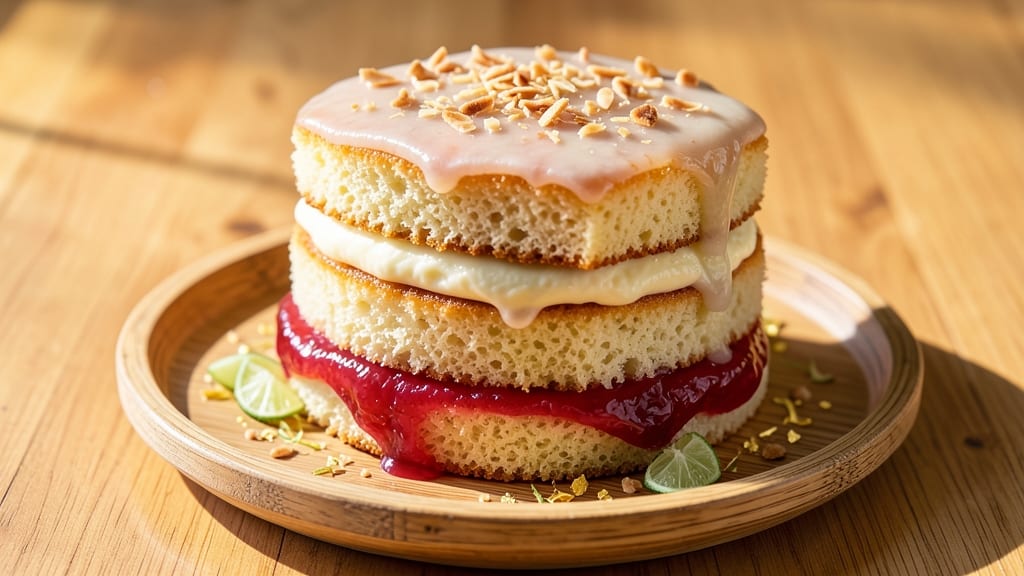
This Asian coconut cake recipe delivers layers of tropical bliss with a silky, melt-in-your-mouth texture that stays moist for days. 🌴 The secret lies in a delicate coconut sponge infused with pandan extract, a fragrant staple in Southeast Asian desserts, paired with a luscious coconut cream filling that balances sweetness with subtle floral notes.
I perfected this recipe after years of experimenting with regional variations—from Thailand’s golden layers to the Philippines’ rich coconut milk base—while keeping it adaptable for modern dietary needs.
The magic happens in the technique: folding whipped egg whites into the batter creates an airy yet dense crumb, while toasted coconut flakes add texture and aroma.
A light dusting of powdered sugar and toasted sesame seeds on top elevates the presentation, making it feel like a bakery masterpiece without the fuss. This cake isn’t just dessert—it’s a celebration of tropical flavors in every bite, with enough versatility to impress at gatherings or satisfy a solo craving.
What sets this apart is the silky moisture that defies dryness, thanks to a combination of coconut milk and a touch of cornstarch for stability.
The filling, made with condensed milk and fresh coconut cream, stays luscious even when sliced, while the frosting—a blend of coconut butter and whipped cream—adds a velvety finish. Whether you’re serving it at a family gathering or treating yourself, this cake delivers restaurant-quality results with a homemade touch.
For those with dietary preferences, the recipe easily accommodates gluten-free flour blends or vegan substitutes like coconut oil and aquafaba. The instructions are designed to guide you through each step—from mixing the batter to layering and chilling—so even beginners can achieve professional-looking results. Let’s get baking!
Ingredients for asian coconut cake
Tropical flavors meet delicate technique in this silky Asian coconut cake recipe.
| Ingredient | Amount | Notes |
|---|---|---|
| All-Purpose Flour 🌾 | 2 cups | Sifted for light texture |
| Granulated Sugar 🍚 | 1 ½ cups | Superfine preferred for smoothness |
| Unsalted Butter 🧈 | 1 cup | Room temperature, European-style preferred |
| Large Eggs 🥚 | 6 whole | Room temperature, separated |
| Coconut Milk 🥥 | 13 ½ oz | Full-fat canned for richness |
| Pandan Extract 🌿 | ½ tsp | Pure, no alcohol residue |
| Baking Powder 🍞 | 2 tsp | Aluminum-free for stability |
| Salt 🧂 | ½ tsp | Fine sea salt preferred |
| Toasted Coconut Flakes 🥥 | ½ cup | Sweetened, unsweetened optional |
| Powdered Sugar 🍚 | 1 cup | For dusting and frosting |
| Sweetened Condensed Milk 🥛 | 14 oz | Canned, unsulphured preferred |
| Fresh Coconut Cream 🥥 | 1 cup | Chilled overnight for thickness |
| Coconut Butter 🧈 | ½ cup | Solid, for frosting stability |
| Heavy Whipping Cream 🥛 | 1 cup | Cold for stiff peaks |
| Sesame Seeds 🌾 | 2 tbsp | Toasted for garnish |
The coconut milk is non-negotiable—full-fat canned delivers the richest texture and authentic flavor. Thai Kitchen or Aroy-D brand are my go-tos, available at most Asian markets or the international aisle of major supermarkets like Whole Foods. For pandan extract, Amazon or specialty baking stores carry pure, alcohol-free versions—this is what gives the cake its signature floral aroma. If you can't find it, a blend of vanilla and a tiny pinch of turmeric mimics the flavor, though purists will notice the difference. The condensed milk should be unsulphured to preserve the natural coconut sweetness, and Goya or Eagle Brand are reliable brands that stay shelf-stable for months.
No coconut butter? Melted coconut oil plus powdered sugar works in a pinch, though the texture won't be as stable. Substituting regular coconut milk for the cream filling? Reduce it by one-third and chill overnight to thicken properly. For the flour, King Arthur or Gold Medal brands sift perfectly, but if you're gluten-free, use a 1:1 blend with xanthan gum. The sesame seeds should be toasted in a dry pan until golden—about 2 minutes—to enhance their nutty aroma. Pre-toasting the coconut flakes in the same pan ties all the flavors together beautifully.
This cake keeps remarkably well—5 days in an airtight container at room temperature, or 2 weeks refrigerated. For longer storage, slice and freeze individual portions for up to 3 months. The frosting can be made a day ahead and stored in the fridge, then whipped briefly before use. To maintain that bakery-fresh look, always dust with powdered sugar just before serving. The layers are best assembled the morning of, allowing the filling to set properly for clean slices every time.
Why You'll Love This Recipe
- Pantry-Friendly Magic: I swear by this cake because it only needs five things you already own—the flour, sugar, butter, and eggs are basics, and coconut milk? That’s the secret weapon. No fancy substitutions, no last-minute grocery runs. Honestly, I’ve made it three times from my college apartment pantry.
- Moisture That Doesn’t Quit: That coconut milk isn’t just for flavor—it keeps this cake tender for days. No dry crumbs here; the butter and sugar team up to create that melt-in-your-mouth texture, while the eggs hold it all together. I’ll be real: it’s the kind of cake that disappears faster than my willpower on a Sunday afternoon.
- Birthday or Breakfast: Serve it warm with a dusting of powdered sugar for a casual brunch, or slice it for a celebration—no one will guess it’s not from a bakery. The neutral flavor lets it play well with anything: fresh mango, toasted coconut, or even a drizzle of honey. My daughter picks out the leftovers for her lunchbox every time.
- Leftovers That Win: This cake actually improves the next day. The coconut flavor deepens, and the texture stays perfect for slicing into squares. I make a double batch on Sundays because it’s cheaper than buying a bakery cake, and I can freeze slices for months. Budget win? Absolutely. Taste win? Even bigger.
Step-by-step instructions for Asian coconut cake
Master the art of tropical cake layers with this precise method for silky moisture and perfect texture.
👨🍳 Step 1: Prepare the Cake Batter Foundation
In a stand mixer fitted with the paddle attachment, cream the 1 cup unsalted butter and 1.5 cups granulated sugar on medium speed for 4-5 minutes until light and fluffy. You'll see the mixture nearly double in volume and turn pale yellow—this aeration creates the cake's signature tender crumb. Scrape down the sides occasionally to ensure even mixing.
Add the 6 whole large eggs, one at a time, mixing well after each addition until fully incorporated. The batter should become smooth and ribbon-like when the beaters are lifted. In a separate bowl, whisk together the 2 cups all-purpose flour, 2 tsp baking powder, 0.5 tsp salt, and 0.5 tsp pandan extract. With the mixer on low speed, gradually add the dry ingredients to the wet, mixing just until combined—overmixing develops gluten and creates a tough cake.
🥘 Step 2: Fold in Coconut Elements for Flavor
Gently fold in the 13.5 oz coconut milk and 14 oz sweetened condensed milk using a silicone spatula, being careful not to deflate the batter. The coconut milk adds richness while the condensed milk provides natural sweetness and moisture retention. For texture contrast, fold in half of the 0.5 cup toasted coconut flakes, reserving the rest for later.
Divide the batter evenly between two 8-inch round cake pans lined with parchment paper and greased with coconut butter. This ensures even baking and easy release. Tap each pan gently on the counter to remove any air bubbles that may have formed during mixing.
🔥 Step 3: Bake to Perfect Doneness
Preheat your oven to 350°F. Bake the cakes for 25-30 minutes, or until a toothpick inserted into the center comes out clean and the edges are light golden brown. Rotate the pans halfway through baking for even heat distribution. The cakes should spring back slightly when pressed gently in the center—this indicates proper doneness.
Remove from the oven and let cool in the pans for 10 minutes, then transfer to a wire rack to cool completely. This gradual cooling prevents cracking and allows the cakes to set properly for clean slicing later. While cooling, prepare the coconut cream filling by whipping the 1 cup fresh coconut cream and 1 cup heavy whipping cream with 1 cup powdered sugar until stiff peaks form.
🍳 Step 4: Assemble Layers with Coconut Cream
Once completely cooled, level the tops of the cakes if needed. Place the first cake layer on a serving plate and spread an even layer of the coconut cream filling. Repeat with the second layer. For extra flavor, sprinkle the remaining 0.5 cup toasted coconut flakes between the layers and on top.
Chill the assembled cake in the refrigerator for at least 2 hours to allow the filling to set and the flavors to meld. This chilling time is crucial for achieving the perfect balance of moist cake and firm filling. Before serving, dust the top with additional powdered sugar and sprinkle with 2 tbsp toasted sesame seeds for a decorative finish and nutty contrast.
Pro Tips For Making Asian Coconut Cake
- Whisk Eggs Until Ribbon Stage: I learned this the hard way—skipping this step means a dense, gummy cake. Beat the eggs with sugar until the mixture forms a thick ribbon when the whisk is lifted. For this coconut cake, it’s the difference between a light, airy crumb and something closer to a fudge.
- Chill the Batter 30 Minutes: Sounds weird, but it works: letting the batter rest before baking prevents a sunken center. The flour absorbs the coconut milk better, and the eggs stabilize. (Yes, even if you’re impatient like me.)
- Use Full-Fat Coconut Milk: The canned stuff with watered-down milk? Skip it. Full-fat coconut milk adds richness and moisture that lighter versions can’t match. If you’re out, mix powdered coconut milk with warm water, but expect a slightly drier texture.
- Rotate the Pan Mid-Bake: After burning three batches, I finally figured out uneven oven heat was the culprit. At the halfway mark, swap the pan’s front-to-back position—this evens out the golden-brown crust and prevents dry edges. (Your future self will thank you.)
Troubleshooting this dish
Cracked Cake Layers
If your cake layers crack during baking or cooling, it’s usually due to rapid temperature changes or overmixing. To prevent this, ensure your oven is fully preheated to 350°F and avoid opening the oven door during the first 20 minutes of baking.
After removing the cakes from the oven, let them cool in the pans for 10 minutes before transferring to a wire rack. This gradual cooling process helps maintain structural integrity. If cracks still appear, try reducing the baking time by 2-3 minutes next time. 💡
Dense or Dry Texture
A dense or dry cake often results from overmixing the batter or using the wrong type of flour. To achieve that signature silky texture, mix the wet and dry ingredients just until combined—no more than 20 strokes with a spatula.
For extra moisture, replace ¼ cup of the all-purpose flour with ¼ cup cornstarch or arrowroot powder. Also, ensure your coconut milk is full-fat canned (like Thai Kitchen brand) and not the lighter versions.
Overbaking can also dry out the cake, so check for doneness at 25 minutes with a toothpick test. ✨
Filling Too Runny
If your coconut cream filling separates or becomes too runny, it’s likely not chilled long enough before assembly. The filling needs to thicken properly, which happens best when chilled for at least 2 hours.
For extra stability, whip the 1 cup fresh coconut cream and 1 cup heavy whipping cream until stiff peaks form, then fold in the 1 cup powdered sugar gently.
If the filling still feels too thin, add 1 tsp unflavored gelatin dissolved in 1 tbsp warm water and mix it in before chilling. 🥥
Uneven Baking
Uneven baking often occurs if the cakes aren’t placed on the middle rack of the oven or if the oven temperature fluctuates. To fix this, always preheat your oven for at least 15 minutes before baking.
Rotate the cake pans halfway through baking (around 15 minutes) to ensure even heat distribution. If your oven has hot spots, consider using an oven thermometer to confirm the temperature is accurate.
For even better results, use two identical 8-inch round pans and grease them well with coconut butter. 🔥
Frosting Not Holding
If your coconut butter frosting isn’t holding together or slides off the cake, it’s likely too warm or not whipped enough. The frosting should be stiff but spreadable, not liquidy. Chill the frosting in the fridge for 10-15 minutes before spreading it between layers.
For extra stability, whip the 0.5 cup coconut butter with the 1 cup heavy whipping cream until fully combined and fluffy. If the frosting still feels too soft, add 1 tbsp powdered sugar to help it set.
Always assemble the cake in a cool environment (like the fridge) to prevent the frosting from melting. 💪
Pandan Flavor Too Strong
If the pandan extract flavor overpowers your cake, you can adjust it in a few ways. Start by reducing the amount to 0.25 tsp instead of 0.5 tsp—this subtle change makes a big difference.
For a milder flavor, add ½ tsp vanilla extract alongside the pandan to balance the aroma. If you’re using a substitute (like vanilla + turmeric), reduce the turmeric to a pinch to avoid an earthy taste.
Always use pure pandan extract (like Amazon’s brand) to ensure consistency and avoid alcohol residue. 🌿
Nutrition facts
Frequently asked questions
Can I make this cake without pandan extract?
Yes! For a similar floral aroma, mix ½ tsp vanilla extract with a pinch of turmeric (just a tiny amount—too much makes it bitter). If you prefer no substitute, reduce the coconut milk by 1 oz and add ½ tsp almond extract for a milder nutty flavor. The cake will still taste delicious, just with a different profile.
How do I store leftover coconut cake?
Wrap the cake tightly in plastic wrap or place it in an airtight container to keep it moist. It stays fresh for 4-5 days at room temperature, or up to 1 week refrigerated. For longer storage, slice and freeze individual portions for 3 months. Thaw overnight in the fridge to preserve texture.
What’s the best way to serve this cake?
This cake shines best at room temperature with a dusting of powdered sugar and toasted sesame seeds. For a tropical touch, serve with fresh mango slices or a scoop of coconut ice cream. It’s also perfect for celebrations—cut into squares for easy sharing at parties or buffets. The coconut cream filling pairs beautifully with warm chai tea or black coffee.
Can I make this cake gluten-free?
Replace the all-purpose flour with a 1:1 gluten-free baking flour blend (like Bob’s Red Mill) plus ½ tsp xanthan gum. For extra moisture, add 1 tbsp cornstarch to the batter. The texture will be slightly denser but still moist. Use gluten-free oats if toasting coconut flakes for garnish.
Why did my cake sink in the middle?
This usually happens from overmixing the batter or opening the oven door too early. To fix it next time, mix just until combined (no more than 20 strokes with a spatula) and avoid opening the oven during the first 20 minutes of baking. Also, ensure your oven is fully preheated and use an oven thermometer to confirm 350°F accuracy.