Desserts
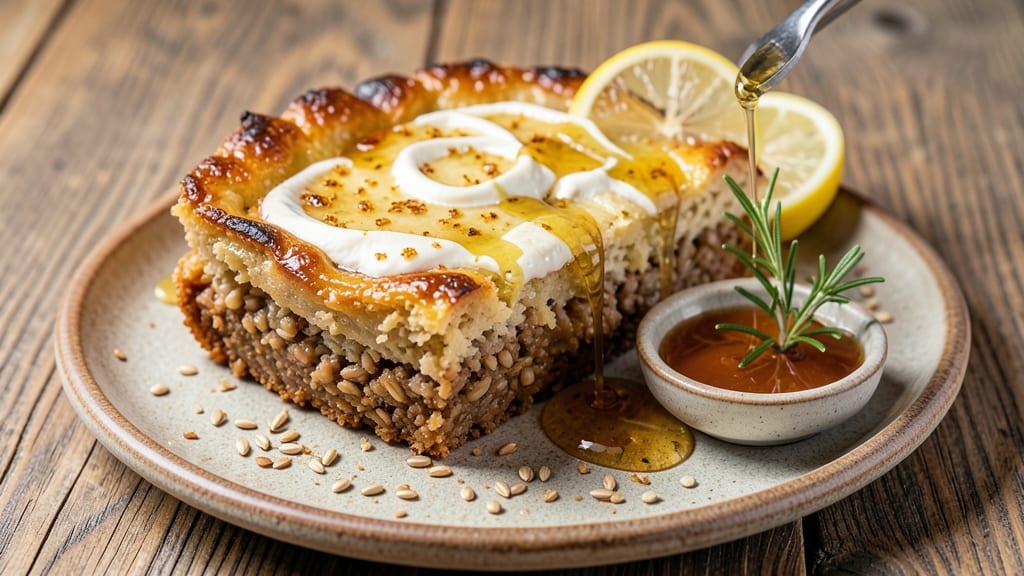
This ancient barley cake recipe transports you to medieval kitchens with its nutty crunch and honeyed depth—perfect for history lovers and dessert enthusiasts alike. 🌟 Barley flour, a staple in early European baking, creates a dense yet satisfying texture, while honey and warm spices like cinnamon and nutmeg evoke the flavors of ancient feasts.
The recipe blends tradition with modern techniques, using simple ingredients like honey, eggs, and a touch of olive oil to bind the moist crumb. Unlike modern cakes, this version relies on the earthy sweetness of barley and the caramel notes of honey, creating a dessert that’s both rustic and refined.
What you’ll achieve is a cake with a golden crust, a tender crumb studded with toasted barley bits, and a subtle spice aroma that lingers long after each bite. Serve it warm with a drizzle of extra honey or a dusting of powdered sugar for a touch of elegance.
Whether you’re recreating a historical treat or simply craving a unique dessert, this barley cake delivers depth and texture that set it apart from conventional sweets. Let’s bring this ancient recipe to life in your kitchen.
Ingredients for ancient barley cake
Barley flour, honey, and warm spices create this ancient cake's signature texture and depth.
| Ingredient | Amount | Notes |
|---|---|---|
| Barley Flour 🌾 | 2 ½ cups | Medium or pearled barley flour preferred |
| All-Purpose Flour 🌾 | 1 cup | For structural balance |
| Large Eggs 🥚 | 4 whole | Room temperature for even baking |
| Honey 🍯 | 1 cup | Raw, unprocessed preferred |
| Extra-Virgin Olive Oil 🫒 | ½ cup | Light fruity variety |
| Plain Whole Milk 🥛 | 1 cup | Full-fat for richness |
| Pure Vanilla Extract 🌿 | 1 tbsp | High-quality preferred |
| Ground Cinnamon 🌶️ | 1 ½ tsp | Freshly ground for warmth |
| Ground Nutmeg 🌶️ | ½ tsp | Freshly grated preferred |
| Salt 🧂 | ½ tsp | Fine sea salt preferred |
| Baking Soda 🧪 | 1 tsp | Freshly opened |
| Toasted Barley Bits 🌾 | ½ cup | For texture and flavor |
| Powdered Sugar 🍬 | ¼ cup | For dusting and garnish |
Barley flour is the heart of this recipe—look for medium or pearled barley flour at specialty stores or online, as it's different from regular whole wheat flour. Bob's Red Mill or King Arthur carry excellent options. If you can't find barley flour, a mix of whole wheat and all-purpose (1:1 ratio) works in a pinch, though texture will differ slightly. Toast your own barley bits by lightly browning them in a dry pan for about 5 minutes—they add a nutty crunch that store-bought versions can't match. For honey, raw, unprocessed varieties like manuka or clover offer the deepest flavor, but any liquid honey will work. The milk should be full-fat to complement the cake's richness.
No barley flour? Substitute with a mix of whole wheat and all-purpose flour, though texture will be slightly lighter. Running short on honey? Maple syrup works well at a 1:1 ratio, though it adds a distinct earthiness. The olive oil can be swapped for melted coconut oil if preferred—just ensure it's fully cooled before mixing. For the spices, pre-ground cinnamon and nutmeg lose potency quickly, so invest in a small grater for nutmeg or buy whole spices to grind fresh. The baking soda must be fresh—if your container is older than 6 months, replace it for proper rise. Toasted barley bits can be omitted if unavailable, but the cake will lack that signature crunch.
Store the cake in an airtight container at room temperature for up to 5 days, though it's best enjoyed within 2 days for optimal texture. For longer storage, wrap tightly and freeze for up to 3 months. To serve, dust with powdered sugar and drizzle with extra honey for that medieval touch. The cake reheats beautifully—wrap a slice in foil and warm in a 300°F oven for 5 minutes to restore its moist crumb. Leftovers keep well in the fridge for 4-5 days, though I find it's best enjoyed fresh from the oven.
Why You'll Love This Recipe
- No-Fuss Mixing: I swear by this recipe—just fold the wet ingredients into the dry ones, no fancy creaming or sifting. The barley flour gives it a rustic texture without requiring a food processor, and the honey blends in like butter.
- Honey-Olive Oil Magic: That combo of raw honey and extra-virgin olive oil? It’s the secret weapon. The cake stays moist for days, with a subtle caramel depth that’s neither sweet nor savory—just right. (Yes, even on a Tuesday night.)
- Breakfast or Snack Star: Slice it thick for a hearty breakfast with yogurt or serve it warm with jam for an after-school treat. It’s the same batter, just different vibes—no need to bake two separate things.
- Budget Baking Win: Barley flour’s cheap, eggs are versatile, and honey lasts forever. I’ve made this for potlucks, lunchboxes, and midnight cravings—always with leftovers that disappear faster than I can reheat them.
Step-by-step instructions for ancient barley cake
Here's the method to create a cake with ancient grains and honeyed richness.
👨🍳 Step 1: Mix Dry Ingredients for Perfect Texture
In a large mixing bowl, whisk together the 2.5 cups barley flour and 1 cup all-purpose flour until evenly combined. This blend creates the ideal balance of nuttiness and structure. Sift in the 1.5 teaspoons ground cinnamon, 0.5 teaspoon ground nutmeg, 0.5 teaspoon salt, and 1 teaspoon baking soda, then whisk again until no lumps remain.
I like to use a fine-mesh sieve for this step—it ensures even distribution of the spices and baking soda throughout the dry ingredients. The nutmeg and cinnamon will infuse warmth while the baking soda helps create that tender crumb. Set this mixture aside for now; we'll combine it with wet ingredients next.
🍳 Step 2: Combine Wet Ingredients for Smooth Batter
In a separate bowl, whisk together the 4 whole large eggs (room temperature), 1 cup honey, 0.5 cup extra-virgin olive oil, 1 cup plain whole milk, and 1 tablespoon pure vanilla extract. The mixture should be smooth and slightly thick, with the honey giving it a golden hue. I use a hand mixer for this step—it incorporates air more efficiently than whisking by hand.
Here's the thing—room temperature eggs blend more smoothly and create a lighter batter. If your eggs are straight from the fridge, let them sit at room temperature for 15-20 minutes before mixing. The olive oil adds richness while keeping the cake moist, and the honey contributes that signature depth of flavor we're after.
🥘 Step 3: Fold Wet and Dry Ingredients Gently
With the mixer on low speed, gradually add the dry ingredient mixture to the wet ingredients, mixing just until combined. Be careful not to overmix—you're looking for a smooth batter with no visible flour streaks. Once incorporated, fold in the 0.5 cup toasted barley bits by hand using a silicone spatula. These bits will add wonderful texture and nutty flavor throughout each slice.
Don't worry if the batter looks slightly thick—it's normal with barley flour. The cake will still rise properly. At this stage, the batter should have a thick but pourable consistency, similar to pancake batter. If it's too thick, you can add 1-2 tablespoons of milk to loosen it slightly.
🔥 Step 4: Bake Until Golden and Springy
Preheat your oven to 350°F and grease a 9-inch round cake pan or line it with parchment paper. Pour the batter into the prepared pan and smooth the top with a spatula. Bake for 40-45 minutes or until a toothpick inserted in the center comes out clean and the top is golden brown. The cake should spring back slightly when pressed gently in the center.
I always check for doneness at the 35-minute mark—your oven might run hot, so start checking early. The barley flour can make cakes dry out faster, so we want to catch it at the perfect moment. The edges should pull away slightly from the pan, and the top should have a beautiful golden hue with a few cracks forming.
⏰ Step 5: Cool and Dust with Powdered Sugar
Allow the cake to cool in the pan for 10 minutes, then transfer it to a wire rack to cool completely. While it cools, dust the top generously with the 0.25 cup powdered sugar using a fine-mesh sieve. This step adds that final touch of sweetness and creates an elegant presentation. The cake will firm up as it cools, developing that perfect crumb texture we're after.
For best results, let the cake cool completely before slicing. The barley flour can make the cake slightly denser when warm, but it becomes perfectly moist and tender as it cools. Each slice should reveal a beautiful mix of golden crumb with those toasted barley bits scattered throughout, offering both texture and flavor in every bite.
Pro Tips For Making Ancient Barley Cake
- SIFT THE BARLEY FLOUR: Ancient barley flour is dense—don’t just dump it in. Sifting it with the all-purpose flour breaks up clumps and lightens the batter, so your cake rises instead of sinking like a brick. (Yes, even if you’re tempted to skip it.)
- WHISK EGGS ROOM TEMP: Cold eggs from the fridge mix unevenly and can leave pockets of dryness in your cake. Let them sit out for 30 minutes before whisking—your batter will blend smoother, and the texture will be consistently tender.
- HONEY SHOULD DRIZZLE: Pouring honey straight into the dry ingredients creates lumps that never dissolve. Warm it slightly (just enough to loosen) and drizzle it into the wet ingredients while whisking—this ensures it integrates fully, not just sits in clumps.
- BAKE UNTIL GOLDEN, NOT DONE: Barley cakes often look underbaked when the center hits 190°F (88°C). Pull it out when the edges are deep golden and the top springs back slowly—overbaking turns it dry, and underbaking leaves it gummy. (Trust the crust, not the thermometer.)
Best sauces and condiments for these flavors
Honeyed Drizzle
Elevate your ancient barley cake with a simple yet luxurious drizzle of warm honey—just heat ¼ cup raw honey in a small saucepan until it reaches 160°F, then strain to remove any impurities.
Drizzle over slices before serving for a glossy, fragrant finish that enhances the cake's natural sweetness. For extra flair, add a pinch of ground cardamom to the warm honey for a Middle Eastern-inspired twist. 🍯
Spiced Whipped Cream
Whip 1 cup heavy cream with 2 tablespoons powdered sugar and ½ teaspoon cinnamon until soft peaks form. This lighter, airier contrast balances the cake's dense texture while complementing its warm spices.
Garnish with a sprinkle of toasted barley bits for a rustic touch. I like to serve this alongside the cake for a dessert that feels both indulgent and balanced. ✨
Citrus Glaze
Brighten the cake's richness with a zesty glaze made from ½ cup powdered sugar, 2 tablespoons fresh lemon juice, and 1 tablespoon orange zest. Whisk until smooth and drizzle over cooled slices.
The acidity cuts through the honey's sweetness, creating a refreshing contrast. For a deeper flavor, simmer the lemon juice with 1 teaspoon honey for 2 minutes before mixing. 🍋
Nut Butter Swirl
Add a modern twist by swirling ¼ cup almond or hazelnut butter into the batter before baking. The nutty depth pairs beautifully with the barley's earthiness. For presentation, top each slice with a dollop of whipped nut butter mixed with a touch of honey.
This variation works especially well if you're serving the cake at a brunch or afternoon tea gathering. 🌰
Caramelized Onion Jam
For a savory-sweet contrast, prepare a quick onion jam by cooking 1 cup thinly sliced onions in 2 tablespoons olive oil until caramelized, then mixing with 2 tablespoons honey and a pinch of salt.
Spread a thin layer on cake slices before serving. This unexpected pairing adds depth and complexity, making the cake feel even more sophisticated. 🧅
Herbal Tea Pairing
Serve the barley cake with a cup of chamomile or spiced chai tea to complement its warm, earthy flavors. The tea's natural sweetness and floral notes enhance the cake's honeyed richness without overpowering it.
For a festive touch, garnish the tea with a cinnamon stick or a slice of orange. This pairing feels authentically medieval while being utterly modern. 🍵
Nutrition facts
Frequently asked questions
Why does this barley cake need both barley and all-purpose flour?
Barley flour provides the signature nutty, earthy flavor and dense texture that makes this cake historically authentic. The all-purpose flour acts as a structural support—barley flour alone can make the cake too heavy. This blend creates the perfect balance of moisture, crumb, and flavor that ancient recipes relied on.
Can I make this cake without honey? What's the best substitute?
Yes! If you need a substitute, use maple syrup at a 1:1 ratio for a similar sweetness level, though it adds a distinct earthy note. For a neutral sweetener, agave nectar works well, but the cake will lose some of its traditional depth. Brown sugar (dissolved in warm milk) can also work in a pinch—just reduce other liquids by 2 tablespoons to maintain moisture.
How do I know when the cake is fully cooked?
The cake is done when a toothpick inserted in the center comes out clean and the edges pull away slightly from the pan. Barley cakes can dry out faster than wheat-based cakes, so check for doneness at 35 minutes—your oven might run hot. The top should be golden brown with a few cracks forming.
What's the best way to store leftovers?
Store the cake in an airtight container at room temperature for up to 5 days—it keeps best when protected from air. For longer storage, wrap tightly in plastic and freeze for up to 3 months. To reheat, warm slices in a 300°F oven for 5 minutes to restore moisture, or enjoy at room temperature for that rustic texture.
Can I make this cake gluten-free?
Yes, but with adjustments! Replace the barley flour with a 1:1 gluten-free flour blend (like Bob's Red Mill) and add ½ teaspoon xanthan gum to improve texture. Use 1 extra tablespoon of liquid (milk or water) per cup of gluten-free flour to compensate for dryness. The cake will be slightly denser but still delicious—just don't expect the same crumb as the original.