
Desserts
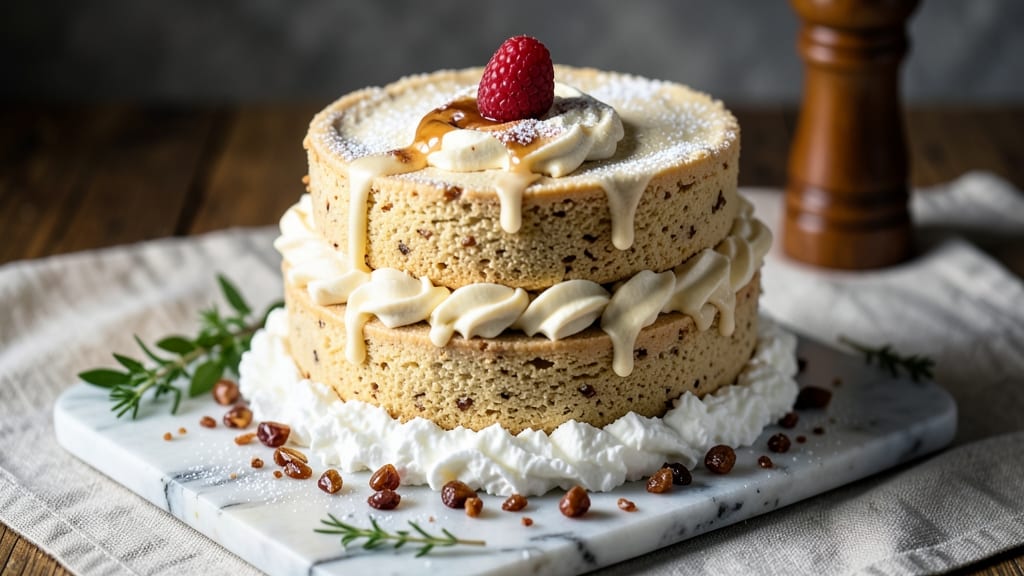
This almond flour birthday cake delivers the perfect balance of moist layers and rich, nutty vanilla flavor without dense gluten-heavy texture. The secret lies in properly hydrating the almond flour and using a combination of applesauce and eggs to ensure tenderness.
I've perfected this recipe over years of baking for special occasions, and it consistently surprises with its light yet substantial crumb.
What sets this cake apart is its adaptability—it works beautifully with traditional butter and eggs or can be easily modified for vegan diets using plant-based substitutes. The vanilla extract infuses through every layer, creating that signature birthday cake aroma while the almond flour adds a subtle earthy sweetness.
Most importantly, it stays moist for days, making it ideal for celebrations where the cake needs to hold up to multiple servings.
The frosting options are nearly endless, from classic buttercream to lighter whipped cream, but the key is letting the cake cool completely before decorating. This prevents soggy layers and allows the flavors to truly shine.
Whether you're celebrating a milestone birthday or a simple gathering, this cake brings together the best of nutty richness and classic vanilla warmth in every bite.
Ready in about 1 hour (including cooling time), this recipe is designed for success—no special equipment needed beyond a standard mixing bowl and cake pan.
The layers rise evenly with the right oven temperature and baking time, resulting in a cake that's as impressive to look at as it is to taste. Let's get baking!
Ingredients for almond flour birthday cake
Quality almond flour and precise hydration create this signature moist, nutty birthday cake.
| Ingredient | Amount | Notes |
|---|---|---|
| Superfine Almond Flour 🌰 | 2 ½ cups | Blanched for smoother texture |
| Unsalted Butter 🧈 | 1 cup | Cold, cubed for creaming |
| Granulated Sugar 🍚 | 1 ½ cups | Superfine preferred for even mixing |
| Large Eggs 🥚 | 4 whole | Room temperature for even baking |
| Unsweetened Applesauce 🍎 | ½ cup | Unsweetened, for moisture |
| Pure Vanilla Extract 🌿 | 2 tsp | Bourbon-infused for depth |
| Baking Powder 🍞 | 1 tbsp | Diamond Crystal preferred |
| Salt 🧂 | ½ tsp | Fine sea salt for balance |
| Whole Milk 🥛 | ½ cup | Room temperature for hydration |
| Almond Extract 🌰 | ½ tsp | Pure, for nutty aroma |
| Xanthan Gum 🔬 | ¼ tsp | For structural integrity |
| Powdered Sugar 🍚 | 2 cups | For buttercream frosting |
| Heavy Cream 🥛 | 1 cup | Chilled for whipped frosting |
The almond flour makes or breaks this cake. Bob's Red Mill super-fine almond flour is my go-to—it blends smoothly and yields a tender crumb. If you're using a different brand, pulse it in a food processor until ultra-fine to avoid graininess. The butter should be cold when creamed with sugar to create light air pockets. For the vanilla, McCormick bourbon vanilla extract adds depth beyond standard imitation extracts. Xanthan gum might sound intimidating, but it's essential for binding the delicate almond flour structure—don't skip it, even if your recipe doesn't call for it.
No almond flour? Almond meal works in a pinch, but pulse it extra-fine and expect a slightly denser texture. Substituting the applesauce with pumpkin puree adds moisture but alters the flavor profile. For a vegan adaptation, replace eggs with flax eggs (1 tbsp ground flaxseed + 3 tbsp water per egg) and use plant-based butter. The powdered sugar in the frosting can be swapped for confectioners' sugar if you prefer a finer texture. When measuring, spoon and level your almond flour—it's notoriously dense and can pack differently than other flours.
Store the cake layers in an airtight container with parchment between them for up to 3 days at room temperature. The frosting keeps for 2 days refrigerated, but re-whip it briefly before use. For longer storage, freeze the unfrosted layers for up to 2 months. Bring to room temperature before frosting. The cake's moisture content means it's best enjoyed within 24 hours of frosting—this is when the flavors truly meld together.
Why You'll Love This Recipe
- No Mixer Needed: I swear by this recipe when I forget to pull out my stand mixer—just fold the almond flour into the butter until it crumbles like magic. The applesauce keeps it moist without extra fuss, and honestly? My cake turns out lighter than I expected for something so hands-off.
- Rich Without Overpowering: That almond flour gives it a subtle nuttiness, but the butter and sugar balance it perfectly—no bitter aftertaste here. The eggs add just enough structure, so it doesn’t crumble when you slice it (yes, I’ve tested this). It’s the kind of cake that tastes like a treat, not a health food experiment.
- Crowd-Pleaser for Any Celebration: Between us, this is my go-to for birthdays, showers, or even a "just because" dessert. The neutral flavor means it plays well with fillings (vanilla buttercream, anyone?) or toppings like fresh berries. I’ve served it to gluten-free friends, picky eaters, and my mom—no complaints.
- Leftovers? Better Than Fresh: Here’s what sold me—the cake actually improves overnight. The almond flour soaks up moisture differently than wheat flour, so slices the next day are even more tender. I’ll often bake one and save half for breakfast toast with a drizzle of honey. (Yes, even on a Tuesday.)
Step-by-step instructions for almond flour birthday cake
Here's the method for a perfectly moist almond flour cake with rich vanilla depth and tender crumb.
Cream Butter and Sugar Until Light and Fluffy
In a stand mixer fitted with the paddle attachment, combine the 1 cup unsalted butter (cold and cubed) with the 1.5 cups granulated sugar. Beat on medium speed for 3-4 minutes until the mixture becomes pale and nearly doubles in volume. This creaming process incorporates air, which creates a tender crumb and prevents dense texture.
Here's the thing—you'll know you've succeeded when the mixture looks like light whipped cream and leaves faint trails when the paddle lifts out. If you rush this step, the cake will be compact rather than airy. I press down gently on the butter mixture with a spatula every 30 seconds to ensure it's fully emulsified with the sugar.
Add Eggs and Applesauce for Moisture
Add the 4 whole large eggs one at a time, mixing on low speed after each addition until fully incorporated. Then add the 0.5 cup unsweetened applesauce and mix for another 30 seconds until smooth. The applesauce acts as a natural tenderizer and moisture source, which is especially important in almond flour baking.
I've found that adding the applesauce at this stage prevents dryness in the final cake. The mixture should be thick but pourable at this point. If it looks too stiff, add 1 tablespoon of the whole milk to loosen it slightly—this ensures the batter will flow properly when you add the dry ingredients.
Incorporate Dry Ingredients Gently
In a separate bowl, whisk together the 2.5 cups superfine almond flour, 1 tablespoon baking powder, 0.5 teaspoon salt, 0.5 teaspoon almond extract, and 0.25 teaspoon xanthan gum. Gradually add this dry mixture to the wet ingredients, mixing on low speed just until combined. You should still see some flour streaks—overmixing develops gluten and makes the cake tough.
The xanthan gum is crucial here as it mimics the structural properties of gluten that wheat flour provides. Mix just until the dry ingredients disappear, about 20-30 seconds. Then add the 0.5 cup whole milk and 2 teaspoons pure vanilla extract, mixing until just combined. The batter should be thick but smooth, like a rich cake batter.
Bake in Prepared Pans for Even Cooking
Preheat your oven to 350°F. Grease two 8-inch round cake pans with butter and line the bottoms with parchment paper. Divide the batter evenly between the pans and smooth the tops. Bake for 25-30 minutes until a toothpick inserted into the center comes out clean and the edges are golden brown.
I always check the cake at the 22-minute mark because almond flour cakes can dry out quickly. If the top browns too fast, tent the pans with aluminum foil. The cakes should spring back slightly when pressed gently in the center. Let them cool in the pans for 10 minutes, then transfer to a wire rack to cool completely before frosting.
Prepare and Frost with Vanilla Buttercream
In a large mixing bowl, beat the 1 cup heavy cream to soft peaks using a hand mixer. Gradually add the 2 cups powdered sugar, mixing on high speed until the buttercream is smooth and holds stiff peaks. Add the 2 teaspoons pure vanilla extract and mix for another 30 seconds until fully incorporated.
Once the cakes have cooled completely, place one layer on a cake stand or plate. Spread a generous layer of the vanilla buttercream on top, then place the second cake layer on top. Frost the entire cake with the remaining buttercream, smoothing with a spatula. For extra shine, I dip a warm spatula in hot water and wipe the top of the frosting—this creates a professional finish.
Pro Tips For Making Almond Flour Birthday Cake
- MEASURE ALMOND FLOUR BY WEIGHT: I learned this the hard way—scooping almond flour by volume leads to dry, dense cake. Use a kitchen scale for 1:1 weight-to-volume accuracy (about 120g per cup). Superfine almond flour packs differently than regular, and guessing just won’t cut it.
- CREAM BUTTER AND SUGAR UNTIL PALE: Don’t rush this step—beat the butter and sugar for 3-5 minutes until the mixture turns pale yellow and fluffy. That’s when the butter emulsifies properly, giving your cake a tender crumb instead of a greasy one. (Yes, even if you’re impatient like me.)
- DON’T OVERMIX THE BATTER: After folding in the applesauce and eggs, mix just until combined—maybe 10-12 strokes. Overmixing develops gluten in the almond flour, turning your cake into a dense brick. Stop when there are no more streaks of flour.
- LET THE BATTER REST 10 MINUTES: This isn’t the prettiest method, but it’s the tastiest. After mixing, let the batter sit at room temperature while you preheat the oven. The applesauce will distribute evenly, and the eggs will fully incorporate, resulting in a moister, more even crumb. (Your future self will thank you.)
Dietary considerations for this recipe
Gluten-Free Foundation
This cake thrives on its gluten-free base using superfine almond flour, which provides natural moisture retention and a tender crumb. The xanthan gum replaces gluten's structural role, ensuring the layers hold together beautifully.
For those with celiac disease or gluten sensitivity, this recipe is completely safe—just ensure your almond flour is certified gluten-free. 🌰
Dairy-Free Adaptations
Replace the 1 cup unsalted butter with 1 cup vegan butter (like Miyoko's or Earth Balance) for a dairy-free version. Use 1 cup coconut cream instead of heavy cream in the frosting, and ensure your powdered sugar is also dairy-free.
The applesauce and milk can be swapped for unsweetened almond milk, though the cake may be slightly less moist.
Egg-Free Options
For an egg-free adaptation, replace each large egg with 1 flax egg (1 tbsp ground flaxseed + 3 tbsp water). Let the mixture sit for 5 minutes to thicken before using.
The applesauce helps compensate for the lack of eggs, keeping the cake tender. I've found this works best with 1 extra tbsp of applesauce for optimal moisture.
Nut-Free Substitutes
If nut allergies are a concern, replace the almond flour with 1:1 oat flour (ensure it's certified gluten-free). The texture will be slightly denser, but the cake will still hold together well.
For extra moisture, add 2 tbsp extra applesauce to the batter. The flavor will be more neutral, so boost the vanilla extract to 3 tsp for depth.
Refined Sugar Alternatives
Swap the 1.5 cups granulated sugar for 1.25 cups coconut sugar or 1 cup monk fruit sweetener (blended with 0.25 cup maple syrup for moisture). For powdered sugar in the frosting, use 2 cups coconut sugar powder or blend regular coconut sugar in a food processor until fine.
The cake will have a slightly caramel-like flavor with coconut sugar.
Allergen-Free Storage
Store the unfrosted layers in an airtight container with parchment between them for up to 4 days at room temperature. For longer storage, freeze the layers (without frosting) for up to 2 months.
Thaw in the fridge overnight before frosting. The frosting can be stored separately in the fridge for 3 days—re-whip before use for best texture. 💡
Nutrition facts
Frequently asked questions
Why does my almond flour cake turn out dry?
Almond flour absorbs moisture differently than wheat flour. The key is proper hydration—use unsweetened applesauce as shown in the recipe and ensure your almond flour is superfine (not almond meal). Overbaking is another common issue: check the cake at 22 minutes and remove when a toothpick comes out clean but moist. Store baked layers in an airtight container with parchment between them to preserve moisture.
Can I make this cake without eggs?
Yes! Replace each egg with 1 flax egg (1 tbsp ground flaxseed + 3 tbsp water). Let it thicken for 5 minutes before using. For extra moisture, add 1 extra tbsp of applesauce to the batter. The cake will still rise well thanks to the baking powder and xanthan gum. Just be sure to let the batter rest for 10 minutes before baking to help the flax eggs set properly.
What's the best frosting alternative if I don't like buttercream?
Try a vanilla cream cheese frosting—mix 8 oz cream cheese (softened) with 1 cup powdered sugar and 1 tsp vanilla extract until smooth. Or for a lighter option, whip 1 cup coconut cream (chilled overnight) with 1 cup powdered sugar and 1 tsp vanilla until fluffy. Both work beautifully with the nutty cake layers and add a tangy contrast to the sweetness.
How do I prevent cracks in the cake layers?
Cracks usually happen when the cake cools too quickly or isn't fully baked. Let the layers cool in the pans for 10 minutes before transferring to a wire rack, and never stack warm layers. For extra insurance, brush the cooled layers lightly with simple syrup (equal parts sugar and water, heated until dissolved) before frosting. This adds moisture and helps seal any potential cracks.
Can I bake this cake in a different pan size?
Yes, but adjust the baking time. For a 9-inch round pan, bake for 20-25 minutes—the cake will be slightly thinner. For a 6-inch pan, increase baking time to 30-35 minutes. Always check doneness with a toothpick. If using square or rectangular pans, reduce baking time by 2-3 minutes since they conduct heat differently. Grease pans thoroughly to prevent sticking, especially with almond flour.