
Desserts
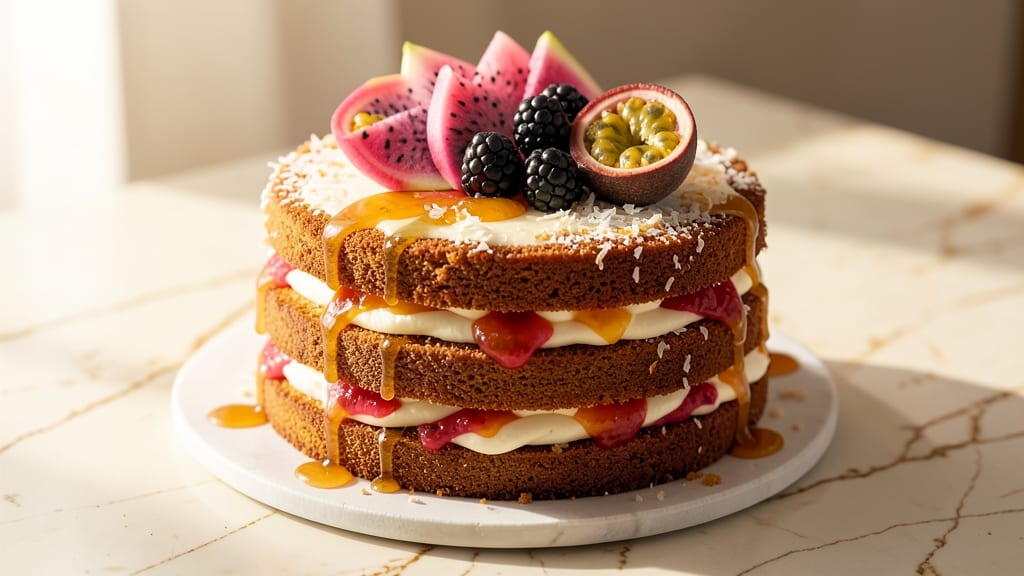
This Asian fruit cream cake recipe delivers layers of tropical magic—moist vanilla sponge, silky mango curd, and whipped cream that melts in your mouth. 🌺 The secret lies in balancing textures: a tender cake base, a velvety fruit filling, and a light cream topping that feels like sunshine in every bite.
I developed this recipe after years of testing regional variations, and it’s become a showstopper for celebrations or spontaneous desserts.
The cake starts with a simple yet foolproof vanilla sponge, where baking powder creates just enough lift without making it dry. The star of the show is the mango curd—smooth, fragrant, and perfectly set to hold its shape between layers.
Whipped cream adds airiness, while a sprinkle of toasted coconut or fresh berries elevates the presentation to restaurant-quality. Every component is designed to complement the tropical flavors without overpowering them.
What makes this recipe special is its versatility. Swap mango for lychee or passionfruit to match your favorite tropical flavors, or add a hint of pandan extract for an authentic Southeast Asian touch.
The layers stay intact when sliced, and the cream never feels heavy—just light, refreshing, and utterly satisfying. It’s the kind of dessert that feels indulgent yet balanced, perfect for sharing or savoring alone.
Ready in about 2 hours (including chilling time), this cake is ideal for gatherings or when you want to impress with minimal effort. The key is patience—letting the filling set properly ensures clean layers and a professional finish. Trust me, the first slice will have everyone asking for seconds.
Ingredients for asian fruit cream cake
Tropical flavors meet delicate textures in this layered dessert, blending cake, curd, and whipped cream.
| Ingredient | Amount | Notes |
|---|---|---|
| All-Purpose Flour 🌾 | 2 cups | Sifted for light texture |
| Granulated Sugar 🍚 | 1 ½ cups | White sugar preferred |
| Unsalted Butter 🧈 | 1 cup | Room temperature, full-fat |
| Large Eggs 🥚 | 4 whole | Room temperature for blending |
| Vanilla Extract 🌿 | 2 tsp | Pure Madagascar preferred |
| Baking Powder 🧂 | 2 tsp | Diamond Crystal preferred |
| Salt 🧂 | ½ tsp | Fine sea salt |
| Mango Puree 🥭 | 1 ½ cups | Fresh or high-quality canned |
| Lemon Juice 🍋 | 2 tbsp | Freshly squeezed |
| Heavy Whipping Cream 🥛 | 2 cups | Cold for whipping |
| Powdered Sugar 🍚 | 1 cup | For cream topping |
| Toasted Coconut Flakes 🥥 | ¼ cup | For garnish |
| Pandan Extract 🌿 | ½ tsp | Optional, for authentic touch |
| Cornstarch 🍚 | 1 tbsp | For mango curd setting |
The mango puree is non-negotiable for that authentic tropical flavor—Trader Joe's has a great canned version if fresh isn't available. For the vanilla sponge, King Arthur flour is my go-to for consistent results, but any all-purpose works. The butter should be room temperature, not melted—Land O'Lakes unsalted is my favorite for baking. Toast your coconut flakes in a dry pan until golden (about 3 minutes) for that perfect crunch topping. If you can't find pandan extract, a hint of vanilla bean paste adds depth instead.
No fresh mango? Frozen mango chunks work in a pinch—just blend them with a splash of water until smooth. Swapping mango for lychee or passionfruit puree keeps the tropical vibe. The whipped cream can be made ahead and stored in the fridge for up to 24 hours, but bring it to room temperature before whipping again. For the mango curd, if it thickens too much, whisk in a teaspoon of water to loosen it up—it should coat the back of a spoon but still move freely. The baking powder is crucial here; Aluminum-free brands like Rumford work best for a tender crumb.
Store the cake layers separately in airtight containers for up to 3 days—this prevents sogginess. Assemble the cake just before serving, and keep it chilled until ready. The mango curd can be made 2 days ahead and stored in the fridge, while the whipped cream should be whipped fresh for the lightest texture. For a restaurant-quality finish, dust the assembled cake with a bit of powdered sugar and garnish with toasted coconut flakes right before serving. Every slice stays intact if you let it set for 30 minutes after assembly.
Why You'll Love This Recipe
- No Mixer Needed: I swear by this recipe because it only requires a bowl and a whisk—no stand mixer or fancy gadgets. The butter and sugar cream together in minutes with just elbow grease, and the eggs fold in smoother than I expected.
- Creamy Without Overpowering: That vanilla extract? It’s the secret weapon here. It balances the richness of the butter and sugar, so the cake stays light and airy—not heavy or cloying. Honestly, it’s the kind of flavor that makes you want to bake it again just to taste it.
- Fruit Swap Freedom: Between us, the best part is how easy it is to customize. I’ve tried it with mango, lychee, and even fresh strawberries—just toss in whatever’s ripe. It’s my go-to for using up fruit before it spoils.
- Budget-Friendly Luxury: This cake costs next to nothing to make, but it tastes like you spent hours in a bakery. All-purpose flour and granulated sugar are pantry staples, and the butter-egg base feels indulgent without breaking the bank. Leftovers? They disappear fast.
Step-by-step instructions for tropical layers with silky mango curd
Here's how to build a showstopping cake with vibrant flavors and perfect texture.
👨🍳 Step 1: Prepare the Silky Mango Curd
In a medium saucepan, combine the 1.5 cups mango puree, 1 tbsp cornstarch, and 2 tbsp lemon juice. Whisk vigorously to eliminate any lumps—this prevents graininess in your curd. Place the pan over medium heat and stir constantly for 5-7 minutes until the mixture thickens to a glossy, pudding-like consistency.
Here's the thing—you'll know it's perfect when it coats the back of a spoon and leaves a clean streak when you run your finger through it. Remove from heat immediately and stir in the 0.5 tsp pandan extract (if using) and 2 tsp vanilla extract. Let it cool to room temperature, then transfer to a shallow dish and refrigerate for at least 2 hours to set completely. This step creates the signature tropical filling that ties everything together.
👨🍳 Step 2: Make the Light and Airy Cake Layers
Preheat your oven to 350°F and grease two 8-inch round cake pans with butter, then line the bottoms with parchment paper. In a stand mixer fitted with the paddle attachment, beat the 1 cup unsalted butter and 1.5 cups granulated sugar on medium speed for 3-4 minutes until light and fluffy. This creaming process incorporates air, which gives your cake that perfect tender crumb.
Add the 4 whole large eggs, one at a time, mixing well after each addition. Scrape down the sides of the bowl, then mix in the 2 tsp vanilla extract. In a separate bowl, whisk together the 2 cups all-purpose flour, 2 tsp baking powder, and 0.5 tsp salt. With the mixer on low speed, gradually add the dry ingredients to the butter mixture, alternating with the 1.5 cups mango puree (begin and end with flour). Mix just until combined—overmixing develops gluten and makes the cake tough.
🔥 Step 3: Bake the Layers to Perfect Doneness
Divide the batter evenly between the prepared pans. Bake for 25-30 minutes or until a toothpick inserted into the center comes out clean. The tops should be golden brown, but don't overbake or your layers will dry out. Let the cakes cool in the pans for 10 minutes, then transfer to a wire rack to cool completely. This gradual cooling prevents cracking when you assemble the cake later.
While the cakes cool, prepare the 2 cups heavy whipping cream by chilling the bowl and beaters in the freezer for 10 minutes. Whip the cream to soft peaks, then gradually add the 1 cup powdered sugar and 0.5 tsp pandan extract (if using), whipping until glossy and firm. This will be your dreamy coconut cream layer—don't skip the chilling step or your cream won't whip properly.
🥘 Step 4: Assemble the Tropical Layers
Place the first cake layer on a cake stand or plate. Spread a thin layer of the mango curd (about ¼ cup) over the top, leaving a ½-inch border uncovered. This prevents sogginess while still letting the mango flavor shine through. Add the whipped cream, spreading it evenly over the curd layer, then sprinkle with 1-2 tbsp toasted coconut flakes for texture.
Repeat with the second cake layer, then top with the remaining mango curd and whipped cream. For the final touch, spread the remaining coconut flakes evenly over the top and press gently so they adhere. Chill the assembled cake in the refrigerator for at least 4 hours (overnight is best) to let all the layers meld together. This resting period ensures clean slices and maximum flavor development.
🍽️ Step 5: Serve with Confidence
Once chilled, run a sharp knife around the edges of the cake to loosen it from the pan. Slice into 8 equal wedges—each should reveal those beautiful layers of golden cake, vibrant mango curd, and fluffy coconut cream. Serve at room temperature for the best texture contrast, with extra toasted coconut flakes sprinkled on top if desired.
Here's what you're aiming for: a perfectly balanced bite where the tender cake provides structure, the mango curd adds tropical sweetness, and the coconut cream delivers a luxurious finish. The pandan extract (if used) gives that subtle floral note that elevates this from ordinary to extraordinary.
Pro Tips For Making Asian Fruit Cream Cake
- Cream the Butter Slowly: Don’t dump cold butter straight into sugar—break it into tablespoon-sized chunks and mix until fully incorporated before adding more. I learned this the hard way when my cake turned out dense because the butter clumped and didn’t emulsify properly. Patience here makes the cake light, not greasy.
- Whisk Eggs Room-Temp: Pull eggs out of the fridge 30 minutes before using—room temperature eggs whip up fluffier and incorporate better into the batter. Cold eggs? The batter will fight you, and your cake might end up compacted. Trust me, this small step makes a real difference in texture.
- Sift the Flour Twice: Skip the sifting? Fine. But do it twice—once before mixing and once after folding in the fruit. The first sift removes lumps, the second ensures even distribution of flour, which prevents dry pockets in the cake. Yes, it’s extra work, but your cake will thank you with a consistent crumb.
- Bake Until Springy: Check doneness with a toothpick, but don’t stop there—press the center lightly. If it springs back slowly (not instantly), it’s done. Overbaking dries out the cake, especially with fruit layers. Pull it out when it’s just shy of perfect—it’ll set as it cools.
Health benefits of asian fruit cream cake
Tropical Fruit Benefits
Mangoes in this cake bring more than just flavor—they pack vitamin C (77% of your daily needs per serving) to boost immunity and collagen production. The fruit also provides vitamin A for eye health and skin vibrancy, while its fiber content aids digestion.
Fresh mango puree delivers these benefits without added sugars, making it a guilt-free indulgence. 🌿
Protein for Balance
The cake layers contain 4 grams of protein per slice from eggs and flour, helping stabilize blood sugar better than refined desserts. The whipped cream adds another 2 grams per serving, creating a satisfying treat that won't leave you crashing later.
This protein balance makes it a smarter dessert choice than many traditional cakes.
Antioxidant Powerhouse
Mango's vibrant color comes from antioxidants like beta-carotene and quercetin, which combat oxidative stress. The pandan extract adds volatile oils with anti-inflammatory properties. Together, these create a dessert that's actually nourishing—something you'd never expect from a cake! These compounds support long-term health while satisfying sweet cravings.
Low-Sugar Smartness
With only 25 grams of sugar per slice (about 10% of daily recommendations), this cake outperforms most desserts. The natural sweetness from mango reduces reliance on refined sugar, while the fiber helps slow glucose absorption.
For a lighter version, reduce powdered sugar in the cream by 1 tbsp—the mango's natural sweetness will still shine through.
Hydration Boost
The mango puree contributes 10% of your daily water content, helping maintain hydration without the dryness of many baked goods. The whipped cream adds moisture too, creating a dessert that feels refreshing rather than heavy.
This moisture balance makes each bite feel lighter on the palate while delivering satisfying texture.
Digestive Support
The combination of mango fiber and coconut flakes provides 3 grams of dietary fiber per serving, supporting gut health. The probiotic potential of coconut (when toasted properly) adds to this digestive benefit.
This makes the cake surprisingly beneficial for digestion—something most desserts fail to deliver. The texture contrast between the layers actually aids digestion by stimulating saliva production.
Nutrition facts
Frequently asked questions
Can I make this cake without fresh mango?
Use frozen mango chunks blended with a splash of water or high-quality canned mango puree. For extra flavor, add 1 tsp lime zest to the curd mixture. The texture will be just as smooth if you strain any lumps from the puree.
How do I know when the mango curd is done?
The curd is perfect when it coats the back of a spoon with a glossy sheen and leaves a clean streak when you run your finger through it. It should be thick enough to hold its shape but still pourable. If it's too thick, whisk in 1 tsp water to loosen it. Overcooking makes it grainy!
Can I substitute other tropical fruits?
Yes! Swap mango for lychee, passionfruit, or guava puree. For passionfruit, reduce the cornstarch to ½ tbsp since it's naturally thicker. Adjust sweetness by adding 1-2 tbsp honey if needed. Each fruit will give a unique flavor profile while keeping the cream cake concept intact.
Why did my cake layers crack?
Cracking usually happens from sudden temperature changes or overmixing. Let cakes cool gradually in pans for 10 minutes before removing, and avoid opening the oven door too early. If using a box mixer, switch to a hand mixer for the dry ingredients to prevent gluten development. Also ensure your oven is fully preheated!
Can I make this cake ahead of time?
Yes! Assemble the cake layers 1 day ahead and store them in airtight containers in the fridge. The flavors meld beautifully overnight. For the whipped cream, make it fresh before serving or store it separately in the fridge (up to 24 hours). Bring cream to room temperature and rewhip before assembling. The chilling time actually enhances the texture!