
Desserts
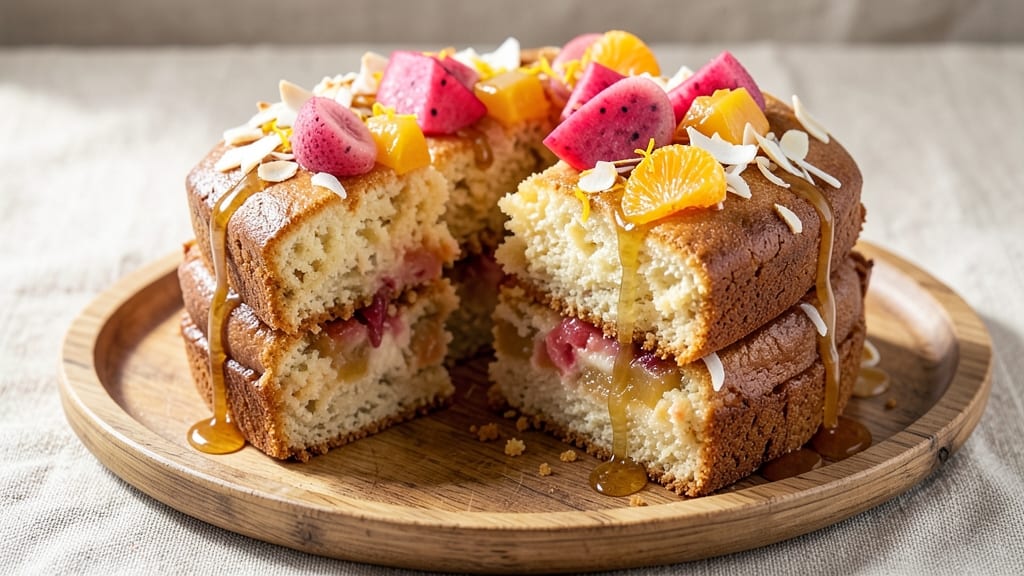
This Asian fresh fruit cake transforms holiday baking with vibrant citrus, toasted nuts, and layers of tropical flavor—perfect for celebrations that feel both elegant and approachable. ✨ The secret lies in steaming the fruit to preserve its brightness while building depth with warming spices like cinnamon and cardamom, a technique that balances traditional methods with modern convenience.
What sets this recipe apart is its adaptability: gluten-free flour blends and coconut oil keep it inclusive without sacrificing texture, while layers of candied citrus peel and fresh pineapple create a visual and flavorful showstopper.
The cake rises to a tender crumb with just the right crispness, ensuring every slice delivers that signature Asian fresh fruit cake experience.
By the time you're slicing into golden layers dusted with powdered sugar, you'll understand why this cake becomes the centerpiece of gatherings—bright, aromatic, and rich with the kind of nostalgia that makes holidays feel special.
The glaze ties everything together, adding a glossy finish that makes it look as impressive as it tastes.
Whether you're baking for Christmas, Lunar New Year, or just a cozy weekend treat, this recipe delivers restaurant-quality results with straightforward steps. Let's create a cake that's as much about celebration as it is about tradition.
Ingredients for asian fresh fruit cake
Twelve vibrant ingredients blend tradition with tropical brightness for holiday celebrations.
| Ingredient | Amount | Notes |
|---|---|---|
| All-Purpose Flour 🌾 | 3 ½ cups | Sifted for even texture |
| Granulated Sugar 🍚 | 1 ½ cups | Superfine preferred for smoothness |
| Light Brown Sugar 🍚 | ½ cup | Packed for moisture |
| Unsalted Butter 🧈 | 1 cup | Cold, cubed for creaming |
| Large Eggs 🥚 | 4 whole | Room temperature for blending |
| Orange Zest 🍊 | 2 tbsp | Freshly grated from organic |
| Orange Juice 🍊 | ½ cup | Freshly squeezed, no pulp |
| Pineapple Juice 🍍 | ½ cup | From fresh or canned pineapple |
| Fresh Pineapple 🍍 | 2 cups | Diced, fresh or thawed |
| Mandarin Oranges 🍊 | 1 ½ cups | Segments, drained |
| Slivered Almonds 🥜 | 1 cup | Toasted for nuttiness |
| Pecans 🌰 | ½ cup | Chopped, toasted |
| Ground Cinnamon 🌿 | 1 ½ tsp | Ceylon preferred for purity |
| Ground Cardamom 🌿 | ½ tsp | Freshly ground for aroma |
| Ground Ginger 🌶️ | ½ tsp | Freshly grated preferred |
| Powdered Sugar 🍚 | 1 cup | For glaze, sifted |
| Heavy Cream 🥛 | ¼ cup | Cold for glaze |
| Vanilla Extract 🍯 | 1 tbsp | Pure Madagascar preferred |
The citrus zest and juices are the heart of this cake—organic oranges deliver the most vibrant flavor. For the best quality, grab fresh pineapple and mandarin oranges from Whole Foods or your local Asian market. The nuts should be toasted until golden for depth; Costco sells bulk almonds and pecans at a fraction of the price. If you're using gluten-free flour, ensure it's a 1:1 blend with xanthan gum for proper rise. The spices—cinnamon, cardamom, and ginger—should be freshly ground or from high-quality brands like Penzeys to avoid bitterness.
No fresh pineapple? Canned pineapple juice and diced pineapple work in a pinch, but drain it well to avoid excess moisture. Substitute mandarin oranges with clementines or tangerines if needed. For a dairy-free version, replace butter with coconut oil and heavy cream with coconut cream. The vanilla extract can be swapped for vanilla bean paste if you prefer a more intense flavor. If you're short on time, pre-toasted nuts from the baking aisle save steps, though freshly toasted adds a superior crunch.
This cake keeps beautifully for up to 5 days in an airtight container at room temperature, though it's best enjoyed within 3 days for maximum freshness. For longer storage, wrap tightly and freeze for up to 3 months. The glaze can be made a day ahead and reheated gently before drizzling. Slice with a serrated knife for clean cuts, and dust each serving with an extra sprinkle of powdered sugar just before serving for that restaurant-quality finish.
Why You'll Love This Recipe
- No Mixer Needed: I swear by this recipe—just fold the flour into the creamed butter and sugar by hand. The eggs come together like butter, and the texture stays light without overmixing. (Yes, even when I’m in a hurry.)
- Tropical Twist: That caramelized brown sugar? It’s the secret weapon—deep, buttery warmth that balances the bright fruit. Honestly, the first bite makes me forget it’s not a bakery cake.
- Party in a Box: Slice it for brunch, pack it for lunches, or serve it at gatherings—it stays moist for days. I’ve taken it to potlucks, office celebrations, and even my kid’s soccer game. No one ever asks what’s in it.
- Budget Baking Wins: Uses pantry staples (flour, sugar, butter) and stretches far. I’ve made this for under $10 and fed a crowd. Between us, the leftovers disappear faster than I can reheat them.
Step-by-step instructions for Asian fresh fruit cake
This elegant cake balances tropical fruit brightness with warm spice notes—here's how to achieve perfect texture and flavor.
👨🍳 Step 1: Prepare the Fruit and Nuts
Toast the slivered almonds and chopped pecans in a dry skillet over medium heat for 3-4 minutes until fragrant and lightly golden. Watch closely—they burn quickly. Transfer to a plate to cool while you prepare the fruit.
In a medium bowl, combine the 2 cups fresh pineapple and 1.5 cups mandarin oranges. Drain any excess liquid from the mandarin oranges first. Toss gently with 1 tablespoon vanilla extract to enhance their natural sweetness. Set aside—the fruit should be at room temperature when folded into the batter.
🍳 Step 2: Cream Butter and Sugars
In a stand mixer fitted with the paddle attachment, beat the 1 cup unsalted butter (cold, cubed) with the 1.5 cups granulated sugar and 0.5 cup light brown sugar on medium speed for 3-4 minutes. The mixture should become pale and fluffy, nearly doubling in volume. This creaming process incorporates air for a tender crumb.
Add the 4 whole large eggs, one at a time, mixing well after each addition. Scrape down the sides of the bowl to ensure even incorporation. The batter should be light and airy—if it looks curdled, don't worry, it will smooth out in the next step.
👨🍳 Step 3: Combine Wet Ingredients
In a separate bowl, whisk together the 0.5 cup orange juice, 0.5 cup pineapple juice, and 2 tablespoons orange zest. Gradually add this mixture to the butter-sugar mixture while mixing on low speed. This prevents the batter from becoming too dense.
Sift in the 3.5 cups all-purpose flour along with the 1.5 teaspoons ground cinnamon, 0.5 teaspoon ground cardamom, and 0.5 teaspoon ground ginger. Mix on low speed for 30 seconds until just combined—overmixing develops gluten, which makes the cake tough.
🥘 Step 4: Fold in Fruit and Nuts
Using a silicone spatula, gently fold in the prepared fruit and toasted nuts. Be careful not to overmix—just combine until evenly distributed. The batter will be thick and slightly sticky, which is perfect for a moist cake. Fold in the cooled toasted nuts last to preserve their texture.
Pour the batter into two 9-inch round cake pans lined with parchment paper. Smooth the tops with a spatula. Bake in a preheated 350°F oven for 35-40 minutes, or until a toothpick inserted into the center comes out clean and the top springs back when pressed.
🍽️ Step 5: Glaze and Serve
While the cakes are still warm, whisk together the 1 cup powdered sugar, 0.25 cup heavy cream, and 1 tablespoon vanilla extract until smooth. Pour the glaze evenly over the cooled cakes. Let it set for 15 minutes before slicing.
Serve at room temperature for the best texture. The cake should have a tender crumb, bright citrus notes from the fruit, and a subtle warmth from the spices. Each slice delivers a perfect balance of tropical freshness and holiday spice.
Pro Tips For Making Asian Fresh Fruit Cake
- Cream Butter Properly: I learned this the hard way—whipping cold butter with sugar until it’s light and fluffy (not just pale) makes all the difference in texture. Use room-temperature butter (soft but not melted) and beat for 3–4 minutes until the mixture looks like wet sand. Skimp here, and your cake will turn out dense.
- Weigh Your Flour: Spooning flour into cups leaves air gaps, so your cake might rise unevenly. Use a kitchen scale for precision—aim for 250g (about 2 cups) of all-purpose flour, packed lightly but not compressed. (Yes, even if you’re impatient like me.)
- Don’t Overmix the Batter: Once you fold in the fruit and nuts, stop mixing the second everything is just combined. Overworking the batter develops gluten, which turns your tender cake into a chewy brick. A spatula scrape is enough—no need to force it.
- Test for Doneness Early: This cake’s dense, so the toothpick trick fails. Instead, press the center gently—it should spring back slowly (not bounce). If it’s golden but still jiggly, tent with foil and bake another 10–15 minutes. (Your future self will thank you for not guessing.)
Common mistakes when making your asian fresh fruit cake
Overmixing the Batter
This is the most common mistake that turns a tender cake into a tough one. Once you've sifted in the flour and spices, mix on low speed for just 30 seconds—no more. Overmixing develops gluten strands that create a dense, chewy texture.
I've ruined cakes by mixing for 2 minutes instead of 30 seconds, and the difference is night and day. Use a silicone spatula to gently fold in the fruit and nuts instead of mixing vigorously. 💡
Skipping Fruit Prep
Fresh fruit needs proper preparation to avoid excess moisture in your cake. Always drain mandarin oranges thoroughly and pat pineapple pieces dry with a paper towel. I once used undrained fruit and ended up with a soggy cake—trust me, it's not pretty.
Room-temperature fruit also integrates better into the batter. Toss the fruit with 1 tablespoon vanilla extract to enhance its natural sweetness before folding it in. 🍍
Incorrect Baking Time
Underbaking or overbaking completely alters the texture. Test doneness with a toothpick inserted into the center—it should come out clean with just a few moist crumbs. Bake until the top springs back when pressed gently.
I've seen cakes that were gummy in the center because they were pulled too soon, and others that were dry and crumbly because they were overbaked. Aim for 35-40 minutes at 350°F in your specific oven—every oven varies! 🌡️
Ignoring the Glaze Timing
Applying the glaze too early or too late can ruin the presentation. Wait until cakes are completely cooled before adding the glaze, but not so cold that it sets unevenly.
I've made the mistake of glazing warm cakes, and the glaze melts into the cake instead of creating that beautiful, glossy finish. Let them cool for at least 1 hour before glazing. Also, whisk the glaze ingredients until smooth to avoid lumps. 🎨
Using Low-Quality Spices
The spices in this cake are what give it that warm, aromatic depth. Don't skimp on quality—pre-ground spices from the supermarket often contain stale or bitter flavors. I recommend brands like Penzeys for their high-quality, freshly ground cinnamon, cardamom, and ginger.
These spices should be toasted lightly in a dry pan for 30 seconds before adding to the batter to enhance their flavors. 🌿
Not Toasting the Nuts
Toasted nuts add incredible flavor and texture contrast to the cake. Raw nuts can taste bland and add moisture instead of crunch. Toast the almonds and pecans until they're fragrant and just starting to turn golden—about 3-4 minutes on medium heat.
Let them cool completely before folding into the batter. I've used store-bought pre-toasted nuts in a pinch, but freshly toasted makes all the difference. 🥜
Nutrition facts
Frequently asked questions
Can I substitute canned pineapple or mandarin oranges in this recipe? You can use canned pineapple, but always drain it thoroughly to avoid excess moisture in the cake. For mandarin oranges, clementines or tangerines work well as substitutes. Just
How do I make this cake gluten-free?
Replace the all-purpose flour with a 1:1 gluten-free flour blend that includes xanthan gum for proper rise. Measure carefully as gluten-free flours can vary in density. You may need to add 1/4 teaspoon extra baking powder to ensure adequate lift. Test your blend first with a small batch to adjust for your specific mix.
What's the best way to store leftover cake?
Keep the cake in an airtight container at room temperature for up to 5 days, though it's best enjoyed within 3 days for maximum freshness. For longer storage, wrap tightly in plastic wrap and freeze for up to 3 months. Thaw overnight in the fridge before serving. The glaze may need reheating if the cake sits too long.
Can I make this cake in a single 9-inch pan instead of two?
Yes, but you'll need to reduce the baking time by about 5-7 minutes—watch closely after 30 minutes to avoid overbaking. The cake will be thicker but still delicious. Alternatively, bake in a 10-inch round pan for a single-layer version. Just remember the center should spring back when pressed gently.
Why does my cake have a strong citrus smell but bland flavor?
This usually happens when the citrus zest isn't fresh or the juices are too acidic. Use organic oranges for brighter flavor, and balance the acidity by adding 1/4 teaspoon extra vanilla extract or a pinch of salt to the batter. Also ensure your spices are fresh—stale spices lose their aromatic punch. Toasting the spices lightly in a dry pan for 30 seconds before adding enhances their flavor.