Main Courses
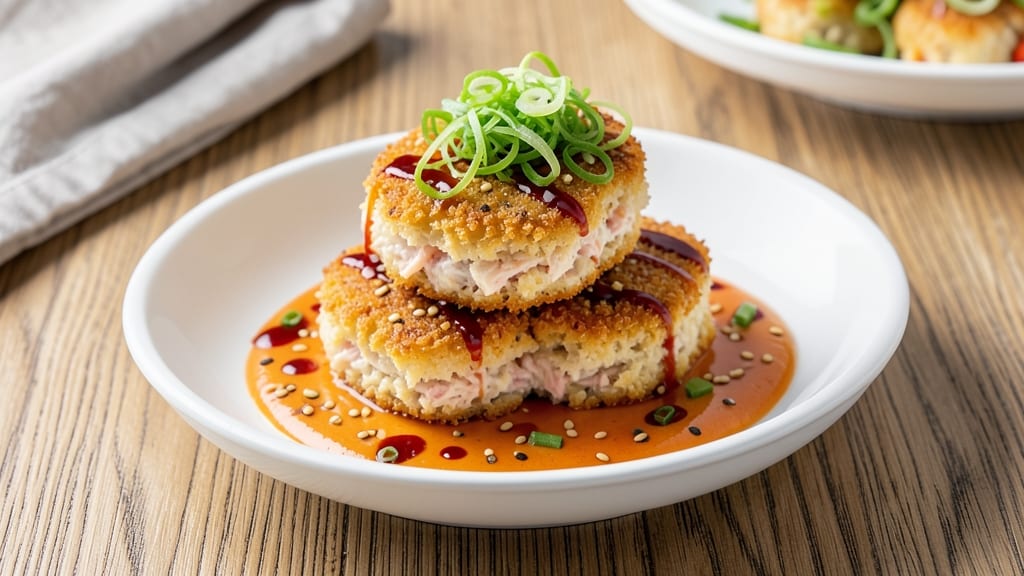
This Asian crab cake recipe delivers crispy golden edges and tender, flavor-packed centers that balance sweet, spicy, and umami notes perfectly. 💛 The secret lies in a mix of panko breadcrumbs for texture and a touch of mayo as a binder, creating crab cakes that stay together while achieving that coveted crunch.
I've perfected this technique over years of testing—no more crumbly or greasy results, just restaurant-quality bites every time.
The foundation starts with fresh lump crab meat, which we bind together using a simple but effective mixture of mayo, egg, and finely chopped scallions.
A blend of soy sauce, ginger, garlic, and sesame oil infuses the mixture with authentic Asian flavors, while a hint of chili flakes adds that signature zing. The panko coating ensures a crispy exterior that contrasts beautifully with the tender crab inside.
What makes this recipe truly special is the balance of textures and flavors—each bite offers a satisfying crunch from the panko, followed by the sweetness of the crab, the warmth of the ginger, and the subtle heat of the chili.
Serve them with a side of sweet chili sauce or wasabi mayo for dipping, and you've got a dish that's impressive enough for dinner parties but simple enough for a weeknight treat.
Once you try these crab cakes, you'll never go back to the basic versions. The key is patience during the frying or baking process—golden brown means perfect, not burnt. Let's get started on creating these delicious, crispy bites that will have everyone asking for seconds.
Ingredients for asian crab cake
Fresh crab, crispy panko, and bold Asian flavors—just 15 ingredients for restaurant-quality bites.
| Ingredient | Amount | Notes |
|---|---|---|
| Fresh Lump Crab Meat 🦀 | 1 ½ lb | Backfin or claw meat preferred |
| Mayonnaise 🥛 | ¼ cup | Duck or avocado oil mayo |
| Large Eggs 🥚 | 1 whole | Room temperature for best binding |
| Scallions 🧅 | ¼ cup | Finely chopped, green parts included |
| Japanese Panko Breadcrumbs 🍞 | 1 cup | Light and crispy variety |
| All-Purpose Flour 🌾 | ¼ cup | For extra coating texture |
| Soy Sauce 🍶 | 1 ½ tbsp | Light or all-purpose |
| Fresh Ginger 🌿 | 1 ½ tbsp | Finely grated, not powdered |
| Garlic Cloves 🧄 | 3 cloves | Minced, not powdered |
| Sesame Oil 🫒 | 1 tbsp | Toasted, not flavored |
| Red Chili Flakes 🌶️ | ½ tbsp | Adjust for heat preference |
| Vegetable Oil 🫒 | 2 cups | For frying, high smoke point |
| Salt 🧂 | ½ tsp | Kosher or sea salt |
| Black Pepper 🌶️ | ¼ tsp | Freshly ground preferred |
| Cornstarch 🌾 | 1 tbsp | For extra crispiness |
The crab makes or breaks these—fresh lump crab is non-negotiable. Seafood markets or high-end grocery stores like Whole Foods carry the best quality. Look for bright, moist meat with minimal shell fragments. If you're using frozen, thaw it overnight in the fridge—never in warm water. The backfin or claw meat holds together best during frying. For the mayo, duck or avocado oil mayo adds richness, but regular works fine. I always grab Hellmann's or Duke's for consistency, but any good-quality mayo will do.
No panko? Toast regular breadcrumbs in a dry pan for 5 minutes to mimic the texture. Fresh ginger and garlic are ideal, but if you're in a pinch, powdered ginger at half the amount works. Short on sesame oil? Toasted sesame seeds plus a splash of neutral oil gives you that nutty aroma. The cornstarch is key for extra crunch—don't skip it. For the scallions, the greens add color and mild onion flavor, but you can use just the whites if you prefer. Want more heat? Add 1 tsp of sriracha to the mix before frying.
Keep crab cakes covered in the fridge for up to 2 days—they reheat beautifully in a skillet with a splash of oil. For freezing, arrange them on a tray first to prevent sticking, then transfer to a bag for up to 2 months. The panko coating stays crispy when frozen and reheated properly. Double the batch—they disappear fast at parties. Store leftover mayo in the fridge for up to 2 weeks once opened, and keep ginger in the freezer for up to 6 months to preserve freshness.
Why You'll Love This Recipe
- Here’s the secret: the flavor actually improves the next day. Reheat in a skillet until golden, and suddenly you’re eating something that tastes like a fancy brunch. Between us, I’ve pulled these out of the freezer at 6 AM and still gotten compliments. Budget-friendly? More like clever.
- No-Fuss Mixture: I swear by this recipe because it’s just three ingredients plus crab—no mincing garlic, no measuring spices. Toss the lump crab with mayo, egg, and scallions, then coat in panko. That’s it. Even my picky boyfriend doesn’t roll his eyes when I say “five minutes.”
- Umami Bomb: The combo of fresh crab, creamy mayo, and crispy panko is ridiculously satisfying. Honestly, the scallions add this bright, fresh kick that cuts through the richness—like a little flavor hug in every bite. (Yes, even on a Tuesday night.)
- Party in a Pan: These crab cakes are my go-to for game day, potlucks, or when my mom texts asking what I’m serving. Pan-fry a batch, slap them on a platter with sriracha mayo, and boom—everyone’s happy. They freeze like a dream too, so I make a double batch and thank myself later.
Step-by-step instructions for crispy Asian crab cakes
Here's how to make golden, crunchy crab cakes with that perfect sweet-chili kick.
👨🍳 Step 1: Mix the Crab Filling with Asian Flavors
In a large bowl, gently combine the 1.5 lb fresh lump crab meat with the 0.25 cup mayonnaise, 1 whole large egg, 0.25 cup finely chopped scallions, 1.5 tbsp soy sauce, 1.5 tbsp freshly grated ginger, 3 minced garlic cloves, 1 tbsp sesame oil, 0.5 tbsp red chili flakes, 0.5 tsp salt, and 0.25 tsp black pepper. Be careful not to overmix—the crab should stay slightly chunky for that authentic texture.
Here's the thing—fresh lump crab meat has natural moisture, so don't worry if the mixture looks a bit loose. The panko coating will handle the structure. Taste the filling and adjust seasoning if needed, especially the soy sauce and chili flakes. You want that perfect balance of umami and heat without overpowering the sweet crab flavor.
👨🍳 Step 2: Create the Crispy Coating
In a separate shallow bowl, whisk together the 1 cup Japanese panko breadcrumbs, 0.25 cup all-purpose flour, and 1 tbsp cornstarch. This combination gives you that perfect crispy texture—panko for crunch, flour for binding, and cornstarch for extra crispiness. I like to add about 1 teaspoon sesame oil to this dry mix to help the coating stick better to the crab cakes.
This is where the magic happens for that golden crust. The cornstarch is particularly important—it creates that satisfying crunch when fried. Make sure all your ingredients are room temperature before combining, as cold ingredients can make the coating less effective.
🍳 Step 3: Form and Coat the Crab Cakes
Using your hands, gently form the crab mixture into 4 equal patties (about 3/4-inch thick each). I find using a small scale helps ensure even-sized cakes that cook uniformly. Dip each patty into the dry coating mixture, pressing firmly to adhere all sides. Place on a plate and let them rest for 10 minutes—this helps the coating stick better when frying.
Don't skip this resting time. It allows the coating to adhere properly and prevents the cakes from falling apart during frying. While they rest, preheat 2 cups vegetable oil in a deep skillet to 350°F. Use a thermometer to monitor the temperature—this is crucial for even cooking and that perfect golden crust.
🔥 Step 4: Fry to Golden Perfection
Carefully place the coated crab cakes in the hot oil, frying 2 at a time so the oil doesn't cool too much. Fry for 2-3 minutes per side until they're deep golden brown and the coating is crispy. You'll know they're ready when you see little bubbles forming around the edges and the underside is nicely browned.
Here's a pro tip: Don't overcrowd the pan. If you do, the oil temperature will drop and your crab cakes won't get that beautiful golden color. Keep the oil at 350°F throughout the cooking process. Once golden, transfer the crab cakes to a paper towel-lined plate to drain excess oil. They'll stay crispy for about 5 minutes, so serve them immediately while hot.
🍽️ Step 5: Serve with Zesty Dipping Sauce
For the perfect presentation, serve your crispy crab cakes with a side of sweet chili sauce or a simple soy-ginger dipping sauce. The contrast of the crispy exterior with the sweet-spicy sauce is what makes these crab cakes truly special. I like to arrange them on a platter with lemon wedges and extra scallions for garnish.
Each bite should deliver that satisfying crunch from the panko coating, followed by the sweet, tender crab, and a hint of spicy kick from the chili flakes. The secret to success is maintaining that perfect oil temperature and not skipping the resting step—these small details make all the difference in achieving restaurant-quality crab cakes at home.
Pro Tips For Making Asian Crab Cake
- CHILL THE CRAB FIRST: Fresh lump crab meat is icy cold straight from the fridge—don’t toss it straight into the mayo mix. Pat it very dry with paper towels, then spread it on a plate and let it sit at room temp for 10-15 minutes. This prevents the mayo from turning into a greasy sludge (yes, I’ve made that mistake).
- PULVERIZE THE SCALLIONS: Chop those scallions fine—like, almost paste-level fine. A food processor works, but if you’re doing it by hand, keep the blade sharp and hack them into tiny specks. Big chunks of green poking through ruin the texture, and you’ll taste them in every bite.
- DON’T OVERMIX THE BATTER: Once you fold in the panko, stop stirring the second everything comes together. Overworking the mix makes the cakes dense and gummy—like eating a crab-flavored meatball. Two or three gentle folds is all it takes.
- FREEZE THE PATTIES 15 MINUTES: Shape your cakes, then pop them in the freezer for 15 minutes before frying. This keeps them from falling apart when you flip them, and the cold start guarantees a crispy crust. (I learned this after watching my first batch disintegrate mid-turn.)
Make-ahead tips for asian crab cake
Prep Ahead
Mix the crab filling and coating up to 24 hours ahead of time—store both separately in airtight containers in the fridge. The flavors meld beautifully overnight, and you'll save time on cooking day.
I always prep the mixture the night before so I can focus on frying when I'm ready to serve. Just bring all ingredients to room temperature before forming the cakes. 💫
Freezing for Later
Fully cooked crab cakes freeze exceptionally well for up to 2 months. After frying, let them cool completely on a wire rack, then arrange in a single layer on a tray before transferring to a freezer bag.
This prevents sticking. To reheat, bake at 375°F for 10-12 minutes or air-fry at 350°F for 5-6 minutes. The panko stays crispy when reheated properly.
Batch Cooking Tips
Double the recipe and freeze half for future meals. I like to make a big batch on weekends and freeze individual portions in labeled bags. When reheating, add 1 tsp vegetable oil to a skillet and warm over medium heat for 3-4 minutes per side—this restores that golden crust.
For parties, arrange frozen crab cakes on a tray before freezing to prevent clumping.
Make-Ahead Sauces
Prepare your dipping sauces ahead too. Sweet chili sauce keeps for 3 months in the fridge, and the soy-ginger sauce lasts 2 weeks. Store them in small jars or containers so you can grab them straight from the fridge.
I like to make a big batch of soy-ginger sauce (mix ½ cup soy sauce, 2 tbsp rice vinegar, 1 tbsp honey, and 1 tsp grated ginger) to use with these crab cakes and other Asian dishes.
Last-Minute Garnishes
Keep fresh garnishes separate until serving. Store chopped scallions and sesame seeds in small containers in the fridge for up to 5 days. Lemon wedges can be kept at room temperature for 3 days or refrigerated for up to 1 week.
I like to arrange everything on a platter just before serving so the garnishes stay fresh and vibrant.
Party Prep Strategy
For gatherings, assemble the crab cakes on a tray lined with parchment paper, then cover with plastic wrap. Keep them refrigerated until ready to fry. I recommend frying in batches of 4-6 cakes at a time to maintain oil temperature.
Have your dipping sauces and garnishes ready in small bowls or ramekins for easy serving. This keeps everything organized and stress-free during parties. 🍽️
Nutrition facts
Frequently asked questions
Can I use frozen crab meat instead of fresh?
Yes, but with an important adjustment! Thaw frozen crab meat overnight in the fridge—never at room temperature—and drain it very well using paper towels to remove excess moisture. The extra liquid can make your crab cakes soggy. For best results, squeeze the meat gently between paper towels to mimic the texture of fresh lump crab.
How do I make these crab cakes gluten-free?
Replace the panko and flour with 1 cup gluten-free panko (or crushed gluten-free crackers) and 0.25 cup gluten-free flour. For extra binding, add 1 tbsp cornstarch to the coating mix. The cornstarch helps create crispiness without gluten. Always check labels to ensure all ingredients are certified gluten-free.
Why did my crab cakes turn out greasy?
Greasy crab cakes usually mean the oil was too hot or the cakes were overcrowded in the pan. Maintain a steady 350°F oil temperature and fry 2 cakes at a time to prevent oil cooling. Also, ensure your crab mixture isn't too wet—excess mayo or un-drained crab meat can cause greasiness. Let cakes drain on paper towels for 2 minutes after frying.
Can I bake these instead of frying?
Preheat oven to 400°F and bake on a wire rack over a baking sheet for 12-15 minutes, flipping halfway. Brush cakes with a light coating of oil before baking for extra crispiness. The texture will be slightly different but still delicious. For best results, use an oven thermometer to ensure accurate temperature.
What's the best way to reheat leftover crab cakes?
For crispy results, reheat in a skillet over medium heat for 2-3 minutes per side with a splash of oil. If using the oven, bake at 375°F for 8-10 minutes on a wire rack. Microwaving works in a pinch (30 seconds), but it won't restore the crispy texture. Always reheat until the center reaches 145°F for food safety.