
Desserts
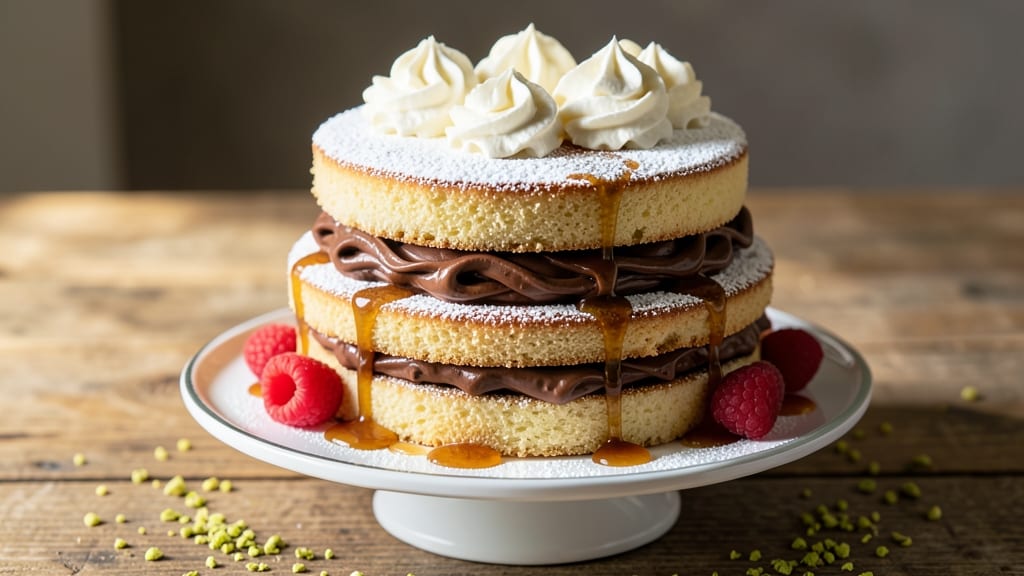
This Argentinian cake recipe brings the comforting flavors of dulce de leche to your kitchen with its signature caramelized layers and tender crumb. 💛 The secret lies in the perfect balance of cornstarch and anise, creating a texture that's both delicate and rich—a staple in Argentine bakeries that transports you to Buenos Aires with every bite.
What sets this recipe apart is the traditional technique of layering thin cake batter with generous swirls of dulce de leche, then baking it to golden perfection. The cake's moist interior contrasts beautifully with the caramelized edges, while the anise-infused syrup adds a subtle, aromatic depth that's quintessentially Argentinian.
You'll end up with a cake that's elegant enough for celebrations but simple enough for a weeknight treat—each slice offering a harmonious blend of sweet, creamy, and slightly nutty flavors. The layers stay moist for days, making it ideal for gifting or enjoying over several servings.
Whether you're baking for a special occasion or just craving a taste of Argentina, this recipe delivers restaurant-quality results with minimal fuss. Let's get started on creating your own dulce de leche masterpiece.
Ingredients for argentinian cake
These 13 ingredients transform into a showstopping Argentinian cake with layers of caramelized goodness.
| Ingredient | Amount | Notes |
|---|---|---|
| All-Purpose Flour 🌾 | 3 cups | Sifted for light texture |
| Granulated Sugar 🍚 | 2 cups | White or light brown |
| Cornstarch 🌾 | ½ cup | Key for tender crumb |
| Unsalted Butter 🧈 | 1 ½ cups | Room temperature, full-fat |
| Large Eggs 🥚 | 4 whole | Room temperature, separated |
| Milk 🥛 | 1 ½ cups | Whole milk preferred |
| Vanilla Extract 🌿 | 2 tsp | Pure vanilla preferred |
| Ground Anise Seeds 🌿 | 1 tsp | Essential for authentic flavor |
| Baking Powder 🧂 | 2 tsp | Aluminum-free preferred |
| Salt 🧂 | ½ tsp | Fine sea salt |
| Dulce De Leche 🍯 | 2 cups | Store-bought or homemade |
| Heavy Cream 🥛 | ½ cup | For anise syrup |
| Granulated Sugar 🍚 | ¼ cup | For anise syrup |
The anise seeds are non-negotiable here—they're what gives this cake its signature Argentinian soul. Penzeys or bulk spice sections at Whole Foods carry the best quality. If you can't find ground anise, crush whole seeds lightly—they're more potent. The dulce de leche makes or breaks this recipe, so don't skimp. La Serenísima is the gold standard, but any good-quality brand works. For the butter, Plugrá or Land O'Lakes are reliable choices—just make sure it's unsalted and at room temperature before mixing.
No anise seeds? Star anise powder at half the amount works in a pinch, though it's not identical. Running short on dulce de leche? Caramel sauce or Nutella can mimic the sweetness, but you'll lose that deep, toffee-like flavor. The cake batter needs to be perfectly smooth—sift the flour and cornstarch together to avoid lumps. For the anise syrup, simmer the sugar and cream until it thickens slightly—this adds that extra layer of richness. The egg whites should be whipped to stiff peaks for maximum lift in the layers.
This cake keeps beautifully—3-4 days wrapped at room temperature or up to 1 week refrigerated. For longer storage, freeze the assembled cake for 2 months. The layers stay moist, but bring it to room temperature before slicing. I always bake an extra layer—leftover cake makes amazing trifle. If you're gifting, wrap each slice individually in parchment and tie with twine for that authentic bakery touch.
Why You'll Love This Recipe
- No Mixer Needed: I swear by this—just fold the butter into the flour until it looks like wet sand. No electric mixer, no fuss, and the result? That signature tender crumb. My hands get tired, but the cake doesn’t suffer.
- Sugar Rush Guaranteed: The cornstarch keeps it light, but the sugar? Oh, it’s there—caramelizing just enough at the edges for a subtle, buttery sweetness. Honestly, the first time I bit into it, I thought, "Why didn’t I make this sooner?"
- Leftovers That Win: This cake stays moist for days (yes, even after three). I’ve sent slices to work for lunch, packed it in my kids’ lunchboxes, and still had enough for midnight cravings. No sad, dry crumbs here.
- Budget Baking at Its Best: Butter, eggs, flour—these are pantry staples that won’t break the bank. I’ve made this for birthdays, potlucks, and just-because desserts, and no one ever questions the price tag. (Or the seconds.)
Step-by-step instructions for Argentinian cake
This cake delivers that signature Argentinean flavor with layers of dulce de leche and anise-infused cream.
👨🍳 Step 1: Make the Anise-Infused Cream
In a small saucepan, combine the 0.5 cup heavy cream and 0.25 cup granulated sugar. Bring to a gentle simmer over medium heat until the sugar dissolves completely. Remove from heat and stir in the 1 tsp ground anise seeds. Let it steep for 5 minutes—you'll notice the aroma intensify as the anise infuses the cream. Strain through a fine-mesh sieve to remove the seeds, then let cool completely before using.
This step is what gives the cake its authentic Argentinean flavor. Don't skip the straining—those seeds can make the cake taste bitter if left in. The cooled cream will be used in the final layer, so let it sit at room temperature while you prepare the rest of the cake.
👨🍳 Step 2: Cream Butter and Sugars
In a large mixing bowl, beat the 1.5 cups unsalted butter (at room temperature) with the 2 cups granulated sugar using an electric mixer on medium-high speed for 3-4 minutes until light and fluffy. You'll see the mixture nearly double in volume and become pale in color. This creaming process incorporates air, which is crucial for that tender cake texture.
Here's the thing—if your butter isn't soft enough, the mixture will look greasy and won't lighten properly. Press the butter between two sheets of wax paper and let it sit at room temperature for 30 minutes if needed. You want it to be soft but not melted when you press your finger into it.
👨🍳 Step 3: Add Eggs and Dry Ingredients
Add the 4 whole large eggs, one at a time, mixing well after each addition. Then stir in the 2 tsp vanilla extract and 1.5 cups milk. In a separate bowl, whisk together the 3 cups all-purpose flour, 0.5 cup cornstarch, 2 tsp baking powder, and 0.5 tsp salt. Gradually add the dry ingredients to the wet mixture, mixing on low speed just until combined—you should still see some flour streaks. Overmixing develops gluten, which makes the cake tough.
Don't be tempted to add all the dry ingredients at once. Fold them in gently to maintain that light, airy texture we worked so hard to create. The batter should be smooth but slightly thick—like a thick pancake batter. If it looks too thin, add 1-2 tablespoons of flour to adjust the consistency.
🥘 Step 4: Assemble the Cake Layers
Preheat your oven to 350°F and grease three 8-inch round cake pans, lining the bottoms with parchment paper. Divide the cake batter evenly among the three pans, spreading it out to create even layers. Bake for 25-30 minutes or until a toothpick inserted into the center comes out clean. Let the layers cool in the pans for 10 minutes, then transfer to a wire rack to cool completely.
While the layers are baking, prepare the dulce de leche filling by warming 2 cups dulce de leche in a microwave-safe bowl for 20-30 seconds to make it easier to spread. This step ensures the filling is at the perfect consistency—thick enough to hold its shape but still spreadable. The warm filling will also help create that signature caramelized layer between the cake layers.
🍳 Step 5: Layer and Frost the Cake
Once the layers are completely cool, place the first layer on a cake stand or plate. Spread a generous layer of the warmed dulce de leche over the top, leaving a ½-inch border around the edges. Repeat with the second layer, then add a thin layer of the anise-infused cream. Top with the third layer and spread the remaining dulce de leche evenly over the top and sides. Finally, spread the remaining anise cream over the entire cake for a glossy finish.
Here's where the magic happens: Chill the cake in the refrigerator for at least 4 hours (or overnight) to let the flavors meld and the layers set properly. This waiting period is crucial—it allows the dulce de leche to fully absorb into the cake and creates that perfect balance of sweet and anise flavors. When you're ready to serve, dust with powdered sugar if desired, and enjoy each slice with a cup of strong coffee.
Pro Tips For Making Argentinian Cake
- MELT BUTTER SLOWLY: This isn’t a race—warm the butter in a double boiler or microwave in 15-second bursts until it’s just pourable, not steaming. I learned this the hard way when my cake turned out greasy and dense because I dumped in hot butter straight from the fridge. The goal is silky, not scrambled.
- SIFT DRY INGREDIENTS TOGETHER: Don’t just eyeball the flour, sugar, and cornstarch. Sift them into a bowl first, then whisk in the eggs and melted butter. This cuts out lumps and guarantees even distribution—especially important for that signature moist crumb. (Yes, even if you’re impatient like me.)
- DON’T OVERMIX THE BATTER: Stir just until the flour disappears—about 10 strokes max. Overworking it develops gluten, which turns your cake into a tough, chewy brick. My grandmother swore by this, and she was right: the texture should stay light and airy.
- LET IT REST BEFORE BAKE: Give the batter a solid 5-10 minutes at room temperature before pouring into the pan. This helps the eggs and butter emulsify better, so your cake rises evenly instead of sinking in the middle. (Your future self will thank you.)
Troubleshooting this recipe
Cake Too Dense
If your cake turns out dense instead of light and airy, the butter might not have been soft enough or the eggs weren't at room temperature. I've found that pressing butter between wax paper for 30 minutes before creaming makes all the difference. Also,
Dulce De Leche Not Spreading
Cold dulce de leche can be stubborn to spread between layers. Warm it in the microwave for 20-30 seconds to make it more pliable—this is a game-changer! If it's still too thick, add a few drops of heavy cream to thin it out slightly. Spread it quickly while the cake layers are still slightly warm (but completely cooled) for the best results. The filling should be thick enough to hold its shape but still spreadable. ⚡
Layers Not Holding Together
If your cake falls apart when slicing, the layers likely didn't have enough time to set. Chill the cake in the refrigerator for at least 4 hours (overnight is even better) to let the dulce de leche fully absorb and bind the layers.
Another trick is to brush each layer lightly with the anise-infused cream before adding the dulce de leche—this acts as a glue. Also, ensure your cake pans are greased well to prevent sticking, which can make layers uneven. 💪
Bitter Aftertaste
A bitter taste usually means the anise seeds weren't strained properly or the cake was overbaked. Always strain the anise-infused cream through a fine-mesh sieve to remove any seeds. For the cake, check for doneness with a toothpick—it should come out clean but not wet.
If the cake tastes slightly bitter, try reducing the anise seeds to ½ tsp next time. A pinch of vanilla extract can also help balance the flavor. 🌿
Cracked Top
Cracking often happens when the oven temperature fluctuates or the cake bakes too quickly. To prevent this, preheat your oven thoroughly and avoid opening the door during baking. I also recommend baking the layers one at a time rather than all three simultaneously—this helps maintain a steady temperature.
If cracks do appear, they can be covered with extra dulce de leche or anise cream when assembling. 🔥
Dry or Crumbly Texture
Dryness is usually caused by overbaking or using too much flour. Check your cake's doneness with a toothpick at the 25-minute mark—it should come out with a few moist crumbs, not completely clean.
If the batter seems too thin, add just 1-2 tablespoons of flour to adjust the consistency. Also, make sure your oven is calibrated—many home ovens run hotter than the set temperature. 💛
Nutrition facts
Frequently asked questions
What makes this Argentinian cake different from other spice cakes?
The star ingredient is the ground anise seeds, which give it that signature warm, licorice-like flavor found in traditional Argentine pastries. Unlike cinnamon or nutmeg, anise adds a unique depth that pairs perfectly with the dulce de leche layers. This combination is what makes it distinctly Argentinian—think of it as the country's answer to caramel cake with a cultural twist!
Can I substitute dulce de leche with something else?
For the best results, no—dulce de leche is non-negotiable in this recipe as it provides both the signature caramelized flavor and texture. However, in a pinch, you could use caramel sauce or Nutella for a similar sweetness, though the flavor won't be identical. The cake will still be delicious, but it won't have that authentic Argentinian taste. For homemade dulce de leche, simmer 1 can of sweetened condensed milk in a water bath for 2-3 hours until thick and caramel-colored.
How do I store leftovers to keep them moist?
Wrap the cake tightly in plastic wrap or place it in an airtight container at room temperature for up to 3 days. For longer storage, refrigerate for up to 1 week or freeze for 2 months. To serve, let it sit at room temperature for 30 minutes before slicing. The key is the plastic wrap—it traps moisture and prevents the layers from drying out. For extra freshness, store each slice individually with parchment paper between them.
Can I make this cake in a different pan size?
Yes, but you'll need to adjust the baking time. For a 9-inch pan, bake for 20-25 minutes instead of 25-30. If using a 6-inch pan, increase the time to 30-35 minutes and reduce the oven temperature to 325°F to prevent overbrowning. Always check for doneness with a toothpick. The total volume of batter should remain the same—just divide it evenly among your pans. For a single-layer cake, use a 9x13-inch pan and bake for 35-40 minutes.
Why does the recipe call for cornstarch?
The 0.5 cup cornstarch is what gives this cake its signature tender, melt-in-your-mouth texture. It creates a lighter crumb compared to all-purpose flour alone, making each bite more delicate. Think of it as the secret weapon for that perfect Argentinian cake consistency—similar to how it's used in traditional Medialunas or Vigilantes pastries. Without it, the cake would be denser and less airy.