
Desserts
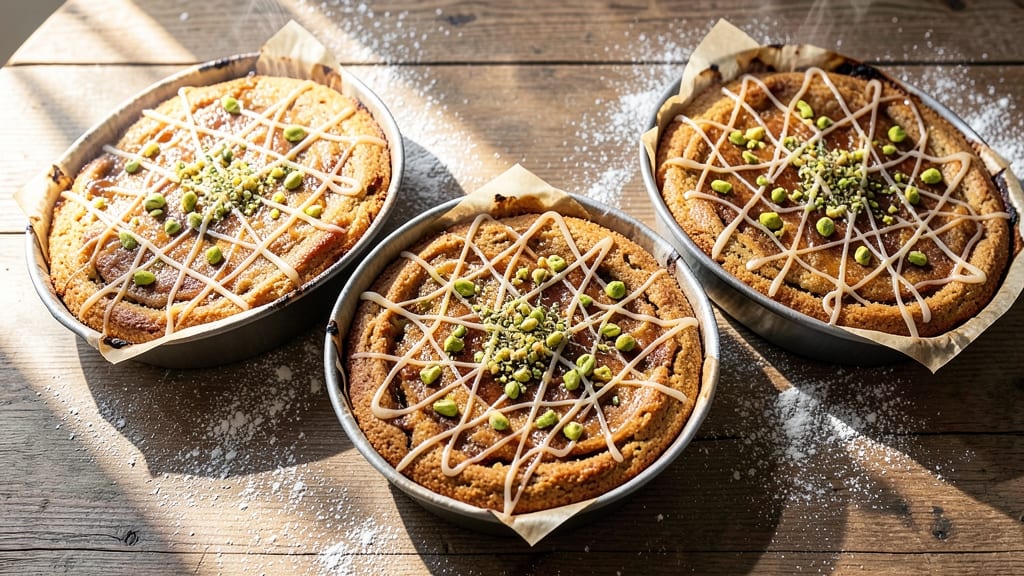
This ancient Greek honey cake recipe transports you straight to the sweet shops of Athens, where golden layers of olive oil-rich cake soak up rich honey syrup and crunchy pine nuts.
The technique dates back to Byzantine times, when honey was the primary sweetener—its deep, caramelized flavor still shines through in every bite. What makes this recipe special is the balance of textures: tender cake, sticky syrup, and nutty crunch that keeps you reaching for seconds.
The process is surprisingly simple for such a historic dessert. You'll mix a basic olive oil cake batter (no butter needed!) with warm spices like cinnamon and clove, then bake it into a dense, slightly chewy base.
The real magic happens when you drizzle warm honey syrup over the cooled cake, letting it absorb completely before finishing with toasted pine nuts. This method ensures every slice delivers that perfect combination of moist cake and sweet, aromatic syrup.
What you'll end up with is a dessert that's both rustic and refined—a cake that tastes like a piece of ancient history but feels perfectly modern.
The honey syrup adds a deep, caramelized sweetness that pairs beautifully with the cake's subtle olive oil richness, while the pine nuts provide a satisfying crunch. This cake is especially magical served at room temperature, when the flavors have time to meld and the textures reach their peak.
Perfect for special occasions or as a sophisticated dessert for dinner guests, this honey cake requires just a few simple ingredients but delivers restaurant-quality results. The best part? It keeps well for days, making it ideal for meal prep or gifting. Let's bring this ancient Greek tradition to your kitchen.
Ingredients for ancient greek honey cake
Golden layers of olive oil cake, sticky honey syrup, and crunchy pine nuts—just twelve ingredients for a taste of ancient Greece.
| Ingredient | Amount | Notes |
|---|---|---|
| All-Purpose Flour 🌾 | 3 cups | Sifted for light texture |
| Granulated Sugar 🍚 | 1 ½ cups | White or light brown |
| Extra-Virgin Olive Oil 🫒 | 1 cup | High-quality, fruity |
| Large Eggs 🥚 | 4 whole | Room temperature preferred |
| Pure Honey 🍯 | 1 cup | Thick, dark variety |
| Plain Greek Yogurt 🧀 | ½ cup | Full-fat for richness |
| Vanilla Extract 🌿 | 1 tbsp | Pure vanilla preferred |
| Ground Cinnamon 🌶️ | 1 ½ tsp | Freshly ground if possible |
| Ground Cloves 🌿 | ½ tsp | Freshly ground for warmth |
| Salt 🧂 | ½ tsp | Fine sea salt preferred |
| Pine Nuts 🥜 | ¾ cup | Toasted until golden |
| Lemon Zest 🍋 | 1 tbsp | Freshly grated |
The honey is the soul of this cake—look for thick, dark varieties like thyme honey or wildflower at specialty stores or farmers markets. Trader Joe's often carries good options, or check the bulk bins at Whole Foods for local Greek honey if you're lucky. The pine nuts? Toast them yourself (5 minutes in a dry pan) for that nutty aroma—Costco sells them in bulk for the best price. Fresh lemon zest brightens everything, so grab a couple lemons while you're there. The olive oil should be extra-virgin—look for Italian or Greek brands if you want that authentic flavor profile.
No Greek honey? Substitute with maple syrup or agave—just reduce the liquid in the syrup by 1 tbsp to match honey's thickness. Pine nuts too expensive? Walnuts or pecans work in a pinch, though they'll change the texture slightly. The yogurt adds moisture but can be swapped for sour cream or even applesauce if you're avoiding dairy. For the spices, cinnamon is non-negotiable, but if you can't find cloves, a pinch of nutmeg will do. The cake batter needs to be smooth—whisk eggs and olive oil first to emulsify properly before adding dry ingredients.
This cake tastes even better the next day as flavors meld. Store wrapped tightly at room temperature for 3-4 days or refrigerate for 1 week—though it's so good, it won't last that long. For gifting, slice and wrap individual portions in parchment with a drizzle of honey. The syrup can be made ahead and reheated—just 30 seconds in the microwave brings it back to perfect pouring consistency. Freezes beautifully too if you want to make it months in advance.
Why You'll Love This Recipe
- No Mixer Needed: This cake comes together with just a bowl and a whisk—no stand mixer, no food processor, no fuss. The olive oil keeps it tender without overworking the dough, and the honey blends in like butter (seriously, it’s that smooth).
- Honey-Sweet Without Guilt: That thick, golden Greek honey isn’t just for drizzling—it’s the star, balancing the sugar so every bite is rich but not cloying. The olive oil adds a subtle depth that makes it taste like a bakery’s secret, not a shortcut.
- Weekday Breakfast or Weekend Treat: Slice it warm with yogurt for a lazy morning, or serve it at a potluck—it disappears fast. Honestly, I’ve taken it to book clubs, holiday brunches, and even packed it for my kid’s soccer game. (Yes, even on a Tuesday night.)
- Leftovers That Last: This cake stays moist for days (I’ve tested it), so you can bake one batch and enjoy it all week. The olive oil and honey keep it from drying out, and it’s cheap enough that I don’t stress if I make too much. Budget win, flavor win.
Step-by-step instructions for ancient Greek honey cake
Here's how to create layers of golden honey-soaked cake with crunchy pine nuts—just like the ancient Greeks enjoyed.
Prepare the Cake Batter
Preheat your oven to 350°F and grease three 8-inch round cake pans with the extra-virgin olive oil, then line the bottoms with parchment paper. Sift the 3 cups all-purpose flour into a large mixing bowl to remove any lumps—this ensures a light, airy texture.
In a separate bowl, whisk together the 1.5 cups granulated sugar, 4 whole large eggs, and 1 cup pure honey until fully combined and slightly thickened. The mixture should be smooth, with no graininess from the sugar. This sweet base will give your cake its signature golden syrup flavor.
Gradually add the wet ingredients to the dry flour, mixing on low speed until just combined. Fold in the 0.5 cup plain Greek yogurt, 1 tbsp vanilla extract, 1.5 tsp ground cinnamon, 0.5 tsp ground cloves, 0.5 tsp salt, and 1 tbsp lemon zest. The batter should be thick but pourable—if it's too stiff, add 1-2 tablespoons of water to help it flow smoothly into the pans.
Bake the Layers
Divide the batter evenly among the three prepared pans, filling each about two-thirds full. Bake for 25-30 minutes or until a toothpick inserted into the center comes out clean. Rotate the pans halfway through baking to ensure even browning.
Here's the thing—don't overbake. The cake should be just set in the center but still slightly springy to the touch. Overbaking will dry out the layers, making them tough instead of tender. Let the cakes cool in the pans for 10 minutes before transferring them to a wire rack to cool completely.
Prepare the Honey Syrup
While the cakes cool, make the honey syrup by combining the 1 cup pure honey with 0.25 cup warm water in a small saucepan. Heat over medium-low heat until the honey dissolves completely, then remove from heat and let it cool slightly. This syrup is the heart of your cake—it will soak into the layers, giving them that signature moist, golden sweetness.
Toast the 0.75 cup pine nuts in a dry skillet over medium heat for 3-4 minutes, stirring constantly, until they turn a rich golden brown and release their nutty aroma. Watch them closely—they burn quickly! Let them cool completely before using.
Assemble the Cake
Once the cakes are completely cool, place the first layer on a serving plate. Brush the top evenly with half of the honey syrup, then sprinkle with a third of the toasted pine nuts. Repeat with the second layer, brushing with more syrup and pine nuts, then top with the final layer. Brush the top and sides of the cake with the remaining syrup.
Let the cake sit for 30 minutes at room temperature to allow the syrup to fully absorb into the layers. This step is crucial—it ensures every bite is moist and flavorful. For best results, serve the cake at room temperature, allowing the layers to soften slightly and the flavors to meld together perfectly.
Serve and Enjoy
Slice the cake into 12 equal pieces and serve immediately. The contrast of the warm, honey-soaked layers with the crunchy pine nuts on top is what makes this cake truly special. Pair it with a cup of Greek coffee or a glass of sweet red wine for an authentic ancient Greek experience.
This cake keeps well in an airtight container at room temperature for up to 3 days, though I promise it won't last that long in your home. The flavors only deepen as it sits, making each slice even more delicious with time.
Pro Tips For Making Ancient Greek Honey Cake
- Warm the Honey First: Pour your honey into a small saucepan and heat it gently—just until it’s fluid enough to drizzle smoothly. Cold, thick honey won’t mix evenly with the olive oil, and you’ll end up with clumps that ruin the cake’s silky texture. I learned this the hard way after scraping globs out of my batter.
- Whisk Eggs Until Ribbon-Thin: Beat the eggs with the sugar until the mixture forms a slow, thick ribbon when you lift the whisk. This takes about 3-4 minutes—don’t rush it. Overmixing makes the cake dense, but stopping too soon leaves it gummy. (Yes, even if you’re impatient like me.)
- Don’t Overfill the Pan: Fill your baking dish no more than ¾ full—this cake rises more than you’d expect. I used to pack it tight, only to watch it spill over the edges or bake unevenly. A little air space guarantees a domed, golden top instead of a sad, flat mess.
- Olive Oil Matters: Use extra-virgin olive oil—its fruity depth cuts through the sweetness. Cheap or refined oil flattens the flavor, and the cake ends up tasting like dessert without the soul. (Sounds weird, but it works: trust the good stuff.)
Serving suggestions for ancient greek honey cake
Traditional Serving Style
Serve this honey cake in the ancient Greek tradition—cut into 12 equal wedges and arranged on a wooden platter or ceramic plate to evoke that rustic feel. The Greeks often presented desserts on low, wide platters so guests could easily reach across.
For an extra touch, dust the top with powdered sugar or a sprinkle of crushed pistachios before serving. 🍯
Beverage Pairings
Pair your cake with Greek coffee for the ultimate authentic experience—its strong, sweet flavor complements the honey perfectly. For wine lovers, a sweet red like Mavrodaphne (a Greek dessert wine) or a dry Riesling balances the richness without overpowering.
I also love serving it with ayran (a yogurt-based drink) for a refreshing contrast.
Garnish Variations
While toasted pine nuts are traditional, try crushed walnuts for a budget-friendly alternative or orange zest for a citrusy twist. For a modern touch, drizzle dark chocolate ganache between layers before assembling.
The Greeks often finished their honey cakes with sesame seeds—just sprinkle 1 tbsp over the top before serving for an extra crunch. 🥜
Occasion Ideas
This cake shines at holiday gatherings (like Greek Easter or Christmas) or as a showstopping dessert for dinner parties. For a special occasion, wrap individual slices in parchment paper tied with twine and gift them with a small jar of honey.
The cake also makes a thoughtful hostess gift—just slice and pack in an airtight container.
Temperature Tips
Serve the cake at room temperature for the best texture—this allows the syrup to fully absorb and the layers to soften slightly. If storing in the fridge, let it sit for 10-15 minutes before serving to restore the perfect bite.
For a warm-weather twist, chill the cake slightly and serve with a scoop of vanilla ice cream on top for a melomakarona-inspired treat. ❄️
Presentation Tricks
For a restaurant-worthy look, dust the cake with powdered sugar and arrange pine nuts in a circular pattern on top. Use edible gold leaf (sparingly!) for a luxurious touch.
To highlight the layers, slice the cake vertically before serving—this showcases the golden syrup-soaked goodness inside. A sprig of fresh rosemary on the side adds a fragrant, herbal note. 🌿
Nutrition facts
Frequently asked questions
What makes this honey cake different from modern Greek desserts?
This recipe stays true to ancient techniques using olive oil as the primary fat (no butter) and honey as the sole sweetener—just like the Greeks did before sugar arrived. The warm spices (cinnamon and cloves) and pine nuts were also staples in ancient desserts, giving it that authentic historical flavor. The layering technique with honey syrup is inspired by Byzantine-era melomakarona, but this version creates a cake instead of cookies.
Can I make this cake without pine nuts?
If pine nuts are too expensive, substitute with toasted walnuts or pecans (use 1 cup total). For a nut-free version, try toasted coconut flakes or even crushed pistachios for color. The key is toasting them first for that satisfying crunch—just 3-4 minutes in a dry pan until golden.
Why does the recipe call for both honey AND sugar?
The honey provides the authentic ancient flavor and moisture, while the granulated sugar helps create the perfect cake structure. The sugar caramelizes slightly during baking, giving that golden crust, while the honey keeps the layers tender. You could use 100% honey (reduce other liquids by 2 tbsp), but the texture might be denser.
How do I store leftovers to keep them fresh?
Wrap the cake tightly in plastic wrap, then place in an airtight container at room temperature for up to 3 days. For longer storage, refrigerate for 1 week—just let it sit at room temperature for 10 minutes before serving to restore texture. The syrup will thicken slightly when chilled, so reheat gently (30 seconds in microwave) before drizzling if needed.
Can I make this cake in a single layer instead of three?
Yes! For a single-layer version, use one 9-inch round pan and bake for 35-40 minutes at 350°F. After cooling, brush with the honey syrup and sprinkle with pine nuts. The texture will be slightly denser but still delicious. This works well for smaller gatherings or when you want to skip the layering process.