
Desserts
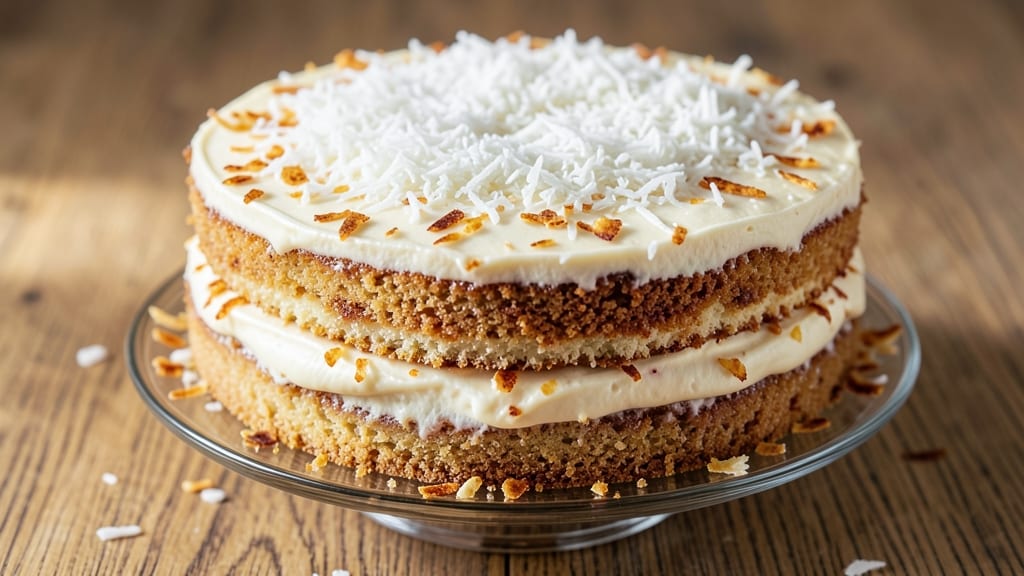
America's Test Kitchen coconut cake delivers ultra-moist layers infused with real vanilla bean that'll make you question every boxed cake you've ever bought. The secret lies in precise ingredient ratios and a vanilla bean paste that transforms ordinary cake into something truly extraordinary.
I've baked this recipe dozens of times—it never fails to impress with its tender crumb and perfect balance of coconut flavor without being overpowering.
What sets this apart is the two-stage mixing process that ensures maximum moisture retention. We begin with a simple batter of flour, sugar, and eggs, then fold in toasted coconut and vanilla bean paste in a way that distributes flavor evenly.
The cake bakes up with domed layers that stay tender for days, not dry by day three. This isn't your grandmother's coconut cake—it's a restaurant-quality dessert that's surprisingly simple to make at home.
The real magic happens in the frosting—a velvety coconut cream cheese frosting that complements rather than competes with the cake's natural flavors. Each bite delivers that perfect moist texture you crave in a coconut cake, with the vanilla bean adding depth that takes it from good to unforgettable.
The frosting's tangy sweetness cuts through the coconut richness, creating balance in every forkful.
Perfect for birthdays, holiday gatherings, or when you simply crave something special. The recipe scales beautifully for crowds while maintaining that foolproof quality that makes it ideal for beginners. Let's get baking—this cake is worth every minute of the process.
Ingredients for america's test kitchen coconut cake
This extraordinary coconut cake delivers restaurant-quality moisture and vanilla depth with just 13 ingredients.
| Ingredient | Amount | Notes |
|---|---|---|
| All-Purpose Flour 🌾 | 2 ½ cups | Sifted for even texture |
| Granulated Sugar 🍚 | 1 ½ cups | Superfine preferred for smoothness |
| Unsalted Butter 🧈 | 1 ¼ cups | Room temperature, cubed |
| Large Eggs 🥚 | 4 whole | Room temperature for even mixing |
| Vanilla Bean Paste 🌿 | 2 tbsp | High-quality for authentic flavor |
| Unsweetened Shredded Coconut 🥥 | 1 ½ cups | Toasted for enhanced aroma |
| Baking Powder 🧂 | 1 ½ tsp | Fresh for proper leavening |
| Salt 🧂 | ½ tsp | Kosher or sea salt |
| Cream Cheese 🧀 | 8 oz | Room temperature for smooth frosting |
| Powdered Sugar 🍚 | 3 cups | Sifted for fluffy texture |
| Heavy Cream 🥛 | 1 cup | Cold for stable whipping |
| Vanilla Extract 🌿 | 1 tsp | Pure vanilla for depth |
| Lemon Zest 🍋 | 1 tsp | Fresh for bright citrus notes |
The vanilla bean paste is non-negotiable here—look for brands like Madagascan or Tahitian at specialty stores or online. I always buy mine from Williams Sonoma when I need a reliable source. For the coconut, unsweetened is a must—sweetened will throw off the balance. The cream cheese should be full-fat; Philadelphia works perfectly. Toast your coconut in a dry pan for 3-4 minutes until golden—that aroma is everything—then let it cool before folding into the batter. The superfine sugar makes all the difference for a silky texture, but if you can't find it, pulse regular sugar in a food processor for 30 seconds.
No vanilla bean paste? Double the vanilla extract and add a pinch of ground vanilla bean seeds if you have them. Running short on cream cheese? Substitute with an equal amount of softened butter—though the frosting will be slightly less tangy. The lemon zest brightens the coconut flavor beautifully, but if you're out, orange zest works in a pinch. For the frosting, whip the cream to soft peaks—overbeating makes it grainy. And if you're making this ahead, assemble the cake and frost it a day in advance—the flavors meld even better overnight. The powdered sugar should be sifted to avoid lumps in the frosting.
This cake keeps beautifully—cover tightly with plastic wrap and store at room temperature for up to 3 days, or refrigerate for 5 days. The frosting stays fresh for 4 days in the fridge, though it's best used within 2 days. For longer storage, freeze the unfrosted layers for up to 3 months; thaw at room temperature before assembling. The toasted coconut can be prepped a week ahead and stored in an airtight container—its aroma alone will make your kitchen smell like a tropical paradise.
Why You'll Love This Recipe
- No-Fuss Layers: I swear, this cake comes together faster than my coffee brews—just mix, pour, bake. The secret’s in the one-bowl method with melted butter and sugar, no creaming required. My lazy Sundays just got a lot sweeter.
- Vanilla Butter Bliss: That vanilla bean paste? Not just flavor—it’s luxury in a jar. Paired with the buttery richness and toasted coconut (if you add it), every bite tastes like a bakery’s secret. Honestly, my husband licks the bowl.
- Birthday to Brunch: Too good for just dessert. I’ve served it at potlucks, packed slices for book club, even used it as a base for coconut cream pie—no one bats an eye. The crumb stays moist for days, so it’s my go-to for any celebration.
- Budget Bakes Better: Uses pantry staples—no fancy ingredients, no waste. A single cake feeds six, and leftovers? They disappear faster than my willpower when it’s warm. Between us, this is the cake that actually stretches my grocery budget.
Step-by-step instructions for america's Test Kitchen coconut cake
Here's how to create layers of ultra-moist coconut cake with rich vanilla bean infusion—every bite delivers on that signature Test Kitchen quality.
👨🍳 Step 1: Prepare the Cake Batter for Maximum Moisture
In a stand mixer fitted with the paddle attachment, combine the 1.25 cups unsalted butter and 1.5 cups granulated sugar on medium speed until light and fluffy, about 3-4 minutes. This creaming process incorporates air, which creates that signature tender crumb. Scrape down the bowl to ensure even mixing.
Add the 4 whole large eggs, one at a time, mixing well after each addition until fully incorporated. The mixture should be pale and thick—this ensures proper leavening. In a separate bowl, whisk together the 2.5 cups all-purpose flour, 1.5 tsp baking powder, 0.5 tsp salt, 2 tbsp vanilla bean paste, and 1.5 cups unsweetened shredded coconut. The vanilla bean paste adds depth that regular extract can't match.
With the mixer on low speed, gradually add the dry ingredients to the wet, mixing just until combined—you should still see small flour streaks. Overmixing develops gluten, which can make the cake dense. The batter should be thick and slightly sticky, perfect for creating those ultra-moist layers.
🍳 Step 2: Bake the Layers for Even Doneness
Preheat your oven to 350°F and grease three 8-inch round cake pans with butter or baking spray. Divide the batter evenly among the pans. Bake for 25-30 minutes, or until a toothpick inserted into the center comes out clean. The edges should be golden brown, but the centers should still look slightly underdone—they'll set as they cool.
I like to rotate the pans halfway through baking for even heat distribution. If the tops brown too quickly, tent the pans with foil. Let the cakes cool in their pans for 10 minutes, then transfer to a wire rack to cool completely. This gradual cooling prevents cracking and ensures even layers when assembling.
🥘 Step 3: Make the Vanilla Bean Cream Cheese Frosting
In a large mixing bowl, beat the 8 oz cream cheese and 1.25 cups unsalted butter (softened) on medium speed until smooth and creamy, about 2 minutes. Add the 3 cups powdered sugar, 1 tsp vanilla extract, and 1 tsp lemon zest, mixing until fully combined and fluffy. The lemon zest adds a bright contrast to the coconut flavor.
In a separate bowl, whip the 1 cup heavy cream to soft peaks, then gently fold it into the cream cheese mixture. This lightens the frosting without making it too sweet. The frosting should be thick but pipeable—if it's too stiff, add 1-2 tablespoons heavy cream to loosen it.
🍽️ Step 4: Assemble the Cake for Perfect Layers
Place the first cake layer on a serving plate and spread a generous layer of frosting on top. Repeat with the remaining two layers, frosting each one completely. The frosting should cover the sides and top evenly—this creates that classic Test Kitchen look and ensures every bite has that rich cream cheese flavor.
For the final touch, spread a thin layer of frosting over the entire cake and sprinkle the remaining 1.5 cups unsweetened shredded coconut evenly on top. Chill the cake in the refrigerator for 30 minutes before slicing. This resting period allows the layers to set and the flavors to meld, resulting in that signature moist texture and clean vanilla-coconut balance.
Pro Tips For Making America'S Test Kitchen Coconut Cake
- Whisk Eggs Until Ribbon-Thin: The recipe calls for room-temperature eggs, but don’t stop at just separating them—whisk the yolks and whites until they hold a slow ribbon when the whisk is lifted. I learned this the hard way when my cake turned dense; the extra aeration makes all the difference, especially with coconut’s natural heaviness.
- Sift Flour Twice: The recipe’s flour measurement is weight-based, but sift it before weighing and again after mixing with the dry ingredients. Coconut cake relies on lightness, and unsifted flour packs differently—even a little extra can throw off the texture. (Yes, it’s extra work, but your future self will notice.)
- Don’t Overmix the Batter: Once you fold in the coconut, stop mixing the second everything is just combined. Overmixing develops gluten, and this cake needs tender crumb, not chewiness. I used to worry about streaks, but the recipe’s structure handles it—trust the process.
- Rotate the Pan Mid-Bake: The cake’s edges dry faster than the center, so after 30 minutes, swap the pan’s front and back in the oven. I was skeptical until I saw the difference—no more dry edges or a gummy middle. (Pro move: Use a baking stone on the lower rack for even heat.)
Wine and beer pairings for this recipe
White Wine Pairings
For this coconut cake, reach for a dry Riesling from Germany—its crisp acidity and subtle honeyed notes complement the cake's tropical sweetness without overwhelming the vanilla. I love Dr. Loosen Blue Slate, which balances the coconut's richness beautifully.
The wine's mineral finish also cleanses your palate between bites, making each slice feel like a fresh experience. 🍷
Sparkling Wine Harmony
A dry Prosecco or Cava adds effervescence that enhances the cake's light texture. The bubbles help cut through the coconut's richness while the slight fruitiness in Prosecco mirrors the cake's vanilla notes.
For a special occasion, La Marca Prosecco from Italy delivers that perfect balance of sweetness and acidity. Serve chilled to highlight the wine's liveliness.
Beer Pairings
For beer lovers, a light lager like Corona Extra or Heineken works surprisingly well. The clean, crisp profile lets the cake's flavors shine without competing.
If you prefer something with a bit more character, try a Belgian witbier like Hoegaarden—its coriander and citrus notes create an interesting contrast with the coconut. Keep it cold to maintain the beer's refreshing quality. 🍺
Dark Rum Cocktail
For a tropical twist, serve this cake with a dark rum cocktail like a Rum Punch. Mix 2 oz dark rum (I recommend Appleton Estate or Diplomático), 1 oz pineapple juice, ½ oz lime juice, and a splash of grenadine.
The rum's caramel notes enhance the coconut while the citrus brightens the vanilla. Garnish with lime wheels for that resort-vibe presentation.
Non-Alcoholic Options
For non-drinkers, sparkling apple cider like Martinelli's provides the same refreshing acidity as white wine. The apple's subtle sweetness complements the cake's coconut flavor without overpowering it.
Chill it well and serve in elegant flutes for a sophisticated touch. Alternatively, ginger beer adds a spicy kick that contrasts beautifully with the cake's sweetness.
Nutrition facts
Frequently asked questions
Why does this coconut cake stay moist for days?
The secret lies in the two-stage mixing process and precise ingredient ratios. The butter-sugar cream incorporates air for a tender crumb, while the vanilla bean paste enhances moisture retention. The cake's high fat content (from butter and cream cheese frosting) prevents drying out. Plus, the 10-minute cooling in pans before transferring creates a seal that locks in moisture.
Can I make this cake without vanilla bean paste?
Yes! Double the 1 teaspoon vanilla extract and add a pinch of ground vanilla bean seeds if available. For deeper flavor, simmer 1 vanilla bean in 2 tablespoons sugar for 5 minutes, then scrape out the seeds and use the mixture. The cake will still be delicious—just slightly less complex in flavor.
How do I prevent coconut flavor from being overpowering?
The recipe balances coconut with lemon zest and vanilla bean for harmony. If you prefer milder flavor, reduce toasted coconut to 1 cup (save 0.5 cup for garnish). The cream cheese frosting also adds tangy contrast. For extra balance, add ½ teaspoon almond extract to the batter—it complements coconut beautifully.
Can I bake this in a different pan size?
For best results, use 8-inch round pans (3 layers). If using 9-inch pans, reduce batter by 20% per layer and bake 5-7 minutes less. For 6-inch pans, increase batter by 50% per layer. Always check doneness with a toothpick—overbaking dries out the cake. Adjust oven rack position if your oven runs hot or cold.
What's the best way to store leftovers?
Cover tightly with plastic wrap and store at room temperature for 3 days or refrigerate for 5 days. For longer storage, freeze unfrosted layers (up to 3 months)—thaw at room temperature before assembling. The frosting stays fresh for 4 days in the fridge. Refrigerated cake is even better the next day as flavors meld!