
Desserts
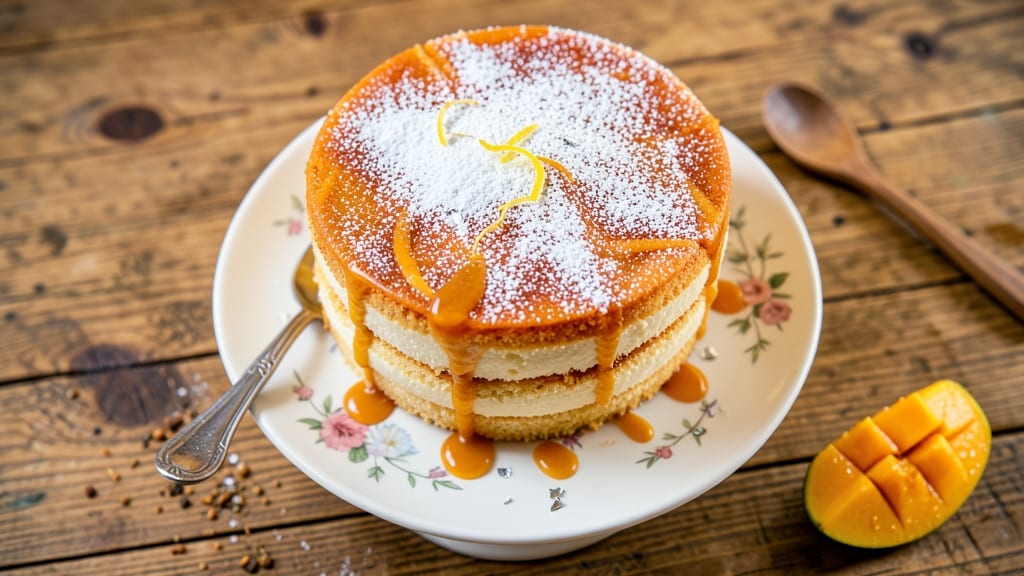
This Alphonso mango cake delivers a perfect balance of golden crust and rivers of juicy fruit that taste like summer in every bite. The secret lies in layering fresh mango purée with tender cake batter, creating pockets of vibrant fruit throughout.
I've perfected this recipe over years of baking, ensuring the mango flavor shines without overpowering the delicate vanilla-spiced cake base.
The cake achieves its signature texture through a precise folding technique with egg whites, resulting in a light, airy crumb that holds up beautifully to the rich mango filling. What makes this recipe special is how the mango's natural sweetness enhances rather than dominates the cake's flavor profile.
Each slice reveals layers of golden cake surrounding pools of bright orange mango that practically ooze with juice.
By the time it emerges from the oven, you'll have a cake with a perfectly crisp exterior and tender interior, where the mango's sweetness is perfectly balanced by the cake's subtle vanilla and citrus notes.
The aroma alone will have everyone gathering around your kitchen, and the first bite delivers that perfect combination of moist cake and juicy mango that makes this dessert unforgettable.
This recipe works equally well as a showstopping dessert for special occasions or as a comforting treat for a weeknight dessert craving. The measurements are straightforward, and the technique is beginner-friendly, making it accessible for home bakers of all skill levels while delivering restaurant-quality results.
Ingredients for alphonso mango cake
Golden crust meets rivers of juicy mango—here’s what you’ll need for summer’s most stunning dessert.
| Ingredient | Amount | Notes |
|---|---|---|
| Alphonso Mangoes 🍈 | 1 ½ lb | Ripe, juicy, peeled and puréed |
| All-Purpose Flour 🌾 | 2 ½ cups | Sifted for light texture |
| Granulated Sugar 🍚 | 1 ½ cups | White or light brown |
| Unsalted Butter 🧈 | 1 cup | Room temperature, full-fat |
| Large Eggs 🥚 | 4 whole | Room temperature, separated |
| Vanilla Extract 🌸 | 1 tbsp | Pure, high-quality |
| Baking Powder 🧂 | 2 tsp | Aluminum-free preferred |
| Salt 🧂 | ½ tsp | Fine sea salt |
| Lemon Juice 🍋 | 1 tbsp | Freshly squeezed |
| Powdered Sugar 🍚 | ½ cup | For dusting |
| Toasted Almond Slices 🌰 | ½ cup | For garnish |
| Heavy Cream 🥛 | ¼ cup | Whipped for topping |
The mango is non-negotiable. Alphonso mangoes are the gold standard—sweet, fragrant, and packed with juice. Whole Foods or specialty Indian markets usually carry them frozen during off-season, but fresh is ideal if you can find them. Look for vibrant orange color and a slight give when pressed. If fresh isn’t available, high-quality mango purée from a trusted brand works, but nothing beats the real thing. I always buy a few extra—half goes in the cake, half gets blended into smoothies. The purée should be smooth, with no pulp or seeds, so strain it if needed.
No Alphonso mangoes? Atul or Kent mangoes are solid substitutes, though slightly less sweet. For a budget option, blend regular mangoes and add 1 tbsp extra sugar to compensate. The butter must be room temperature—microwave it for 40 seconds if it’s cold. European-style butter like Plugrá has higher fat content, giving a richer flavor. Powdered sugar for dusting? Confectioners’ sugar is a must—it dissolves smoothly. And if you’re short on time, swap the whipped cream topping for store-bought whipped topping—just add a splash of vanilla to taste.
Store the purée in an airtight container in the fridge for up to 3 days—it’s the heart of this cake. The cake batter keeps for 1 day in the fridge, but bake it fresh for the best texture. Once baked, let it cool completely before slicing—at least 2 hours. Garnishes like almond slices and powdered sugar can be added right before serving, but the cake itself stays fresh for 3 days at room temperature or 1 week refrigerated. For longer storage, slice and freeze portions for up to 3 months—just thaw at room temperature.
Why You'll Love This Recipe
- No Chopping Needed: The only prep is peeling and pureeing those golden mangoes—no dice, no seeds, just blend until silky. Honestly, I’ve made this on days I forgot to grocery shop because the mango’s the star, and the rest is basic pantry stuff.
- Sunshine in Every Bite: That buttery mango puree soaks into the cake like a dream, while the eggs and sugar create this perfect balance—creamy but not dense, sweet but not cloying. (Yes, even on a Tuesday night, this tastes like summer vacation.)
- Crowd-Pleaser for Days: Slice it for breakfast, pack it for picnics, or serve it at potlucks—it’s the one dessert no one skips. Between us, I’ve seen grown men fight over the last piece, and it’s not even fancy.
- Leftovers? Best Part: This cake actually improves overnight—moisture locks in, flavors meld, and you’ll be sneaking slices for days. I’ll be real: my freezer’s always got a stash because it’s cheaper than buying a new cake every weekend.
Step-by-step instructions for Alphonso mango cake
Here's how to create a moist, fragrant cake with rivers of mango purée flowing through golden layers.
Prepare the Mango Purée and Wet Ingredients
Start by puréeing the 1.5 lb Alphonso mangoes until completely smooth—no visible chunks should remain. I use a food mill for this because it gives you that silky texture without any fiber. Add the purée to a mixing bowl and whisk in the 1 tbsp lemon juice and 1 tbsp vanilla extract. This brightens the mango flavor and balances the sweetness.
In a separate large bowl, cream together the 1 cup unsalted butter and 1.5 cups granulated sugar using an electric mixer on medium speed for 3-4 minutes. You're looking for a light, fluffy texture that nearly doubles in volume. This step is crucial—it incorporates air that will make your cake tender and moist. Scrape down the sides of the bowl as needed to ensure even mixing.
Combine Dry Ingredients and Fold in Wet Mixtures
In a medium bowl, sift together the 2.5 cups all-purpose flour, 2 tsp baking powder, and 0.5 tsp salt. This ensures a light, airy texture without lumps. Gently fold the dry ingredients into the butter-sugar mixture in three additions, mixing just until combined. Overmixing develops gluten, which can make your cake tough.
Next, add the 4 whole large eggs, one at a time, mixing well after each addition. Then, gently fold in the mango purée mixture until just combined. The batter will be thick and vibrant orange—this is perfect. Don't overmix; you want to preserve the air incorporated earlier. The cake should be smooth but still hold some streaks of mango purée.
Bake in Layers for Perfect Texture
Preheat your oven to 350°F and grease two 9-inch round cake pans with butter or baking spray. Divide the batter evenly between the two pans. Bake for 25-30 minutes, or until a toothpick inserted into the center comes out clean. The edges should be golden brown, and the top should spring back when gently pressed.
I like to bake both layers simultaneously for even cooking. As soon as they're done, remove from the oven and let them cool in the pans for 10 minutes. Then transfer to a wire rack to cool completely. This gradual cooling prevents cracking and ensures even layers for assembling.
Assemble and Frost the Cake
Once both layers are completely cool, place the first layer on a cake stand or plate. Spread a thin layer of 0.25 cup whipped heavy cream over the top to help the filling adhere. Then spread half of the remaining 0.5 cup powdered sugar evenly over the cream layer. Repeat with the second cake layer.
Now, pipe or spread the remaining 0.25 cup whipped heavy cream evenly over the top and sides of the cake. This creates a smooth, elegant finish. Press the 0.5 cup toasted almond slices gently into the sides of the cake for a beautiful presentation and added crunch. The almonds should be evenly distributed, covering about 75% of the cake's surface.
Chill and Serve for Maximum Juiciness
Cover the cake and refrigerate for at least 4 hours, or preferably overnight. This chilling time allows the flavors to meld and the cake to set properly. When you're ready to serve, dust the top with an additional sprinkle of powdered sugar for a professional finish.
The cake should be moist with rivers of mango purée visible through the golden layers. Each slice will reveal a perfect balance of tender crumb, sweet mango flavor, and creamy frosting. Serve at room temperature for the best texture and experience.
Pro Tips For Making Alphonso Mango Cake
- ROAST THE MANGOS: I learned this the hard way—raw mango puree makes the cake dense and cloying. Roast peeled, pitted Alphonso mango halves at 375°F (190°C) for 15-20 minutes until caramelized and soft. The concentrated sweetness and depth cut through the richness of the butter better than any blender trick.
- WHISK EGGS COLD: Warm eggs lose structure and make the cake gummy. Whisk them straight from the fridge with the sugar until the mixture lightens by 30%. Cold eggs also prevent butter from melting prematurely when you fold it in later—this is the thing that matters most for a tender crumb.
- SIFT THE FLOUR TWICE: Alphonso mango cake relies on air for height, and flour settles. Sift it directly into the dry ingredients before mixing, then sift again after folding in the butter-egg mixture. Yes, it’s extra work, but the difference in texture is noticeable—especially if you’re using a slightly heavier flour.
- TEST DONENESS BY TOUCH: Skip the toothpick—it’s too dry. Press the center lightly with a finger wrapped in a towel. If it springs back slowly (not instantly), it’s done. Overbaking dries out the mango flavor, and underbaking leaves the middle gummy. The oven’s hot spots will lie to you; trust your hand.
Storing and reheating your alphonso mango cake
Room-Temp Prep
Let your cake layers cool completely before assembling, but don't refrigerate the batter or purée before baking. The mango purée should sit at room temperature for 30 minutes before mixing—this ensures smooth blending and even distribution.
I always prep my mango purée first while the oven preheats, giving it time to reach the ideal consistency. 🍈
Short-Term Storage
Once fully assembled, store your cake in an airtight container at room temperature for up to 3 days. The golden crust stays crisp, while the mango filling remains juicy.
For best results, slice before storing—this prevents the layers from separating. I like using glass cake carriers from Pyrex because they maintain moisture better than plastic.
Refrigeration Secrets
Refrigerate for up to 1 week if you need longer storage, but let it sit at room temperature for 30 minutes before serving. The cold temperature helps preserve the mango's vibrant color and prevents the cake from drying out.
I always wrap the cake tightly in plastic wrap before placing it in the fridge to maintain freshness.
Freezing for Later
For maximum storage, freeze individual slices wrapped in parchment paper and placed in a ziplock bag for up to 3 months. Thaw overnight in the fridge—never at room temperature—to preserve texture. The mango flavor intensifies slightly after freezing, making it even more delicious when reheated. ✨
Reheating Tips
If you refrigerate or freeze the cake, reheat slices in the microwave for 15-20 seconds to restore moisture. For a more even warm-through, place slices on a baking sheet in a 300°F oven for 5-7 minutes. This gentle heat reactivates the mango's natural juices without overcooking the cake layers.
Garnish Refresh
Before serving, always add fresh toasted almond slices and a dusting of powdered sugar—this adds visual appeal and balances the mango's sweetness. I keep my garnishes in small jars on the counter so they're always ready to enhance the presentation.
The contrast of crunchy almonds against the soft cake is what makes this dessert truly special. 🌟
Nutrition facts
Frequently asked questions
Can I substitute Alphonso mangoes with regular mangoes?
Yes, but you'll need to adjust for flavor and texture. Regular mangoes are less sweet and may have more fiber, so blend them extra smooth and add 1 extra tablespoon of sugar to compensate. For the best results, use Atul or Kent varieties—they're sweeter and closer in texture to Alphonso. If using frozen mango purée, thaw it completely first to avoid watery batter.
Why does my cake turn out dense instead of light and airy?
Overmixing the batter is the most common cause. Once you add the flour, mix just until combined—about 10-12 strokes with a spatula. Also, ensure your egg whites are fully incorporated when folding them in. Another tip: don't overfill your pans—use 2/3 capacity maximum. Finally, check your baking powder—old powder loses its lift.
How do I prevent the mango filling from leaking out?
Chilling the cake for at least 4 hours before serving is key—the cold temperature helps set the cream layers. Also, use whipped heavy cream (not whipped topping) for better stability. For extra insurance, place the assembled cake in the fridge for 1 hour before the final chilling period. This creates a firmer barrier between layers.
Can I make this cake in a single layer instead of two?
For a single 9-inch layer, use the same batter but bake in one greased pan for 35-40 minutes at 350°F. Let it cool completely, then spread the mango purée evenly over the top before adding the cream and almond garnish. The texture will be slightly denser but still delicious—great for smaller gatherings!
What's the best way to serve this cake for a special occasion?
For a showstopping presentation, slice the cake with a hot knife (dip in hot water and wipe dry) for clean edges. Arrange slices on a gold-rimmed cake stand and garnish with fresh mint leaves and edible gold leaf. Serve with vanilla bean ice cream or a side of whipped cream for dipping. The contrast of colors makes it perfect for summer weddings or festive celebrations!