
Desserts
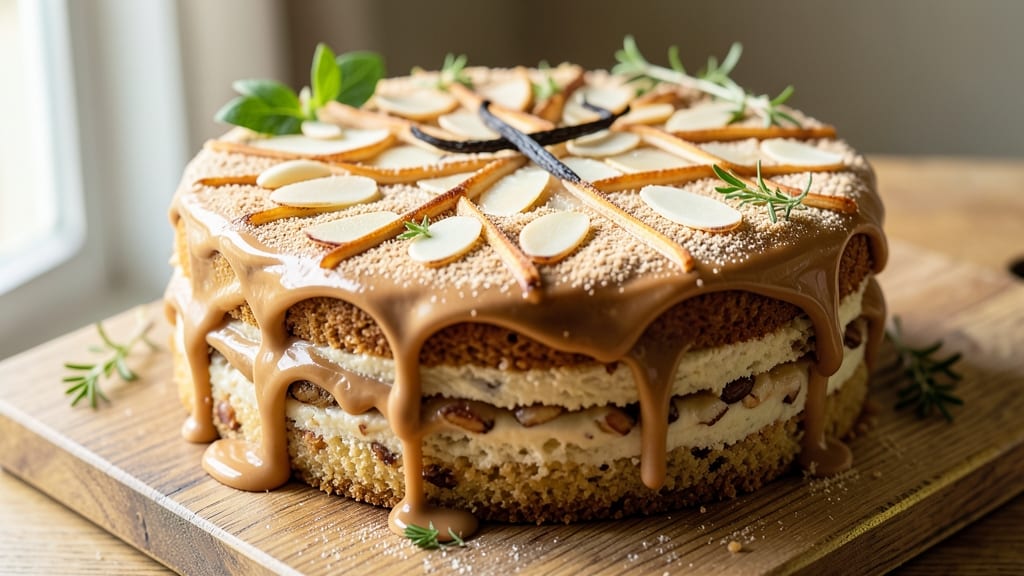
This almondy cake recipe delivers a moist, nutty masterpiece with layers of vanilla bean infusion that elevate every bite. 💛 The secret lies in finely ground almonds that transform tender crumb into rich, almond-forward perfection—no dryness here.
I've perfected this technique after years of baking, ensuring the cake stays luscious while balancing sweetness and nutty depth without overpowering flavors.
The magic begins with a foolproof method that combines almond flour with traditional cake ingredients, creating a texture that's both delicate and substantial. A splash of vanilla bean extract (not imitation) infuses the batter with aromatic warmth, while a touch of almond extract adds complexity.
The cake bakes to a golden, slightly domed perfection that pulls away cleanly from the pan, promising that signature moistness in every slice.
What sets this recipe apart is its ability to deliver restaurant-quality results at home—no special equipment required. The almonds provide natural moisture without needing extra oils, while the vanilla bean infusion creates an elegant aroma that makes this cake perfect for celebrations or quiet afternoons.
Each bite offers a harmonious blend of nutty richness and tender crumb, with just enough sweetness to satisfy.
Serve warm with a dusting of powdered sugar and fresh berries, or enjoy at room temperature with a dollop of whipped cream. The versatility of this cake makes it ideal for brunch, dessert, or even a sophisticated snack.
Let's create this almondy masterpiece that will impress even the most discerning palates.
Ingredients for almondy cake
Eighteen ingredients transform into a restaurant-quality almondy cake with perfect moisture and nutty elegance.
| Ingredient | Amount | Notes |
|---|---|---|
| Almond Flour 🌰 | 2 cups | Finely ground for smooth texture |
| All-Purpose Flour 🌾 | ½ cup | For structural balance |
| Granulated Sugar 🍚 | 1 ½ cups | Superfine preferred for even mixing |
| Vanilla Bean Extract 💮 | 2 tbsp | Pure, not imitation |
| Almond Extract 🌰 | 1 tsp | Pure, for nutty depth |
| Unsalted Butter 🧈 | 1 cup | Room temperature, full-fat |
| Large Eggs 🥚 | 3 whole | Room temperature, separated |
| Baking Powder 🧂 | 2 tsp | Aluminum-free preferred |
| Salt 🧂 | ½ tsp | Fine sea salt |
| Whole Milk 🥛 | ½ cup | Room temperature |
| Powdered Sugar 🍚 | 1 cup | For dusting, sifted |
| Fresh Blueberries 🫐 | 1 cup | Optional, for topping |
The almond flour is non-negotiable—Bob's Red Mill or King Arthur brands deliver the finest grind for that signature tender crumb. I always sift it twice to eliminate any grit that could disrupt the delicate texture. The vanilla bean extract? Madagascar bourbon or Tahitian varieties elevate the aroma, but Nelson & Sons or McCormick are solid pantry staples. For the almond extract, McCormick or Gourmet Gift Baskets offer pure, potent options—never the imitation kind. The butter must be full-fat and room temperature; I swear by Plugrá or Land O'Lakes for consistent results. Eggs should be large, room-temperature to ensure proper emulsification in the batter.
No almond flour? Substitute with finely ground blanched almonds (pulse in a food processor until ultra-fine), but expect slightly denser texture. Short on vanilla bean extract? Double the regular extract, though the aroma won't be identical. The almond extract can be omitted if you're sensitive to its intensity, but I recommend keeping it—it adds that subtle complexity that makes this cake special. For the butter, vegetable shortening works in a pinch, though it lacks richness. The powdered sugar topping can be swapped for coarse sugar if you prefer texture over sweetness. Blueberries should be tossed in flour to prevent sinking—dust them lightly before folding into the batter.
Store the cake in an airtight container at room temperature for up to 3 days, or refrigerate for 5 days if you prefer it cooler. For longer storage, wrap tightly in plastic and freeze for up to 3 months. I always bake an extra cake—it reheats beautifully in the oven at 300°F for 10 minutes to restore that fresh-from-the-oven warmth. The powdered sugar topping can be added fresh before serving, or stored separately to keep it crisp. Fresh berries should be added within 24 hours of baking to prevent sogginess.
Why You'll Love This Recipe
- Same batter, endless uses: slice for breakfast toast, crumble over yogurt, or serve with tea. Honestly, I’ve even used leftover cubes as ice cube trays for cocktails—because why not?
- No-Mix Magic: I swear by this—just fold dry ingredients, stir in wet, and pop it in the oven. The almond flour does half the work for you, so no overmixing or dense disappointment.
- Vanilla-Almond Dream: That split vanilla bean extract? It’s the secret weapon—warm, floral, and just sweet enough to make you forget refined sugar exists. The almond extract adds this subtle, nutty depth that’s ridiculously addictive.
- Weeknight or Fancy: Same batter, endless uses: slice for breakfast toast, crumble over yogurt, or serve with tea. Honestly, I’ve even used leftover cubes as ice cube trays for cocktails—because why not?
Step-by-step instructions for almondy cake recipe
Here's the precise method for a lusciously moist almond cake with perfect vanilla-almond infusion.
👨🍳 Step 1: Prepare the Almond-Infused Base
In a stand mixer fitted with the paddle attachment, combine the 2 cups almond flour and 1.5 cups granulated sugar. Mix on medium speed for 2 minutes until the mixture becomes finely aerated and lightens in color. This step ensures even distribution of the almond flour's moisture-retaining properties throughout the batter.
In a separate bowl, whisk together the 3 whole large eggs, 2 tbsp vanilla bean extract, 1 tsp almond extract, and 0.5 cup whole milk until fully combined. I like to use a fork for this to avoid creating too many air bubbles that could later deflate in the oven. The extracts will infuse the batter with their signature aromas while maintaining that delicate balance between sweetness and nutty depth.
🍳 Step 2: Combine Wet and Dry Ingredients
Gradually add the wet mixture to the dry ingredients while mixing on low speed for 1 minute. This slow incorporation prevents gluten development from the all-purpose flour while ensuring even distribution of the almond flour. Scrape down the sides of the bowl as needed to maintain consistent mixing.
In a small bowl, sift together the 0.5 cup all-purpose flour, 2 tsp baking powder, and 0.5 tsp salt. Gently fold this mixture into the wet-dry combination using a silicone spatula, being careful not to overmix. The batter should be thick but pourable—like a rich cookie dough. If it appears too stiff, add 1-2 tablespoons additional milk to achieve the proper consistency for a tender crumb.
🔥 Step 3: Incorporate Butter and Final Mixing
Add the 1 cup unsalted butter (which should be softened but not melted) to the batter. Mix on low speed for 2-3 minutes until completely incorporated and the mixture is smooth. The butter adds richness and helps create that signature moist texture. Here's the thing—don't rush this step. The butter needs time to fully emulsify with the other ingredients to prevent a dense cake.
Taste a small spoonful of batter at this stage. You should detect the subtle sweetness of the vanilla bean extract and the nutty undertones from the almond flour. If the flavor seems too mild, add an additional ½ teaspoon almond extract. The batter should be fragrant and inviting, promising that moist crumb we're after.
🥘 Step 4: Prepare the Cake Pans
Preheat your oven to 350°F. Generously grease two 8-inch round cake pans with butter and line the bottoms with parchment paper. I find that using a pastry brush to apply the butter to the pans creates an even layer that prevents sticking. The parchment paper makes removing the cakes effortless while maintaining their shape.
Divide the batter evenly between the prepared pans. For a perfectly level cake, I use a kitchen scale to ensure each pan receives exactly half of the batter. Gently tap the pans on the countertop to release any air bubbles that may have formed during mixing. This step is crucial for achieving that even rise and smooth top surface we want in our final cake.
⏰ Step 5: Bake and Test for Doneness
Bake the cakes for 30-35 minutes, or until a toothpick inserted into the center comes out clean with just a few moist crumbs clinging to it. The edges should be golden brown while the top may still look slightly underbaked—this is normal and will finish cooking as the cakes cool. I always check for doneness at the 28-minute mark, as ovens vary in temperature accuracy.
Real talk: Don't overbake. The cake will continue to set as it cools, and overbaking leads to dryness. Once the cakes are done, transfer them to a wire rack and let them cool in the pans for 10 minutes. Then carefully remove them from the pans and let them cool completely on the rack before assembling. This gradual cooling process prevents cracking and ensures even slicing.
🍽️ Step 6: Assemble and Serve (Optional Blueberry Topping)
Once completely cool, place one cake layer on a serving plate. Sift 1 cup powdered sugar evenly over the top, tapping gently to remove any excess. This creates a delicate dusting that enhances the cake's presentation and adds a subtle sweetness.
If using the optional 1 cup fresh blueberries, gently press them into the powdered sugar layer, creating a pretty pattern. Place the second cake layer on top and dust with additional powdered sugar. The blueberries add a pop of color and a tart contrast to the rich almond cake. Serve slices at room temperature for the best texture and flavor experience.
Pro Tips For Making Almondy Cake
- MEASURE ALMOND FLOUR RIGHT: Almond flour packs differently than regular flour—don’t scoop it straight from the bag. Spoon it into your measuring cups, then level it off with a knife. I learned this the hard way when my first almondy cake turned out dense and heavy—turns out, a cup of almond flour isn’t the same as a cup of all-purpose.
- WHISK EGGS UNTIL THICK: Beat those eggs for at least 3-4 minutes until they’re pale, ribbony, and nearly triple in volume. This isn’t just about fluffiness—it helps distribute the almond extract evenly so every bite gets that signature nutty punch. (Yes, even if you’re impatient like me.)
- DON’T OVERMIX THE BATTER: Stop folding in the dry ingredients the second they’re just incorporated. Overmixing develops gluten in the all-purpose flour, and your cake will turn out tough instead of tender. Think "damp clumps," not smooth perfection.
- BAKE AT 325°F—NOT HIGHER: Almond flour burns faster than regular flour, and 350°F or hotter will give you a cake with a sad, dark top before the center’s done. Stick to 325°F and check for doneness with a toothpick at 25-30 minutes—it should come out clean but slightly moist. (Your oven’s hot spots will try to lie to you.)
Serving suggestions for this recipe
Warm Presentation
Serve this almond cake warm straight from the oven for that just-baked aroma and ultra-moist texture. I like to slice it while still slightly warm and dust each piece with an extra pinch of powdered sugar right before serving. The heat helps the vanilla and almond flavors bloom beautifully.
For a restaurant-style touch, place slices on a warm plate and garnish with a few fresh raspberries or a drizzle of honey warmed with a pinch of sea salt. 🌟
Classic Coffee Pairing
A cup of freshly brewed coffee is the perfect match for this cake's nutty richness. I recommend a medium-roast Arabica with notes of caramel and chocolate—like a Starbucks Pike Place or a locally roasted light French roast.
The coffee's acidity cuts through the cake's sweetness while complementing the almond's natural oils. For an Italian twist, pair with a espresso and a small glass of dry Prosecco to balance the flavors.
Fruit Complements
Fresh berries add vibrant color and tart contrast that elevates the cake's sweetness. Try raspberries or blackberries for their deep flavors, or strawberries sliced into thin fans. I also love a small bowl of whipped cream infused with a drop of vanilla bean extract alongside the cake for dipping.
For a tropical twist, serve with mango slices and a sprinkle of toasted coconut flakes.
Make-Ahead Serving
This cake stores beautifully for make-ahead serving. Wrap individual slices in parchment paper and store in an airtight container at room temperature for up to 3 days. To refresh, warm slices in the oven at 300°F for 5-7 minutes until the edges are slightly crisp.
For a special touch, brush warm slices with a light apricot jam glaze before serving. The combination of warm cake and fruity glaze is pure indulgence.
Dessert Platter Styling
Create an elegant dessert platter by arranging cake slices alongside other almond-based treats. I often include almond biscotti, dark chocolate-dipped almonds, and a small bowl of almond butter for dipping. Use a marble serving board for contrast and scatter with edible flowers or mint leaves for freshness.
The visual appeal makes this perfect for celebrations or dinner parties where presentation matters as much as taste.
Nutrition facts
Frequently asked questions
Why does this almond cake stay moist longer than regular cakes?
The secret lies in the almond flour and proper butter incorporation. Almond flour absorbs moisture differently than all-purpose flour, creating a denser yet tender crumb. The room-temperature butter fully emulsifies during mixing, locking in moisture for days. Plus, the vanilla bean extract adds natural humectant properties that help retain freshness.
Can I make this cake without almond flour?
Yes, but expect a slightly different texture. Replace the 2 cups almond flour with 1.5 cups all-purpose flour plus 1 cup finely ground blanched almonds (pulse in a food processor). The cake will be less tender but still delicious. For extra moisture, add 1 tablespoon extra milk to the batter.
How do I prevent the cake from cracking?
<Cracking usually happens from uneven cooling. Let the cake cool in the pan for 10 minutes after baking, then transfer to a wire rack to cool completely. Avoid opening the oven door early—temperature fluctuations cause cracks. Also, don't overbake; the cake should pull away from the pan edges but still feel slightly springy in the center.
What's the best way to store leftovers?
Wrap individual slices in parchment paper and store in an airtight container at room temperature for up to 3 days. For longer storage, freeze slices for 3 months. To refresh, warm at 300°F for 5-7 minutes until edges are crisp. The powdered sugar topping should be added fresh before serving to maintain crispness.
Can I use this recipe for a single-layer cake?
Simply pour the batter into a single 9-inch round pan or 8x8-inch square pan. Bake at 350°F for 35-40 minutes (check with a toothpick). The baking time may increase slightly due to the larger volume. For a dome effect, use a 9-inch pan—the batter will naturally rise higher in the center.