
Desserts
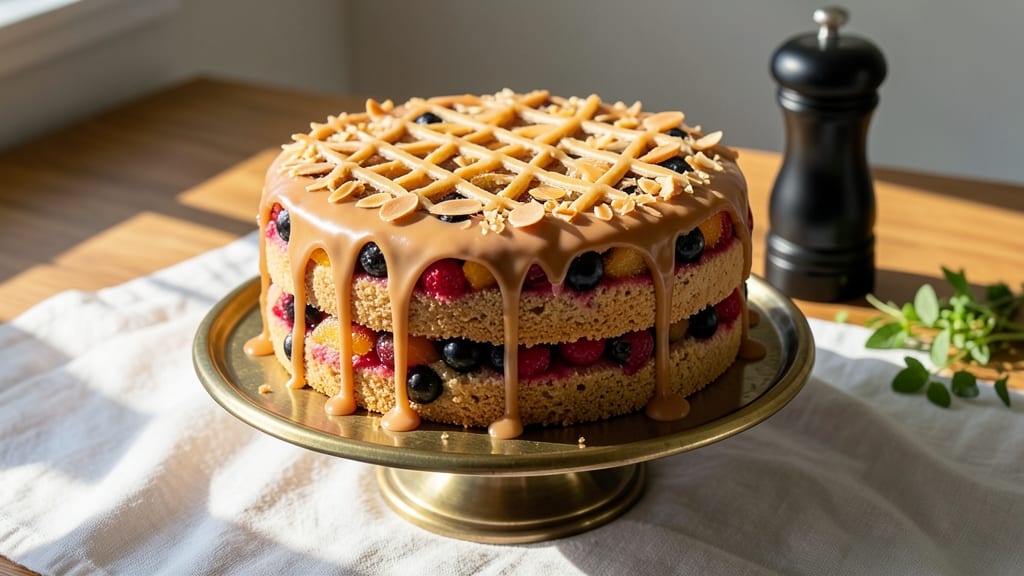
This almond fruit cake recipe delivers the perfect balance of nutty richness and vibrant citrus notes that keep every slice moist for days. 💛 The secret lies in a marbled almond paste swirled into the batter, creating pockets of buttery flavor while the fruit compote adds bursts of tangy sweetness that cut through the density.
What sets this cake apart is the dual-texture technique—almond flour keeps it tender, while toasted almond slices on top add a satisfying crunch. The citrus zest in the batter infuses subtle brightness that prevents heaviness, making each bite feel light yet indulgent.
Baking at a precise temperature ensures a golden crust without drying out the interior.
By the time it emerges from the oven, you'll have a cake with a fragrant aroma that fills your kitchen, a tender crumb that melts in your mouth, and just enough moisture to keep it delicious for up to a week.
The almond paste creates beautiful marbling, while the fruit compote adds pockets of juicy contrast in every slice. Perfect for holidays, gifts, or satisfying cravings, this cake adapts easily to gluten-free flour or vegan butter without sacrificing texture. Let's get baking!
Ingredients for almond fruit cake
Gather these nutty citrus ingredients for a cake that stays moist for days.
| Ingredient | Amount | Notes |
|---|---|---|
| Almond Flour 🥜 | 2 ½ cups | Finely ground for tender crumb |
| All-Purpose Flour 🌾 | ½ cup | For structure balance |
| Unsalted Butter 🧈 | 1 ½ cups | Cold, cubed for marbling |
| Granulated Sugar 🍚 | 1 ½ cups | Light brown preferred |
| Almond Paste 🥜 | 1 cup | High-quality for marbling |
| Large Eggs 🥚 | 3 whole | Room temperature |
| Lemon Zest 🍋 | 1 tbsp | Freshly grated |
| Orange Zest 🍊 | 1 tbsp | Freshly grated |
| Vanilla Extract 🌸 | 1 tbsp | Pure vanilla preferred |
| Baking Powder 🍞 | 1 tsp | Aluminum-free |
| Salt 🧂 | ½ tsp | Fine sea salt |
| Toasted Almond Slices 🥜 | 1 cup | For crunchy topping |
| Dried Mixed Fruit 🍇 | 1 ½ cups | Chopped, soaked overnight |
| Orange Juice 🍊 | ½ cup | Freshly squeezed |
| Brandy or Rum 🍷 | 2 tbsp | Optional for depth |
The almond flour is the star here—Bob's Red Mill or Anthony's Goods are my go-tos for the finest grind. You can find it in the baking aisle or online, but avoid pre-ground flour that's been sitting for months. For the almond paste, Marzipan House makes the best store-bought version, but homemade is worth the effort if you're feeling ambitious. The citrus zest needs to be fresh—those little bottles of pre-grated zest in stores are usually sad and flavorless. Toast your almond slices in a dry pan for about 3-4 minutes until golden, then set aside for that perfect crunch. If you're gluten-free, swap the all-purpose flour for a 1:1 gluten-free blend like King Arthur.
No almond flour? Almond meal works in a pinch, but it's coarser and won't give the same tender texture. Running short on brandy? Orange liqueur or even more orange juice adds depth without alcohol. The dried fruit can be any mix—raisins, cranberries, or dried apricots all work, but soak them in warm water for 20 minutes to plump them up. For the citrus zest, if you only have one type, go with lemon—it's more vibrant. The baking powder is non-negotiable here, but if you're out, whisk baking soda with cream of tartar at a 1:2 ratio as a substitute. And trust me, the butter needs to be cold when you start—this isn't the time to use softened butter from the fridge.
This cake keeps beautifully for up to 1 week in an airtight container at room temperature, but honestly, it's even better the next day as the flavors meld. If you're making it ahead for a holiday, wrap it tightly in plastic and store it in the fridge for up to 3 days. The toasted almond slices on top stay crisp for about 2 days, so if you're prepping early, toast a fresh batch before serving. For extra moisture, brush the top with a simple syrup made from equal parts sugar and water—just heat until dissolved and let cool. Slice with a warm knife for cleaner cuts, and always serve at room temperature for the best texture.
Why You'll Love This Recipe
- No-Fuss Mixing: I swear by this recipe—just fold the almond flour and paste into the butter-sugar base, then dump in the wet ingredients. No sifting, no overworking the dough. The almond paste keeps it moist without extra fuss.
- Rich Nutty Depth: That almond flour and paste combo? It’s like dessert in every bite. The butter keeps it tender, but the toasted almond notes make it taste like a bakery secret—not just another cake.
- Holiday or Snack: Between us, this cake is my go-to for Christmas gifts and my kids’ after-school snack stash. Slice it thin for tea sandwiches or serve it whole with coffee—no judgment either way.
- Budget-Friendly Luxury: Almond flour might seem pricey, but a little goes a long way here. One batch feeds a crowd, and the leftovers? Still delicious days later. I’ve even frozen slices for lazy mornings—no one’s complaining.
Step-by-step instructions for almond fruit cake
Here's how to bake a cake that stays moist for days with perfect almond flavor and bright citrus notes.
👨🍳 Step 1: Soak and Prepare the Fruit
First, chop the 1.5 cups dried mixed fruit into small, even pieces if they're not already uniform. Place them in a bowl and pour over the 0.5 cup orange juice. Add the 2 tbsp brandy or rum (if using) and let it soak for at least 4 hours or overnight in the refrigerator. This step ensures the fruit stays juicy and plump in the cake.
I know it seems like too much liquid, but trust me—this prevents the cake from drying out. The fruit should be completely saturated, almost like a fruit salad consistency. Drain the fruit just before using, reserving the soaking liquid for the batter if you like extra moisture.
🍳 Step 2: Cream Butter and Sugar Together
In a stand mixer fitted with the paddle attachment, beat the 1.5 cups unsalted butter (cold, cubed) with the 1.5 cups granulated sugar on medium speed for 3-4 minutes. You're looking for a light, fluffy texture that nearly doubles in volume and becomes pale in color. This creaming process incorporates air, which creates that tender crumb we want.
The butter should be completely creamed with no graininess remaining. If it looks too soft after mixing, chill the bowl for 10 minutes to firm it up slightly. This step is crucial—under-creamed butter leads to dense cake.
👨🍳 Step 3: Add Eggs and Zests Gradually
Add the 3 whole large eggs, one at a time, mixing on low speed for 30 seconds after each addition until fully incorporated. Then add the 1 tbsp lemon zest, 1 tbsp orange zest, and 1 tbsp vanilla extract, mixing just until combined. The mixture should be smooth with no streaks of zest remaining.
Here's the thing—zest adds incredible flavor but can be overpowering if not distributed evenly. Mix just until combined to avoid developing gluten in the eggs. The batter should be thick and pale yellow with bright citrus flecks.
🥘 Step 4: Combine Dry Ingredients and Fold Gently
In a separate bowl, whisk together the 2.5 cups almond flour, 0.5 cup all-purpose flour, 1 tsp baking powder, and 0.5 tsp salt. Sift if possible to prevent lumps. Gradually add this dry mixture to the wet ingredients, mixing on low speed just until combined. Be careful not to overmix—you should still see small flour streaks.
Then fold in the 1 cup almond paste using a spatula. The almond paste should be broken up into small pieces but not overmixed. Add the soaked fruit (drained) and the 1 cup toasted almond slices, reserving a few for the topping if desired. Fold everything together gently—this keeps the cake tender.
⏰ Step 5: Bake and Create the Signature Topping
Preheat your oven to 350°F. Grease and line two 9-inch round cake pans or one 9x13-inch pan with parchment paper. Divide the batter evenly between the pans. For extra flavor, sprinkle the reserved toasted almond slices on top of each cake layer.
Bake for 35-40 minutes (or 45-50 minutes for the 9x13-inch pan) until a toothpick inserted in the center comes out clean. The cake should be golden brown and spring back when gently pressed. For even baking, rotate the pans halfway through the baking time if using round pans.
🍽️ Step 6: Layer and Finish with Citrus Glaze
Let the cakes cool in their pans for 15 minutes, then transfer to a wire rack to cool completely. For a layered cake, spread a thin layer of orange juice glaze (mix 2 tbsp orange juice with 1 tbsp powdered sugar) between layers. The glaze adds moisture and bright citrus flavor.
For the final touch, brush the top with additional glaze and sprinkle with extra toasted almond slices. This cake tastes best after resting for 24 hours—the flavors meld beautifully and the texture becomes perfectly moist. Store wrapped at room temperature for up to 5 days or refrigerated for 1 week.
Pro Tips For Making Almond Fruit Cake
- Cream Butter Cold: DESCRIPTION:
- Sift Almond Flour Twice: DESCRIPTION:
- Don’t Overmix the Paste: DESCRIPTION:
- Bake Low and Slow: DESCRIPTION:
Troubleshooting this recipe
Dense Cake Texture
If your cake turns out too dense, it’s likely from overmixing the batter or using warm butter. Always use cold, cubed butter straight from the fridge, and mix the dry ingredients just until combined—no streaks should remain.
I also recommend sifting the almond flour and all-purpose flour together to prevent lumps that can weigh down the texture. 🥜
Dry or Crumbly Cake
Dryness usually means the cake baked too long or the oven ran too hot. Use an oven thermometer to confirm your oven’s accuracy—many run hotter than the set temperature. Bake until a toothpick comes out with moist crumbs (not completely clean), then pull it out immediately.
For extra moisture, brush warm cake layers with simple syrup (equal parts sugar and water, heated until dissolved) while still warm.
Uneven Baking
Uneven baking often happens with round pans or when the oven isn’t preheated properly. Always preheat your oven for at least 20 minutes before baking, and rotate the pans halfway through if using round cake pans.
For a 9x13-inch pan, place it on the middle rack to ensure even heat distribution. If your oven has hot spots, consider using an oven thermometer to monitor temperature variations.
Cracked Top or Sinking Center
Cracks or a sinking center usually mean the cake cooled too quickly or the oven temperature fluctuated. Let the cake cool in the pan for 15-20 minutes before transferring to a wire rack, and avoid opening the oven door during baking.
If the center sinks slightly, it’s often fixable—just add a thin layer of orange glaze before serving to mask the issue. For extra stability, bake the cake in a water bath (place the pan in a larger pan filled with hot water) to regulate temperature.
Fruit Too Dry or Hard
If your dried fruit stays tough, it likely didn’t soak long enough. Soak the fruit in orange juice for at least 4 hours (overnight is best) to ensure it plumps up properly. For extra moisture, reserve the soaking liquid and mix 1-2 tablespoons into the batter.
If the fruit still feels dry after baking, try using fresh fruit (like diced apricots or peaches) instead of dried for a juicier texture.
Almond Paste Not Marbling
For beautiful marbling, the almond paste must be broken into small, pea-sized pieces before folding into the batter. Use a spatula to gently swirl the paste into the batter in a circular motion, creating visible streaks.
If the paste clumps, soften it slightly by kneading it with your hands or microwaving for 5-10 seconds. Avoid overmixing—just fold until the paste is evenly distributed for a classic marbled effect. 🌟
Nutrition facts
Frequently asked questions
Can I make this almond fruit cake without almond flour?
You can substitute almond flour with almond meal (though texture will be slightly coarser), or use a 1:1 gluten-free flour blend like King Arthur's. For best results, add 1 extra egg white to help bind the cake. The nutty flavor will be less intense, but the citrus and fruit notes will still shine.
How do I prevent my cake from being too dry?
Keep the cake moist by soaking dried fruit overnight in orange juice, and consider adding 1-2 tbsp reserved soaking liquid to the batter. Brush warm layers with simple syrup (equal parts sugar and water) while cooling. Bake until a toothpick comes out with moist crumbs—not completely clean—and avoid overbaking.
What's the best way to store this cake?
Wrap the cake tightly in plastic wrap and store at room temperature for up to 5 days. For longer storage (up to 1 week), refrigerate. The toasted almond topping stays crisp for 2 days, so toast fresh slices before serving if storing longer. For gifting, wrap in parchment paper and tie with ribbon for a festive touch.
Can I make this cake gluten-free or vegan?
For gluten-free, replace all-purpose flour with a 1:1 gluten-free blend and ensure your almond flour is certified GF. For vegan, substitute butter with vegan butter or coconut oil, and use flax eggs (1 tbsp ground flax + 3 tbsp water per egg). The texture may be slightly denser, but the citrus-almond flavor remains delicious.
Why does my almond paste clump when mixing?
Almond paste clumps when it's too cold or dry. Knead it briefly with your hands or microwave for 5-10 seconds to soften. Break it into pea-sized pieces before folding into the batter, and mix gently to avoid overworking. For best marbling, use a spatula to swirl the paste into the batter in circular motions.