
Desserts
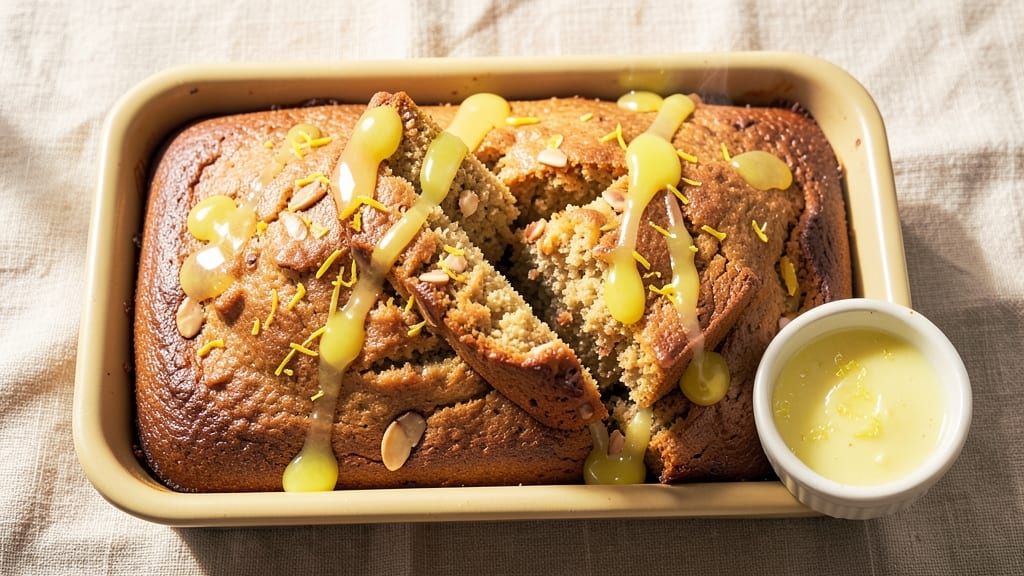
This almond flour lemon pound cake delivers a tender, crumbly texture with bright citrus notes that elevate every bite. The secret lies in blending almond flour's natural richness with zesty lemon juice and zest, creating a moist yet delicate crumb that's perfect for special occasions or afternoon treats.
I've perfected this recipe to ensure it stays tender without becoming dense, making it ideal for those who love gluten-free baking without sacrificing flavor.
The recipe combines simple ingredients like eggs, almond flour, and a touch of honey for subtle sweetness, while fresh lemon juice and zest infuse each layer with vibrant flavor.
Baking at 350°F for 45-50 minutes ensures a golden crust and perfectly set interior, though the cake's moisture comes from the almond flour itself—no extra oils needed. This version is naturally vegetarian and can easily be adapted for keto or low-carb diets by adjusting the sweetener.
What sets this cake apart is its balance: the almond flour provides a delicate crumb, while the lemon keeps it from feeling heavy. A light glaze of powdered sugar and lemon juice enhances the brightness, making it ideal for brunch or dessert.
The result is a cake that's elegant yet approachable, with a texture that's neither too dense nor too crumbly—just right for slicing and sharing.
Perfect for celebrating milestones or simply indulging, this pound cake pairs beautifully with tea or a dollop of whipped cream. The recipe scales easily for larger gatherings, and leftovers stay fresh for days when stored properly. Let's get started on creating a cake that's as impressive as it is delicious.
Ingredients for almond flour lemon pound cake
Bright citrus meets delicate crumb—just eight ingredients transform into this elegant lemon pound cake.
| Ingredient | Amount | Notes |
|---|---|---|
| Almond Flour 🌰 | 2 ½ cups | Finely ground, unsweetened preferred |
| Large Eggs 🥚 | 6 whole | Room temperature for even mixing |
| Granulated Sugar 🍯 | 1 ½ cups | Or substitute honey/maple syrup |
| Unsalted Butter 🧈 | 1 cup | Cold, cubed, not melted |
| Fresh Lemon Juice 🍋 | ½ cup | From 2-3 lemons, freshly squeezed |
| Lemon Zest 🍋 | 2 tbsp | From 2 large lemons, finely grated |
| All-Purpose Flour 🌾 | ½ cup | For structure, gluten-free blend optional |
| Baking Powder 🍞 | 2 tsp | Aluminum-free for best results |
| Salt 🧂 | ½ tsp | Fine sea salt preferred |
| Vanilla Extract 🌿 | 1 tsp | Pure, high-quality extract |
| Powdered Sugar 🍯 | ¼ cup | For glaze, sifted for smooth finish |
| Heavy Cream 🥛 | ¼ cup | Optional, for glaze richness |
The almond flour is non-negotiable here—Bob's Red Mill or King Arthur brands ensure fine texture. Look for unsweetened varieties to control sweetness. Fresh lemons make all the difference; organic Meyer lemons from the grocery store's produce section add subtle floral notes. If using granulated sugar, Domino or C&H brands work best for consistent baking. The butter should be cold when creamed—Plugrá or Land O'Lakes work well, but avoid salted varieties. For the lemon zest, use a fine grater and remove only the yellow outer layer—no white pith, which can turn bitter.
No almond flour? Substitute with a 1:1 gluten-free flour blend, but texture may vary. Running short on eggs? Flax eggs (1 tbsp ground flax + 3 tbsp water per egg) work in a pinch, though texture might be slightly denser. Swap granulated sugar for maple syrup or honey at a 1:1 ratio, but reduce other liquids by 2 tbsp to maintain moisture. For a tangier glaze, add an extra tablespoon of lemon juice. The baking powder is crucial—Clabber Girl is a reliable brand. If you prefer less sweetness, reduce the granulated sugar to 1 cup and add an extra tablespoon of lemon zest for brightness.
Store the cake in an airtight container at room temperature for up to 3 days or refrigerate for 5 days. The glaze sets best at room temperature, so bring it out 30 minutes before serving. For longer storage, wrap tightly in plastic and freeze for up to 3 months. Reheat slices in the oven at 300°F for 5-10 minutes to restore moisture. The cake's delicate texture means it's best enjoyed fresh, but a quick warm-up revives its tenderness. Slice with a serrated knife for clean cuts—almond flour cakes can crumble easily.
Why You'll Love This Recipe
- No Mixer Needed: I swear by this recipe when I’m in a rush—just whisk eggs and butter until fluffy, fold in the almond flour, and you’re done. The batter’s so light it practically mixes itself.
- Citrus Kicks Sugar: That bright lemon juice cuts through the richness of the butter and almond flour, making every bite taste like a sunlit morning. Honestly, the first slice disappears faster than I can say “gluten-free.”
- Weeknight or Guest Day: Slice it warm for breakfast with coffee, pack it for lunches, or serve it at brunch—it’s that versatile. (Yes, even on a Tuesday night when you forgot to plan ahead.)
- Leftovers That Last: The texture stays moist for days, so I bake a double batch and freeze slices. Thaw one for a quick snack, or toss it in a bag for road trips—no sad, dry crumbs here.
Step-by-step instructions for almond flour lemon pound cake
This method delivers a tender, moist cake with a bright citrus flavor and perfect crumb.
Prep Ingredients and Preheat Oven
Preheat your oven to 350°F and grease an 8x4-inch loaf pan thoroughly with butter, then dust with flour. This ensures easy removal later. While the oven heats, whisk together the 2.5 cups almond flour, 0.5 cup all-purpose flour, 2 tsp baking powder, and 0.5 tsp salt in a medium bowl. Sift the dry ingredients once to eliminate any lumps—this prevents a dense texture in your cake.
In a separate large bowl, beat the 6 whole large eggs and 1.5 cups granulated sugar with an electric mixer on medium-high speed for 3-4 minutes until the mixture is pale, thick, and nearly tripled in volume. This step incorporates air, which creates the cake's signature lightness. The mixture should look fluffy and ribbon-like when you lift the beaters.
Combine Wet Ingredients and Lemon Flavor
Add the 1 cup cold cubed unsalted butter to the egg mixture, beating on low speed until just combined. The butter should be incorporated but still visible in small pieces—this creates pockets of moisture in the cake. Next, stir in the 0.5 cup fresh lemon juice and 2 tbsp lemon zest until fully distributed. The mixture will brighten in color and smell intensely citrusy.
Gently fold in the dry ingredients using a spatula, mixing just until no flour streaks remain. Avoid overmixing—this develops gluten and makes the cake dense. The batter should be thick but pourable. Here's the thing—almond flour absorbs liquid differently than wheat flour, so don't be surprised if the batter looks slightly dry. It's normal and will come together in the oven.
Bake Until Golden and Springy
Pour the batter into the prepared loaf pan and smooth the top with a spatula. Bake for 50-55 minutes until a toothpick inserted in the center comes out clean and the top is golden brown. The cake is done when it springs back slightly when pressed in the center—this indicates proper doneness. If the top browns too quickly, tent the pan with foil after 30 minutes to prevent over-browning while the center cooks.
Real talk: Almond flour cakes can sometimes brown faster than wheat-based cakes, so keep an eye on it after 40 minutes. The cake should have a slightly domed top with a crack in the center—this is normal and indicates proper rising. Let the cake cool in the pan for 10 minutes before transferring to a wire rack to cool completely. This gradual cooling prevents cracking.
Prepare and Apply Lemon Glaze
While the cake cools, prepare the glaze by whisking together the 0.25 cup powdered sugar and 0.25 cup heavy cream in a small bowl. Add 1 tsp vanilla extract and 1 tbsp lemon juice (from the remaining lemon), then whisk until smooth. The glaze should be thick enough to coat the back of a spoon but still drizzle easily—if it's too thick, add 1 tsp water to thin it.
Once the cake is completely cool, place it on a wire rack set over a baking sheet. Slowly pour the glaze over the top, letting it drip down the sides. Use a spoon to spread any excess glaze back onto the surface. The cake should have a glossy finish with a thin layer of glaze. For extra shine, you can drizzle additional lemon juice over the top after the glaze sets. Let the glaze set for 15 minutes before slicing—this gives it time to firm up properly.
Pro Tips For Making Almond Flour Lemon Pound Cake
- Whisk Eggs Cold: Pull that butter out of the fridge first—room temperature is a myth with almond flour. Whisk the eggs and sugar together over an ice bath while you cream the butter, or you’ll end up with a cake that’s more dense than a brick. I learned this after my first batch turned out like a sad, dry hockey puck.
- Sift the Flour Twice: Almond flour is sneaky—it clumps like a teenager ignoring chores. Sift it once before measuring, then sift the measured amount directly into your bowl. Skip this, and you’ll get pockets of dry flour that make your cake taste like you forgot half the recipe. (Yes, I’ve done it.)
- Don’t Overmix the Batter: Stop folding in the almond flour the second it’s just combined. Overmixing turns your tender cake into a chewy disaster. Use a spatula and cut through the batter like you’re slicing through butter—not like you’re trying to win a mixing contest. Your cake’s crumb will thank you.
- Test for Doneness Early: Almond flour cakes set faster than regular ones—pull yours when the edges are golden and the center wobbles like Jell-O, not when it’s still jiggling like a bowl of pudding. Poke with a skewer: it should come out clean but slightly moist, not wet enough to make you question your life choices.
Common mistakes when making this recipe
Overmixing the Batter
Almond flour batter behaves differently than wheat flour, so resist the urge to mix it until smooth. Overmixing develops gluten in the small amount of all-purpose flour and creates a dense, rubbery texture.
I've ruined more cakes this way than I care to admit! Mix just until the dry ingredients disappear—about 15-20 strokes with a spatula. The batter should look slightly streaky, not completely uniform. 🌰
Skipping Room-Temp Eggs
Cold eggs from the fridge can cause your batter to curdle when mixed with the butter. Always let your eggs sit at room temperature for 30-60 minutes before using. I learned this the hard way when my first attempt resulted in a lumpy mess.
Room-temperature eggs also whip up to a lighter volume, creating that signature tender crumb. Pro tip: Place eggs in warm water for 5 minutes if you're in a hurry.
Using Sweetened Almond Flour
Sweetened almond flour contains added sugars that can make your cake overly sweet and potentially cause it to brown too quickly. Stick with unsweetened almond flour for best results. I've tested both and noticed the sweetened version made the cake taste cloying after just a few bites.
If you're worried about dryness, reduce the granulated sugar by 2 tablespoons to balance flavors.
Incorrect Oven Temperature
Almond flour cakes require precise temperature control. Baking at 325°F won't set properly, while 375°F can burn the outside before the center cooks. Always preheat your oven to 350°F and use an oven thermometer to verify accuracy.
I keep a Thermoworks Oven Thermometer in my oven at all times—it's saved me from multiple disasters. Also, avoid opening the oven door during the first 30 minutes of baking to maintain steady heat.
Underbaking or Overbaking
The cake should be tested with a toothpick at 50-55 minutes, but don't rely solely on time. The center should be springy to the touch and the toothpick should come out with a few moist crumbs (not wet batter).
Overbaking dries out the almond flour's natural moisture, while underbaking leaves it gummy. I've found that almond flour cakes often have a crack in the center when done properly—this is normal and indicates proper rising. 🍋
Neglecting Cooling Time
Rushing to slice your cake while it's still warm causes it to crumble apart. Let the cake cool in the pan for 10 minutes before transferring to a wire rack. Complete cooling takes 2 hours for the glaze to set properly.
I've seen cakes fall apart when sliced too soon—it's heartbreaking! The gradual cooling also helps the flavors meld together for maximum brightness. For best results, store the cake at room temperature until serving.
Nutrition facts
Frequently asked questions
Can I make this cake without all-purpose flour?
Yes! For a completely gluten-free version, replace the 0.5 cup all-purpose flour with an extra 0.5 cup almond flour. The texture will be slightly more delicate but still tender. Just be sure to use a fine almond flour blend and add 1 extra tsp baking powder to compensate for the reduced structure.
How do I adjust the recipe for keto or low-carb diets?
Swap the granulated sugar for 1.5 cups granulated erythritol or monk fruit sweetener (1:1 ratio) and reduce the heavy cream in the glaze to 1 tbsp to avoid excess carbs. The almond flour already keeps this naturally low-carb—just watch your portion sizes if tracking macros. The lemon flavor shines even brighter with sugar substitutes!
Why does my almond flour cake turn out dense?
Most likely from overmixing or using coarse almond flour. Mix just until combined (about 15-20 strokes) and always use finely ground almond flour. Also, ensure your eggs are room temperature and don't overbake—almond flour cakes should be springy to the touch, not firm. A Thermoworks oven thermometer helps maintain precise 350°F heat.
Can I bake this cake in a different pan shape?
Yes, but adjust baking time accordingly. For an 8-inch round cake pan, bake 40-45 minutes—it'll cook faster. For a 9x5-inch loaf pan, increase time to 60-65 minutes. Always check doneness with a toothpick. The cake's height matters more than width for proper cooking. Pro tip: Grease pans thoroughly to prevent sticking!
How can I make this cake nut-free?
Replace the almond flour with a 1:1 gluten-free flour blend (like Bob's Red Mill 1:1) and add 1 extra tbsp baking powder for lift. The texture will be slightly different but still moist. For extra richness, add 2 tbsp melted coconut oil to the wet ingredients. The lemon flavor remains vibrant—just the texture changes!