
Desserts
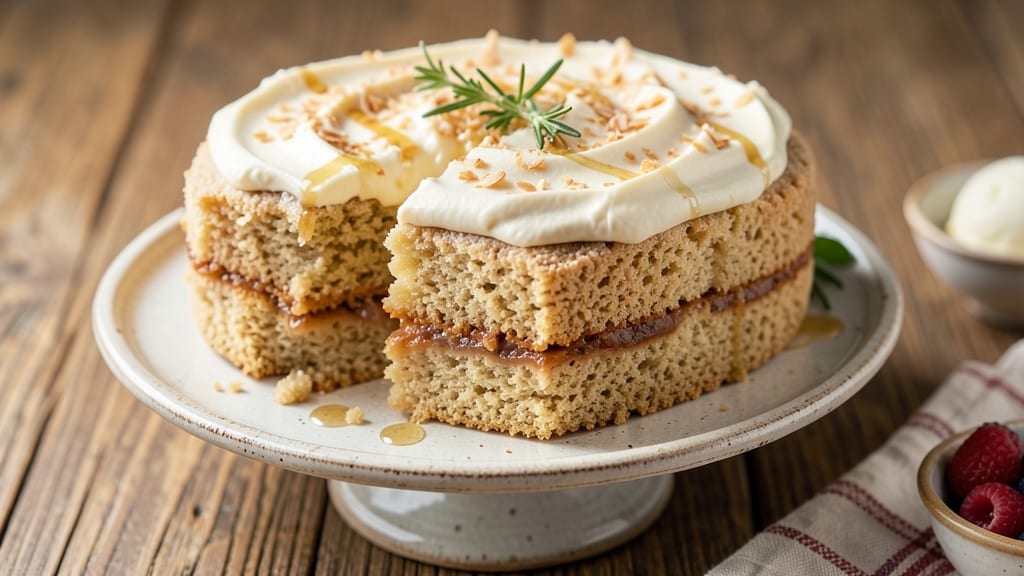
This almond flour cake mix recipe delivers that perfect balance of tender crumb and rich flavor without a single grain of gluten. ✨ The secret lies in properly hydrating the almond flour and using a combination of eggs and applesauce for moisture that lasts—no dry crumb here.
What makes this recipe stand out is how it transforms a typically dense almond flour bake into something light yet substantial, with layers that stay moist for days.
The beauty of this recipe is its versatility—it works equally well for dietary restrictions, whether you're avoiding gluten, eggs, or dairy.
The almond flour provides natural sweetness and a delicate texture, while the optional add-ins like vanilla extract or citrus zest elevate the flavor profile without overpowering the cake's inherent nuttiness. Baking at 325°F ensures even cooking, with a golden top and edges that stay tender.
What you'll end up with is a cake that's rich, moist, and perfectly crumbly—ideal for birthdays, celebrations, or just treating yourself. The natural sweetness of almond flour means you can reduce sugar without sacrificing flavor, and the cake holds its shape beautifully when sliced.
Whether you're a seasoned baker or new to gluten-free baking, this recipe delivers foolproof results every time.
Pair it with fresh berries, a dollop of whipped cream, or a dusting of powdered sugar for the perfect finishing touch. The best part? You can make it ahead and store it in an airtight container for up to five days, ensuring you always have a delicious dessert on hand.
Let's get baking!
Ingredients for almond flour cake mix
Eight simple ingredients transform into a light, moist almond flour cake that's gluten-free and guilt-free!
| Ingredient | Amount | Notes |
|---|---|---|
| Almond Flour 🌰 | 2 ½ cups | Finely ground, unsweetened |
| Large Eggs 🥚 | 4 whole | Room temperature for best mixing |
| Unsweetened Applesauce 🍎 | 1 cup | Unsweetened for neutral flavor |
| Granulated Sugar 🍚 | 1 cup | Or coconut sugar for refined option |
| Pure Vanilla Extract 🌿 | 1 tbsp | High-quality, pure vanilla |
| Baking Powder 🧂 | 1 tsp | Aluminum-free preferred |
| Salt 🧂 | ½ tsp | Fine sea salt preferred |
| Unsalted Butter 🧈 | ½ cup | Melted, cooled slightly |
| Unsweetened Almond Milk 🥛 | 1 cup | For extra moisture |
| Lemon Zest 🍋 | 1 tbsp | Brightens flavor profile |
| Lemon Juice 🍋 | 2 tbsp | Freshly squeezed |
| Powdered Sugar 🍚 | ¼ cup | For dusting, optional |
Almond flour is the star here—Bob's Red Mill or Anthony's Goods are my go-tos for ultra-fine grind. The key is to whisk it first to break up any clumps before mixing, or you'll end up with pockets of dry flour. Freshly ground almond flour makes all the difference, but if you're using pre-ground, pulse it in your food processor for 30 seconds to mimic freshness. The eggs? Room temperature is crucial—they'll mix more smoothly and create a lighter texture. If you're short on eggs, flax eggs work too (1 tbsp ground flax + 3 tbsp water = 1 egg).
No almond milk? Coconut milk or oat milk are great swaps—just use the same amount. Vanilla extract can be tricky: imitation vanilla won't cut it here, so splurge on the good stuff. The lemon zest and juice add brightness without overpowering the almond flavor. Short on lemon? Orange zest works too, but reduce to 1 tsp zest and 1 tbsp juice. For extra richness, add 2 tbsp of melted coconut oil to the butter. The powdered sugar is optional but adds that perfect finishing touch—Trader Joe's has a great organic version if you want to skip refined sugar.
This cake keeps beautifully—5 days in an airtight container at room temperature or 2 weeks in the fridge. For longer storage, wrap tightly and freeze for up to 3 months. I like to slice it into thick layers and store between parchment paper to keep it fresh. The cake actually tastes better the next day as the flavors meld. Want to make it ahead? Bake it 24 hours early, wrap it, and store at room temp—it'll still be moist and delicious. Pair with fresh berries or a dollop of coconut whipped cream for the ultimate treat.
Why You'll Love This Recipe
- No-Mess Mixing: I swear by this recipe because it’s three bowls max—just toss almond flour, sugar, and eggs like you’re shaking a snow globe. The applesauce keeps things moist without extra fuss, and honestly? No sticky hands or overmixing to stress about.
- Vanilla-Almond Magic: That combo of pure vanilla extract and almond flour? It’s like a hug in cake form—warm, nutty, and just sweet enough. The applesauce adds a subtle depth, so it’s not cloying or boring. My coffee cake version gets rave reviews, but even plain, it’s dangerously good.
- Weeknight or Wows: Make it for breakfast (slice it toasted) or dessert (drizzle with honey). The batter’s so stable I’ve even used it for cupcakes—just pop in liners before baking. And between us? It’s my go-to for last-minute gatherings because it always impresses.
- Budget-Friendly Luxe: Almond flour’s pricey, but this recipe uses less than store-bought mixes, and eggs/applesauce stretch it further. A single batch feeds four, and leftovers? I reheat slices in the toaster like a muffin—no waste, all flavor. Plus, it’s gluten-free without the markup.
Step-by-step instructions for almond flour cake mix recipe
Here's how to create a perfectly moist, gluten-free cake that rivals traditional recipes.
👨🍳 Step 1: Prep Ingredients for Perfect Texture
Start by whisking together the 4 whole Large Eggs, 1 cup Unsweetened Applesauce, and 1 cup Granulated Sugar in a large mixing bowl until fully combined and slightly thickened. This base creates the moisture foundation—applesauce replaces oil while keeping the cake tender. I like to use a hand mixer here for about 2 minutes until the mixture is pale and slightly ribbony when you lift the whisk.
In a separate bowl, melt the 0.5 cup Unsalted Butter in the microwave for 30 seconds (or over a double boiler), then let it cool slightly. This prevents scrambling when mixed with the eggs. While the butter cools, measure out the 2.5 cups Almond Flour, 1 tsp Baking Powder, and 0.5 tsp Salt in another bowl. The almond flour should be sifted first for a lighter texture—just tap it through a fine-mesh sieve into your measuring cup to avoid compaction.
🍳 Step 2: Combine Wet and Dry Ingredients Gently
Add the cooled melted butter to the egg mixture and whisk until fully incorporated. Then stir in the 1 tbsp Pure Vanilla Extract, 1 cup Unsweetened Almond Milk, 1 tbsp Lemon Zest, and 2 tbsp Lemon Juice. The lemon adds brightness that balances the richness—trust me, it makes a difference! Now gradually fold in the dry ingredients using a spatula, mixing just until combined. Here's the thing—overmixing develops gluten-like proteins in almond flour, so stop when you see a few dry streaks remaining.
This is where the magic happens: the applesauce and almond milk work together to keep the cake moist without making it dense. If your batter looks too thick, add 1-2 tablespoons more almond milk—it should be like thick pancake batter, not dough. The batter will thicken slightly as it bakes, so don't worry if it looks a bit loose now.
🔥 Step 3: Bake in Two Layers for Even Cooking
Preheat your oven to 350°F and grease two 8-inch round cake pans thoroughly with butter or baking spray. Line the bottoms with parchment paper for easy removal. Divide your batter evenly between the pans—you'll use about 1.5 cups per pan. Tap each pan firmly on the counter 3 times to eliminate any air bubbles.
Bake for 25-30 minutes until a toothpick inserted in the center comes out clean and the edges are golden. Here's my pro tip: if the tops brown too quickly, tent the pans with aluminum foil after 15 minutes. The almond flour can burn faster than wheat flour, so keep an eye on it. The cakes are done when they spring back slightly when touched in the center.
⏰ Step 4: Cool and Layer with Lemon Glaze
Remove the cakes from the oven and let them cool in their pans for 10 minutes, then transfer to a wire rack to cool completely. While they cool, make the glaze by whisking together 0.25 cup Powdered Sugar with 1 tablespoon lemon juice until smooth. This light glaze adds sweetness without overwhelming the delicate cake.
Once completely cool, place one cake layer on a serving plate and spread a thin layer of lemon glaze on top. Add the second layer and spread the remaining glaze over the top and sides. The glaze should be thin—just enough to add shine and sweetness without making the cake soggy. Let the glaze set for 10 minutes before slicing, or it might get messy.
🍽️ Step 5: Serve with Confidence
Slice the cake into 8 equal pieces using a serrated knife—dip the knife in hot water between slices for clean cuts. Each slice should have moist, tender crumbs with a subtle almond flavor and that bright lemon note. Serve immediately for the best texture, or store covered at room temperature for up to 3 days (if it lasts that long!).
This cake proves you don't need gluten to have a moist, flavorful dessert. The secret is in the applesauce and almond milk combination—it's what keeps those layers tender and delicious. Enjoy every bite without any guilt!
Pro Tips For Making Almond Flour Cake Mix
- Mix Dry First: Almond flour loves air—don’t overmix once wet ingredients join. Combine almond flour, sugar, and a pinch of salt in the bowl first, then make a well. This keeps the texture light instead of dense and gummy.
- Use Room-Temp Eggs: Cold eggs make the batter fight you. Let those eggs sit out for 30 minutes before cracking them into the applesauce and vanilla. The batter will blend smoother, and the cake rises more evenly—no surprises when baking.
- Skip the Overbaking: Almond flour cakes dry out fast. Pull yours out when the edges are set but the center still jiggles slightly—about 2-3 minutes before the recipe’s suggested time. It’ll firm up as it cools, but overdoing it turns moist into crumbly.
- Weigh the Flour: Scooping almond flour leads to disappointment. Use a kitchen scale for accuracy—it’s lighter than regular flour, and too much makes the cake tough. One gram difference matters more than you’d think.
Troubleshooting this recipe
Dry, Dense Cake
If your almond flour cake turns out dry or dense, the issue is usually under-moisturizing the batter. Almond flour absorbs liquid differently than wheat flour, so whisk the eggs and applesauce for at least 2 minutes to fully emulsify.
I’ve found that adding 1 extra tablespoon of almond milk (or melted butter) often fixes this—just stir it in gently after combining all ingredients. Overbaking is another culprit: pull the cake when a toothpick comes out clean, even if the edges aren’t fully set. 🌰
Cracked Top
Cracks usually mean your batter was too thick or the oven temperature fluctuated. To prevent this, whisk the batter until it’s smooth but still slightly loose—think thick pancake batter. Also, avoid opening the oven door during the first 20 minutes of baking.
If your oven runs hot, reduce the temperature to 325°F and add a baking sheet on the lower rack to create steam. A cracked top won’t ruin the cake, but this trick keeps it smooth.
Sunken Center
A sunken center often happens when the cake isn’t baked long enough or the oven isn’t hot enough. Make sure your oven is fully preheated for at least 15 minutes before baking.
If the center sinks slightly but the toothpick test passes, it’s still done—just let it cool completely before slicing. For extra insurance, bake 2-3 minutes longer if the center looks underdone. Also, don’t overfill the pans: use 1.5 cups batter per 8-inch pan to allow proper rise.
Bitter Aftertaste
Almond flour can taste bitter if it’s old or if you overmix the batter. Always use freshly ground almond flour (like Bob’s Red Mill or Anthony’s Goods) and sift it before measuring to avoid clumps.
To balance the flavor, add 1 extra tablespoon of lemon juice or vanilla extract—both help mask bitterness. If your cake still tastes off, reduce the almond flour to 2 cups and add ½ cup coconut flour for a milder flavor profile.
Sticky or Gummy Texture
This usually means the cake didn’t bake long enough or the batter was too wet. Double-check your baking time—25-30 minutes at 350°F is standard, but almond flour cakes can take longer.
If the cake feels gummy when cool, bake it 5 more minutes and let it rest on a wire rack for 30 minutes before slicing. For extra insurance, whisk the eggs and sugar until slightly thickened (about 2 minutes) to create structure.
A gummy texture can also happen if the cake is stored in a sealed container too soon—let it cool completely first. ✨
Nutrition facts
Frequently asked questions
Can I make this almond flour cake without eggs?
Yes! For an egg-free version, replace each egg with a flax egg (1 tbsp ground flaxseed + 3 tbsp water) or aquafaba (3 tbsp for each egg). Let the flax mixture sit for 5 minutes to thicken before using. The texture will be slightly denser but still moist and delicious.
How do I prevent my almond flour cake from tasting bitter?
Use freshly ground almond flour (like Bob's Red Mill) and sift it before measuring to avoid clumps. Add 1 extra tbsp lemon juice or vanilla extract to balance the flavor. If bitterness persists, reduce almond flour to 2 cups and add ½ cup coconut flour for a milder taste.
Can I substitute applesauce with something else?
Yes! Use ½ cup unsweetened applesauce + ½ cup Greek yogurt for extra richness, or swap it entirely with ½ cup mashed banana or pumpkin puree. Both add moisture while keeping the cake tender. Just reduce the almond milk by 2 tbsp if using yogurt to balance liquid content.
Why does my almond flour cake sink in the middle?
A sunken center usually means underbaking or insufficient oven heat. Preheat your oven for 15+ minutes and bake until a toothpick comes out clean (even if edges aren't fully set). Avoid overfilling pans—use 1.5 cups batter per 8-inch pan—and consider reducing temp to 325°F if your oven runs hot.
How do I store leftovers to keep them moist?
Store slices in an airtight container at room temperature for 3 days or refrigerate for 5 days. For longer storage, freeze wrapped slices for up to 3 months. Thaw at room temp for 1 hour before serving. Reheat briefly in the microwave (10 seconds) if needed—just don't overdo it!